
Yes, you can buy Bitcoin in Zambia in 2026, and the easiest route for most people runs through mobile money, not a bank card. You open an account on a platform that serves Zambia, verify your identity with your NRC or passport, pay with Airtel Money or MTN Money, and receive Bitcoin in your wallet the same day.
This guide walks you through each route Zambians actually use, the fees to expect, and the legal position as it stands right now. It also flags the one 2026 rule change you must check before you send any kwacha.

Key Takeaways
- Mobile money is the main route: Airtel Money and MTN Money work on Yellow Card and on Binance P2P ads.
- Bitcoin is not legal tender in Zambia, and the Bank of Zambia says you use it at your own risk.
- A reported early 2026 directive asked crypto providers to register with the Bank of Zambia, so check your platform is registered before you trade.
- Yellow Card suits beginners who want one quote and no haggling, while Binance P2P suits buyers who want to pick their own price.
- Move larger amounts to your own wallet after you buy, and never release a P2P payment outside escrow.
Is Bitcoin Legal in Zambia?
Bitcoin is not illegal in Zambia, but it is not legal tender either. Only the kwacha holds legal tender status, and the Bank of Zambia has said this plainly since 2018.
- Key Takeaways
- Is Bitcoin Legal in Zambia?
- The Mobile Money First Route Zambians Actually Use
- Route 1: Yellow Card, the Direct Exchange
- Route 2: Binance P2P, the Marketplace
- Route 3: Bank Transfer Through a Zambian Bank
- Which Route Should You Pick? Our Decision Table
- Step by Step: Buy Your First Bitcoin in Zambia
- Step 1: Choose Your Platform
- Step 2: Create and Secure Your Account
- Step 3: Verify Your Identity
- Step 4: Place Your Order
- Step 5: Pay Exactly as Instructed
- Step 6: Confirm and Move Your Bitcoin
- What You Need Before You Start
- Fees: What Your Kwacha Actually Buys
- Where to Keep Your Bitcoin After You Buy
- Mistakes Beginners in Zambia Make
- Scams to Watch For in Zambia
- Is Bitcoin Taxed in Zambia?
- How Zambia Compares With Its Neighbours
- Frequently Asked Questions
- Can I buy Bitcoin in Zambia with Airtel Money?
- Do I need a bank account to buy Bitcoin in Zambia?
- Is Bitcoin legal in Zambia?
- What is the minimum amount I can buy?
- Should I keep my Bitcoin on the exchange?
- Conclusion
The central bank also warned that it does not oversee or supervise crypto activity. That means your purchase carries no consumer protection from the bank if something goes wrong.
What the Bank of Zambia Actually Said
The Bank of Zambia stated in October 2018 that cryptocurrencies are not legal tender in the Republic of Zambia. It added that all buying, trading, and use of crypto happens at the owner’s risk.
The warning named fraud, hacking, money laundering, and terrorist financing as risks. It also noted that customers would often have no legal recourse because the market was unregulated.
The 2026 Registration Change You Must Check
Early 2026 brought a reported shift in that hands-off stance. Reports say the Bank of Zambia directed virtual asset service providers to register, with a deadline around 27 March 2026.

The same reports say regulated financial institutions were told to stop processing transactions to or from unregistered providers from around 30 March 2026. Registration is a data-gathering step, not a full licence, and a risk-based framework is expected to follow.
Before you trade, open your platform’s Zambia page and look for its registration status. If you cannot find it, ask support directly and keep the answer in writing.
The Mobile Money First Route Zambians Actually Use
Most Zambians do not start with a card or a bank transfer. They start with the wallet already on their phone, because mobile money reaches far more people than bank branches do.
The Bank of Zambia’s own 2025 payments report put active mobile money wallet usage at 77.8 percent. That reach is exactly why the working Bitcoin routes in Zambia run through Airtel Money and MTN Money.
Route 1: Yellow Card, the Direct Exchange
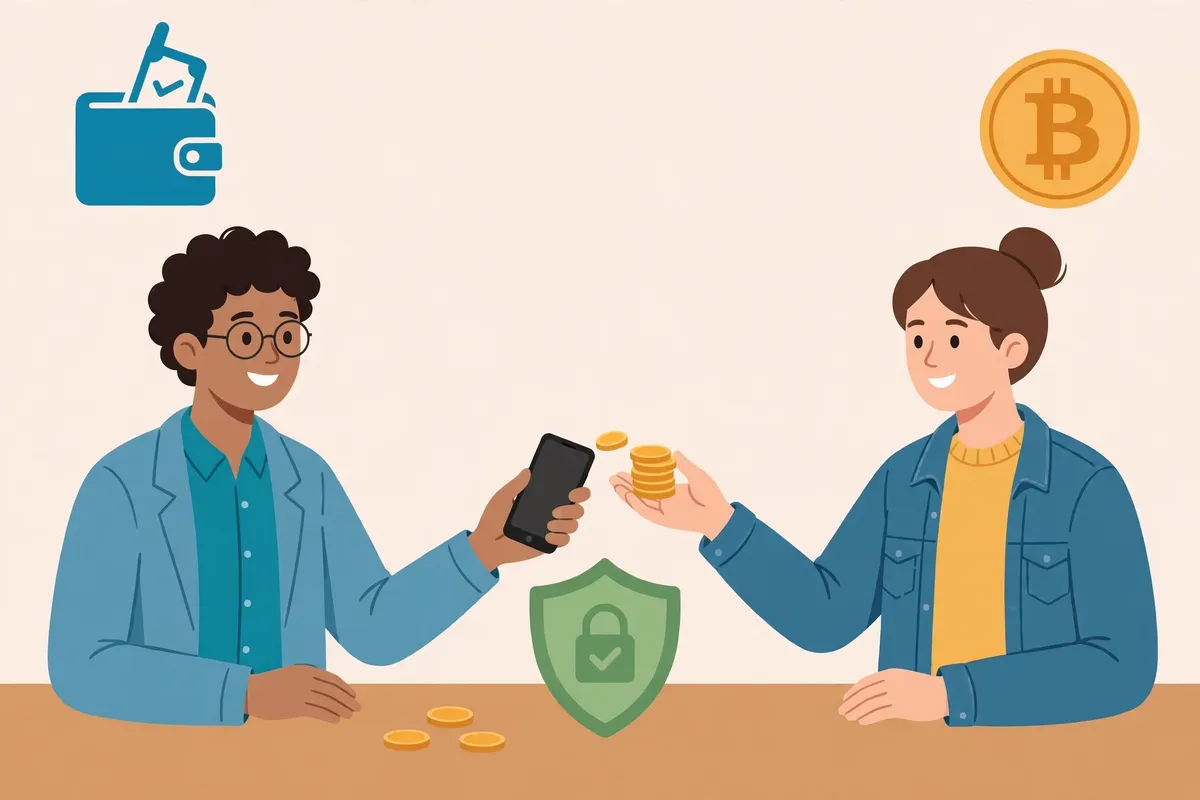
Yellow Card is a pan-African exchange with a physical presence in Zambia, and it accepts Airtel Money and MTN Money alongside bank transfers. You sign up with your name, email, and phone number, verify your identity, and buy at the quote the app shows you.
You deal with the company itself, not another trader, so there is no price to negotiate. Yellow Card also lists kwacha among the currencies it supports, and it holds AML/CFT registration in Zambia.
The trade-off is the spread: the company builds its margin into the quote. Expect roughly 1 to 2.5 percent all-in on a mobile money trade, and always compare the final Bitcoin amount, not the headline rate.
Route 2: Binance P2P, the Marketplace
Binance P2P works differently, because you trade with another person and Binance holds the Bitcoin in escrow until payment clears. You filter ads by payment method, pick a seller who accepts Airtel Money or MTN Money, and pay them directly.
Binance says its P2P marketplace supports more than 800 payment methods and over 100 fiat currencies. That depth matters in Zambia, where the right ad can be hard to find on smaller platforms.
P2P takes more care than a direct exchange. Check the seller’s completion rate and trade count, keep every message inside the platform, and never mark payment as sent before you actually send it.
Route 3: Bank Transfer Through a Zambian Bank
Some buyers still prefer a straight bank transfer from Zanaco, Stanbic, Absa, or FNB. You send kwacha to a seller or platform account, then receive Bitcoin once the transfer clears.
Bank transfers suit larger amounts, but they move slower than mobile money and draw more scrutiny. A bank may ask what the transfer is for, and crypto-linked flows can face extra questions under the 2026 registration climate.
If your bank blocks or queries a transfer, do not route it through a friend’s account to hide it. That creates a paper trail problem you cannot explain later.
Which Route Should You Pick? Our Decision Table
No other guide lays the Zambian choice out this plainly, so use this table as your shortcut. Match your situation to a row, then follow that route only.
| Your situation | Best route | Why it fits |
|---|---|---|
| First buy, small amount, want it simple | Yellow Card with mobile money | One quote, no counterparty, instant MoMo payout |
| Want the best price and can check ads | Binance P2P with MoMo ads | You pick the rate, escrow protects the trade |
| Buying a larger amount | Bank transfer to a verified seller | Higher limits, but slower and more questions |
| No bank account at all | Yellow Card or P2P with MoMo | Both work from a phone wallet alone |
| Platform registration unclear | Stop and verify first | Do not trade on an unregistered provider in 2026 |
Step by Step: Buy Your First Bitcoin in Zambia
Follow these steps in order, and do not skip the wallet step at the end. Most beginner losses come from rushing step five, not from picking the wrong platform.
Step 1: Choose Your Platform
Pick Yellow Card if you want simplicity, or Binance P2P if you want price control. Confirm the platform still serves Zambia and shows its registration status before you sign up.
Step 2: Create and Secure Your Account
Sign up with an email you actually check, then turn on two-factor authentication right away. Use a password you use nowhere else, and store it in a password manager.
Step 3: Verify Your Identity
Upload your NRC or passport when the platform asks, and make sure the name matches your mobile money account. A name mismatch is the most common reason verification stalls in Zambia.
Step 4: Place Your Order
On Yellow Card, enter the kwacha amount and accept the quote shown. On Binance P2P, filter ads by Airtel Money or MTN Money, check the seller’s history, and open the trade inside escrow.
Step 5: Pay Exactly as Instructed
Send the exact amount to the exact number or account shown on the order screen. Never add words like “Bitcoin” or “crypto” to a mobile money note unless the platform tells you to, since banks and wallets flag those notes.
Step 6: Confirm and Move Your Bitcoin
Wait for the Bitcoin to land in your platform wallet, then confirm receipt on the order. For anything you plan to hold, send it to a wallet you control, as our guide to the best Bitcoin wallets for beginners explains.
What You Need Before You Start
You need three things: a phone with an active Airtel Money or MTN Money wallet, a valid NRC or passport, and an email address. You do not need a bank account for the mobile money routes.
Check your mobile money limits before a big purchase, because wallets cap daily transfers. Split a large buy across days rather than borrowing someone else’s wallet to get around the cap.
Fees: What Your Kwacha Actually Buys
Fees in Zambia depend on the route, not on Bitcoin itself. A direct exchange charges a spread, a P2P ad sets its own price, and your wallet or bank may add a transfer fee.
Compare the final Bitcoin amount you receive after every cost, not the advertised rate. Two platforms can show the same price and deliver different amounts once spread and withdrawal fees land.
Watch the withdrawal fee too, because moving Bitcoin off an exchange costs a network fee. Small buys suffer most here, so beginners should avoid buying tiny amounts repeatedly.
Where to Keep Your Bitcoin After You Buy
Leaving Bitcoin on an exchange is convenient, but it means the exchange holds your coins. If the platform freezes withdrawals or fails, your coins sit inside someone else’s system.
A self-custody wallet puts the keys in your hands, and that also puts the responsibility there. Write your recovery phrase on paper, store it somewhere safe, and never photograph it or share it with anyone.
Start small while you learn the wallet, and send a test amount first. A successful test transfer teaches more than any tutorial about addresses and confirmations.
Mistakes Beginners in Zambia Make
The first mistake is paying outside escrow because a seller offered a better rate on WhatsApp. Once the money leaves your wallet with no escrow, no platform can get it back.
The second mistake is buying from social media sellers who post screenshots of profits. Real traders do not need to advertise on Facebook comments, and screenshots prove nothing.
The third mistake is leaving large amounts on an exchange for months. Exchanges are for buying and selling, not for long-term storage, and Zambia’s shifting rules make that distinction sharper.
The fourth mistake is ignoring records. Save every mobile money receipt, bank statement, and exchange export, because you may need to explain where your coins came from.
Scams to Watch For in Zambia
Fake support agents are the most common trap, and they appear in Telegram groups and comment sections. No real exchange employee will ever ask for your password, recovery phrase, or a payment to “unlock” your account.
Doubling schemes promise to double your Bitcoin if you send coins first. They never pay out, and the account behind them disappears within days.
Check every link before you tap it, because phishing sites copy exchange login pages closely. Type the address yourself or use the official app, and never log in through a link someone sent you.
Is Bitcoin Taxed in Zambia?
Zambia has no published retail guide that sets out a clear tax rule for small Bitcoin buyers. That gap does not mean gains are tax-free forever, and the regulatory framework now taking shape may address it.
Keep clean records of every buy, sell, and transfer with dates and kwacha amounts. If the rules change, good records turn a hard question into a simple one, and our global guide to buying Bitcoin around the world explains how other countries handle the same question.
How Zambia Compares With Its Neighbours
Zambia’s mobile money first pattern looks familiar across the region. Our guide to buying Bitcoin in Uganda and our guide to buying Bitcoin in Tanzania show the same wallet-led habit, with local platforms filling the gaps banks leave.
The difference is regulation: Zambia’s 2026 registration push puts it ahead of neighbours still running on warnings alone. That makes checking a provider’s status more important in Zambia than in most nearby markets.
For a contrast outside Africa, our guide to buying Bitcoin in Ukraine shows a P2P first market shaped by wartime banking limits. Zambia’s story is calmer, but the lesson matches: use the rail people already trust.
Regulation also differs sharply in Asia, where our guide to buying Bitcoin in Thailand covers a licensed-only route. Zambia has not reached that stage, and the 2026 registration step sits somewhere in between.
Frequently Asked Questions
These are the questions Zambian beginners ask most often, answered in plain terms. If your question is not here, start with a small test trade and learn the platform first.
Can I buy Bitcoin in Zambia with Airtel Money?
Yes. Yellow Card accepts Airtel Money directly, and Binance P2P sellers list Airtel Money as a payment method, so you can buy Bitcoin with your Airtel Money wallet on both routes.
Do I need a bank account to buy Bitcoin in Zambia?
No. The mobile money routes work without a bank account, and you only need a phone wallet, an NRC or passport, and an email address to start.
Is Bitcoin legal in Zambia?
Bitcoin is not illegal in Zambia, but it is not legal tender, and the Bank of Zambia says all crypto activity happens at the owner’s risk.
What is the minimum amount I can buy?
Minimums vary by platform and ad, and mobile money wallet limits often matter more than the platform minimum, so check both before you place an order.
Should I keep my Bitcoin on the exchange?
For small amounts you plan to sell soon, an exchange wallet is fine, but for anything you plan to hold, move it to a wallet you control and guard your recovery phrase.
Conclusion
Buying Bitcoin in Zambia in 2026 comes down to one choice: a direct exchange quote or a P2P ad, both paid through the mobile money wallet already in your pocket. Start with a small amount, verify the provider’s registration status, and move your coins to your own wallet once you feel confident.
Your next step is simple: open Yellow Card or Binance P2P, confirm it serves Zambia, and run a small test buy before you commit real money. That one careful trade teaches you the whole process, and it keeps your first lesson cheap.