
How to buy Bitcoin in Vietnam in 2026 starts with one honest fact. No exchange holds a Ministry of Finance licence yet, so no fully compliant domestic route exists at the time of writing.
That does not mean Bitcoin itself is banned. Vietnam recognised crypto assets as property on January 1, 2026, but you still cannot use Bitcoin to pay for goods and services.

This guide explains the legal picture first, then the routes Vietnamese buyers actually use. It also shows the exact fine rule, the payment rails, and the safety steps that matter most.
- Key Takeaways
- Is Bitcoin Legal in Vietnam in 2026?
- The September 2026 Fine Rule, Explained Honestly
- How Vietnamese Buyers Actually Buy Bitcoin Today
- Step by Step: How to Buy Bitcoin in Vietnam
- Step 1: Choose a platform and check its reputation
- Step 2: Complete identity verification
- Step 3: Find a P2P seller and start a trade
- Step 4: Pay by instant bank transfer
- Step 5: Convert USDT to Bitcoin if needed
- Step 6: Move Bitcoin to your own wallet
- Step 7: Keep records for tax and the licence switch
- Fees, Limits, and What a First Buy Really Costs
- Scams to Avoid in Vietnam
- Vietnam vs Neighbouring Country Guides
- Common Mistakes Beginners Make
- Frequently Asked Questions
- Is it legal to buy Bitcoin in Vietnam in 2026?
- Is there a licensed crypto exchange in Vietnam yet?
- Will I be fined 30 to 50 million dong for buying Bitcoin now?
- What is the easiest way to buy Bitcoin with VND?
- What ID do I need to buy Bitcoin in Vietnam?
- Can I pay with MoMo or ZaloPay?
- Do I pay tax on Bitcoin in Vietnam?
- Should I keep Bitcoin on the exchange?
- Conclusion
Key Takeaways
- No licensed Vietnamese crypto exchange exists yet as of October 26, 2026.
- Decree 284/2026 sets a 30 to 50 million dong fine for domestic investors, but that fine only starts six months after the first licence is granted.
- Most Vietnamese buyers still use peer to peer trades settled by instant VND bank transfer.
- You need a CCCD card or a passport for identity checks on major platforms.
- Move larger amounts to your own wallet and never share your seed phrase with anyone.
Is Bitcoin Legal in Vietnam in 2026?
Yes, owning Bitcoin is legal in Vietnam in 2026. The Law on Digital Technology Industry, passed in June 2025 and in force from January 1, 2026, recognised crypto assets as property under civil law.
That recognition matters for ownership and disputes. It does not make Bitcoin legal tender, and using crypto as a payment method remains banned.
Vietnam also runs a five year pilot for a licensed crypto asset market. Resolution 05/2025/NQ-CP, effective September 9, 2025, created that pilot and put the Ministry of Finance in charge of licensing.
Trading and settlement inside the pilot must use Vietnamese dong. Foreign investors must open VND denominated accounts when they take part.

The licensing position today
Applications for exchange licences opened on January 20, 2026. Seven firms applied, and five passed the first assessment stage.
Those five include affiliates linked to VIX, Sacom, Vietnam Prosperity, Techcom, and Vietnam Digital Assets. Each applicant must still clear Level 4 information security certification and hold at least 10 trillion dong in charter capital.
No firm had cleared that bar as of late October 2026. A video update dated October 26, 2026 confirmed the same position: five applications under review, zero licences granted.
The September 2026 Fine Rule, Explained Honestly
Decree 284/2026/ND-CP took effect on September 1, 2026. It is the first Vietnamese decree to set administrative fines for crypto market conduct.
Many headlines said the 30 to 50 million dong investor fine started on that date. That reading misses the delay switch built into Resolution 05.
Resolution 05 says the licensed platform requirement starts six months after the first provider receives a licence. The investor fine follows that same clock, so it cannot bite before that date.
Here is the position in plain terms.
| Rule | What it says | Status on October 27, 2026 |
|---|---|---|
| Investor fine | 30 to 50 million dong (about $1,140 to $1,900) for trading outside a licensed provider | On the books, not yet in play |
| Unlicensed platform fine | 180 to 200 million dong for offering crypto services without a licence | In force for operators |
| Maximum individual fine | 100 million dong | Applies across the decree |
| First licence granted | The trigger for the six month clock | Not yet granted |
This article corrects the common September fine story. You face a future compliance deadline, not an automatic fine for every trade you made in September.
That distinction still leaves real risk. Once the first licence lands, you get six months to move your trading to licensed platforms.
Officials have also said investors can keep assets in personal wallets. The licensed platform rule targets trading venues, not self custody itself.
How Vietnamese Buyers Actually Buy Bitcoin Today
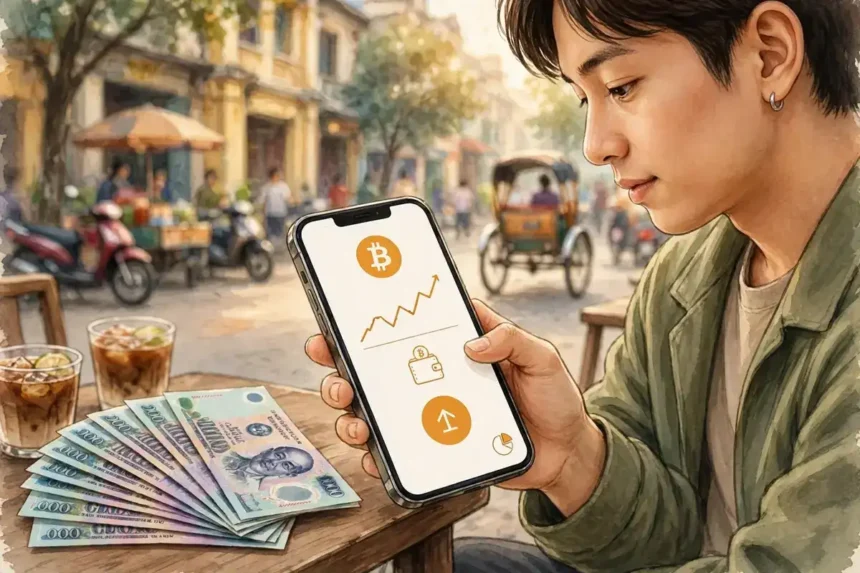
Vietnamese buyers trade overwhelmingly through peer to peer markets. A buyer finds a seller on a P2P marketplace, pays in dong by instant bank transfer, and receives crypto once the seller confirms payment.
The platform holds the crypto in escrow during the trade. Escrow protects both sides, because the seller cannot take your dong and keep the crypto.
Most buyers start with USDT, the dollar pegged stablecoin, and then convert it to Bitcoin. USDT trades in deep volume on P2P markets, and sellers often price it close to the dong rate.
The VND bank transfer rail
Instant interbank transfer is the workhorse payment method in Vietnam. Banks such as Vietcombank, ACB, and MB Bank support fast transfers between accounts.
Your bank account name must match your exchange profile name. A mismatch can freeze a trade or trigger extra checks.
Some sellers also accept MoMo or ZaloPay. E-wallets work well for small trades, but they often carry lower limits than bank transfers.
Which platforms do locals use?
Binance P2P is the largest P2P venue used in Vietnam. OKX and Remitano also serve Vietnamese buyers with VND payment options.
None of these platforms holds a Vietnamese licence today. Using one means you accept the regulatory risk described above, and you should plan to switch when licensed platforms open.
Global spot exchanges such as Kraken and CEX.IO accept cards and wires. They do not offer the same instant VND P2P rail, so most beginners find them harder for a first buy.
Step by Step: How to Buy Bitcoin in Vietnam
Follow these steps in order. Do not skip identity checks or the wallet step, even for a small first buy.
Step 1: Choose a platform and check its reputation
Pick a large P2P platform with escrow and a long operating history. Check seller ratings, completion rates, and trade counts before you trust any single seller.
Avoid sellers with few completed trades or prices far below the market rate. Those offers often hide a scam or a stolen account.
Step 2: Complete identity verification
Major platforms require identity verification before you trade. Vietnamese users usually verify with a CCCD card, and foreigners use a passport.
Verification often takes a few hours and sometimes up to a day. Use clear photos of your document and make sure your account name matches your bank account name exactly.
Step 3: Find a P2P seller and start a trade
Open the P2P section and filter for VND, bank transfer, and sellers with high completion rates. Enter the amount in dong and check the price, limits, and payment window before you confirm.
Never pay outside the platform. Off platform payments remove escrow protection and leave you with no way to appeal.
Step 4: Pay by instant bank transfer
Send the exact dong amount to the seller account shown in the trade window. Use your own bank account, and do not change the amount or the recipient.
Mark the payment as sent inside the platform. The seller then releases the crypto to your platform wallet.
Step 5: Convert USDT to Bitcoin if needed
If you bought USDT, open the spot market and trade USDT for BTC. Check the price and the fee before you confirm, and start with a market order if you want a simple fill.
Bitcoin traded near $80,000 on October 27, 2026. Prices move fast, so decide your amount in dong first and do not chase a moving price.
Step 6: Move Bitcoin to your own wallet
Withdraw your Bitcoin to a wallet you control. A mobile wallet works for small amounts, and a hardware wallet suits larger holdings.
Write your seed phrase on paper and store it offline. Never photograph it, never type it into a website, and never share it with support staff.
If you need help choosing a wallet, read our guide to the best Bitcoin wallets for beginners. It explains the difference between hot and cold storage in simple terms.
Step 7: Keep records for tax and the licence switch
Save a record of every trade, including dates, amounts, prices, and fees. Circular 32/2026 sets a 0.1 percent personal income tax on the gross value of each crypto sale made through a licensed platform, withheld by the exchange.
Trades outside licensed platforms sit in a grey area for tax today. Clean records still help you report correctly and switch cleanly when licensed platforms launch.
Fees, Limits, and What a First Buy Really Costs
Binance charges from 0.1 percent on spot trades. P2P trades themselves often carry no platform fee, but sellers build a spread into their price.
That spread is the real cost of a P2P buy. Compare three or four sellers before you accept a price, and check the total dong you pay against the Bitcoin you receive.
Card buys cost more than bank transfer P2P trades. International wires add bank fees and slower settlement, so they suit larger trades rather than first buys.
| Route | Typical cost | Best for |
|---|---|---|
| P2P bank transfer | Seller spread, often no platform fee | First buys and regular buys |
| Spot trade after USDT | From 0.1 percent on Binance | Converting USDT to BTC |
| Card buy | Higher commission plus surcharge | Small urgent buys |
| International wire | Bank fees plus slow settlement | Larger trades |
Scams to Avoid in Vietnam
Scammers target new buyers with fake support accounts and too good prices. Real platform staff never ask for your seed phrase or your password.
Watch for sellers who ask you to pay outside the platform. That request breaks escrow protection and usually ends in a loss.
Ignore investment groups that promise fixed daily returns. Bitcoin has no guaranteed return, and groups that promise one usually run a fraud.
Check every link before you log in. Fake exchange sites copy real login pages and steal credentials within minutes.
Vietnamese buyers face one more local trap. Some sellers ask buyers to add crypto words to the bank transfer note, which can flag the payment.
Keep transfer notes simple and follow the platform instructions exactly.
Vietnam vs Neighbouring Country Guides
Vietnam sits in a strange middle ground in 2026. The law recognises crypto as property, yet no licensed exchange exists to serve local buyers.
Thailand took a stricter licensed only path for beginners, as our guide to buying Bitcoin in Thailand explains. Vietnam will likely look similar once its first licences land.
Our worldwide guide to buying Bitcoin compares routes across countries. It helps if you travel or hold accounts in more than one country.
Buyers in nearby markets face different rules. See also our guide to buying Bitcoin in Ukraine and our guide to buying Bitcoin in Pakistan for contrasting P2P first markets.
Common Mistakes Beginners Make
Beginners often leave Bitcoin on an exchange for months. Exchanges can freeze accounts, and a hack can drain hot wallets fast.
Many buyers also trade with money they need soon. Bitcoin can drop sharply in days, so only use money you can leave alone for years.
Another common mistake is buying the wrong asset. Check the ticker says BTC before you confirm, because similarly named tokens can trick new buyers.
Finally, do not share screenshots of your wallet balance in public groups. Scammers use those screenshots to pick targets.
Frequently Asked Questions
These answers sum up the legal picture and the practical steps from this guide. Read the full sections above before you make a large buy.
Is it legal to buy Bitcoin in Vietnam in 2026?
Yes, owning Bitcoin is legal, because the Law on Digital Technology Industry recognised crypto assets as property from January 1, 2026. Using Bitcoin to pay for goods and services remains banned, and trading must move to licensed platforms six months after the first licence is granted.
Is there a licensed crypto exchange in Vietnam yet?
No, no exchange holds a Ministry of Finance licence as of October 26, 2026. Five applicants passed the first assessment, but none had met the 10 trillion dong capital and Level 4 security requirements for a full licence.
Will I be fined 30 to 50 million dong for buying Bitcoin now?
Not under the current clock, because that fine starts six months after the first licensed exchange opens. The fine exists in Decree 284/2026, but with no licence granted yet, the six month countdown has not started.
What is the easiest way to buy Bitcoin with VND?
Peer to peer trading settled by instant VND bank transfer is the easiest route for most Vietnamese buyers. Choose a high rated seller, pay inside the platform escrow system, and never pay outside the platform.
What ID do I need to buy Bitcoin in Vietnam?
Vietnamese users usually verify with a CCCD card, and foreigners use a passport. Your bank account name must match your exchange profile name, or trades can stall.
Can I pay with MoMo or ZaloPay?
Yes, some P2P sellers accept MoMo or ZaloPay, especially for smaller trades. Bank transfer remains the main rail, because e-wallets often carry lower limits.
Do I pay tax on Bitcoin in Vietnam?
Circular 32/2026 sets a 0.1 percent tax on the gross sale value for trades through a licensed platform, withheld by the exchange. Trades outside licensed platforms are not clearly covered yet, so keep full records of every trade.
Should I keep Bitcoin on the exchange?
No, move larger amounts to a wallet you control and keep your seed phrase offline. Exchanges suit trading, not long term storage, and our guide to getting a Bitcoin wallet walks through the setup step by step.
Conclusion
Vietnam gives beginners a clear answer and an unclear market at the same time. Bitcoin ownership is recognised, but no licensed exchange exists yet to buy it through.
Use P2P with escrow if you buy now, keep your records clean, and plan to switch when licensed platforms open. That plan respects the law as it stands and prepares you for the six month deadline that follows the first licence.
Start small, move your Bitcoin to your own wallet, and check the licensing news before every large buy. Your next step is simple: verify your account, pick a high rated P2P seller, and buy only an amount you can hold for years.