


Here is the honest answer first. Egypt has no legal way to buy Bitcoin today, and any guide that skips that fact puts you at risk.
Article 206 of the Central Bank and Banking Law No. 194 of 2020 bans issuing, trading, or promoting cryptocurrencies without Central Bank of Egypt approval. The central bank has granted that approval to no exchange.

So this guide starts with the law, then explains how demand still shows up and how people protect themselves. It is part of our series on how to buy Bitcoin around the world.
- Is Bitcoin Legal in Egypt?
- Why Egyptians Still Look for Bitcoin
- Why the Easy Routes You See Online Do Not Work in Egypt
- How Demand Actually Shows Up: P2P and USDT
- What 10,000 EGP Buys in Bitcoin Today
- A P2P Safety Checklist That Prevents Real Losses
- Common Scams That Target Egyptian Buyers
- How Egypt Compares With Other Countries
- FAQs
- Is Bitcoin legal in Egypt?
- What is the penalty for trading crypto in Egypt?
- Can I buy Bitcoin with Vodafone Cash?
- Can my bank block my account over crypto?
- Do I pay tax on Bitcoin in Egypt?
- What is the cheapest way to buy Bitcoin in Egypt?
- The Bottom Line
Key takeaways
- Trading Bitcoin is banned in Egypt under Article 206 of Law 194 of 2020.
- Breaking the ban can bring prison time plus a fine between EGP 1 million and EGP 10 million.
- No licensed local exchange exists, and Egyptian banks block card payments to crypto platforms.
- Most demand moves through peer-to-peer markets, usually USDT first, paid by Vodafone Cash, InstaPay, or bank transfer.
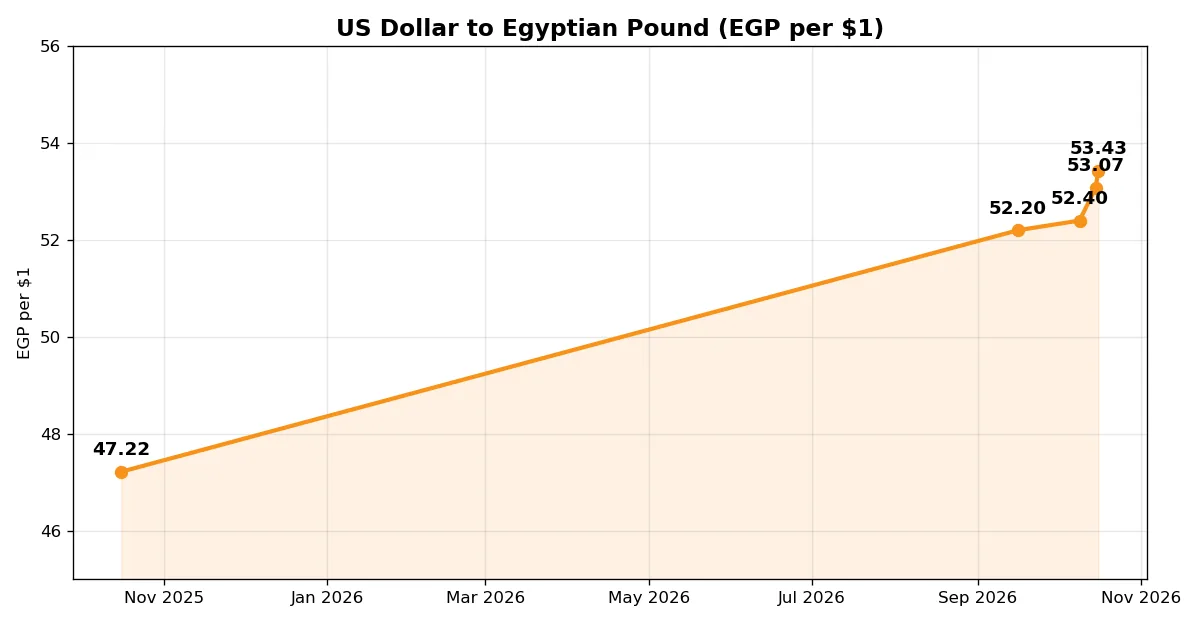
- One dollar cost EGP 53.43 on October 16, 2026, up from EGP 47.22 a year earlier. That slide explains much of the demand.
Is Bitcoin Legal in Egypt?
No. Egyptian law gives you no licensed route to buy, sell, or trade Bitcoin inside the country.
The Central Bank of Egypt repeats that warning in public statements, and the Financial Regulatory Authority renewed its own warning in May 2025. The FRA urged citizens to report online ads that promote crypto investing.
What Article 206 Actually Says
Article 206 covers more than trading. It also bans issuing cryptocurrencies, promoting them, and running a platform for them without a licence from the Central Bank of Egypt.
The central bank has issued no such licence to any public exchange. That single fact shapes everything else in this guide.

The Penalties Are Severe
Breaking the ban can bring prison time. Courts can also add a fine between EGP 1 million and EGP 10 million.
Religious guidance points the same way. Egypt’s Dar al-Ifta issued a ruling in 2018 that treats Bitcoin trading as forbidden in Islam, and it has repeated that position since.
Why Egyptians Still Look for Bitcoin
The pound keeps losing value, and people feel it every week at the market. One dollar bought EGP 47.22 in October 2025 and buys EGP 53.43 today.
That move cut the dollar value of pound savings by about 12 percent in one year. Families who receive money from relatives abroad also watch the gap, because Egypt takes in tens of billions of dollars in remittances every year.
None of that makes buying Bitcoin legal or safe. It only explains why the demand refuses to disappear.
Why the Easy Routes You See Online Do Not Work in Egypt
Most buy guides copy a global template. They assume a licensed exchange, a working debit card, and a bank that stays out of the way.
Egypt fails all three tests. The table below sets the common claims against the local reality.
| What generic buy pages claim | What actually happens in Egypt |
|---|---|
| Buy with your debit card in minutes | Banks decline card payments to crypto platforms, and debit cards are largely switched off for international online use |
| Open an account on a local exchange | No exchange holds a Central Bank of Egypt licence |
| Pay the normal dollar price | Peer-to-peer prices in pounds usually sit above the official exchange rate |
| Your bank will not mind | Banks block transfers to known crypto platforms and can question accounts that receive them |
| The tax office has clear crypto rules | Egypt has no crypto tax framework, so no clear rules protect you either |
Cards and Bank Transfers Hit Hard Limits
Credit cards carry strict foreign currency caps in Egypt. National Bank of Egypt customers who have not filed travel proof face a limit of about $250 a month, and banks charge a foreign currency commission of about 5 percent on top.
Those caps exist for travellers, not crypto buyers. Card networks and banks treat crypto merchants as blocked categories, so most purchase attempts fail at checkout.
In open markets, buying Bitcoin with a bank transfer is the cheapest route. Egypt’s banks sit at the opposite end of that scale.
How Demand Actually Shows Up: P2P and USDT
We describe this section because pretending it does not happen helps nobody. Read it as a risk briefing, not as a recommendation, because every route below still breaks Egyptian law.
Most local demand moves through peer-to-peer markets on international platforms. A buyer sends pounds to a seller, the platform holds the coins in escrow, and the platform releases the coins after the seller confirms payment.
Why USDT Usually Comes First
Sellers price their ads in dollars, and USDT ads in Egypt are usually deeper than direct Bitcoin ads. Many buyers purchase USDT first and then swap it for Bitcoin inside the same platform.
Payment rails named in local ads include Vodafone Cash, InstaPay, and ordinary bank transfers. Prices on these markets usually imply a dollar rate above the official EGP 53.43, and that gap is the real cost of the route.
What ID Verification Looks Like
International platforms ask for identity documents before they unlock peer-to-peer trading. Egyptian users typically verify with a passport or a national ID card, plus a live face check.
Verification does not make the trade legal at home. It only satisfies the platform, and the platform can still restrict or close accounts that break its own terms.

What 10,000 EGP Buys in Bitcoin Today
Numbers make the premium easier to see. Bitcoin traded at $81,880 on October 16, 2026, and one dollar cost EGP 53.43 on the same day.
At the official rate, EGP 10,000 equals about $187. That buys roughly 0.00229 BTC at the spot price, or about 228,600 satoshis, and one full Bitcoin costs about EGP 4.37 million.
A peer-to-peer buyer receives less than that spot figure. The seller’s premium and any platform fee come out of the same EGP 10,000 before a single satoshi arrives.
A P2P Safety Checklist That Prevents Real Losses
Scams cause more losses in Egypt than price moves do. Work through this checklist on every trade, even with a seller you have used before.
- Use escrow only. Never pay outside the platform, because off-platform payments carry no protection.
- Match the names. The wallet or bank account name should match the seller’s verified platform name.
- Start with a small test trade. A tiny first deal limits the damage if anything looks wrong.
- Never release on a screenshot. Release coins only after the money clears inside your own account.
- Keep every record. Save receipts, chat logs, and transaction IDs for each trade.
- Move coins to your own wallet. Our guide to the best Bitcoin wallets for beginners explains safe storage basics.
Check the seller’s history before you open a trade. A long record of completed deals and a completion rate near 100 percent matter more than a slightly better price.
Common Scams That Target Egyptian Buyers
Fake payment screenshots lead the list. A scammer sends an edited Vodafone Cash receipt, pressures you to release the coins, and vanishes while the real money never arrives.
Telegram and Facebook groups run the second pattern. They advertise cheap USDT, collect a transfer, and block the buyer within minutes.
Clone websites run the third. They copy a real exchange page, take your deposit, and show a fake balance that you can never withdraw.
How Egypt Compares With Other Countries
Egypt sits at the strict end of the global scale. Turkey licenses its exchanges under a 2024 law, and our guide on how to buy Bitcoin in Turkey shows a market that works in the open.
South Africa treats crypto as a financial product with licensed providers, as our South Africa Bitcoin guide explains. At the regulated end inside Europe, our Denmark guide shows buyers using licensed exchanges under the MiCA rules.
FAQs
Readers ask the same questions about Bitcoin in Egypt again and again. Here are the short, honest answers.
Is Bitcoin legal in Egypt?
No. Article 206 of the Central Bank and Banking Law No. 194 of 2020 bans issuing, trading, or promoting cryptocurrencies without Central Bank of Egypt approval, and the central bank has approved no exchange.
What is the penalty for trading crypto in Egypt?
Breaking the ban can bring prison time plus a fine between EGP 1 million and EGP 10 million. Regulators also repeat public warnings, most recently from the Financial Regulatory Authority in May 2025.
Can I buy Bitcoin with Vodafone Cash?
Some peer-to-peer sellers accept Vodafone Cash, and buyers use it to pay for USDT or Bitcoin ads. The payment rail works, but the trade itself still breaks Egyptian law and carries real legal risk.
Can my bank block my account over crypto?
Yes, banks block transfers to known crypto platforms and can question or freeze accounts linked to them. Banks also cap foreign currency card use, and National Bank of Egypt customers without travel proof face a limit of about $250 a month.
Do I pay tax on Bitcoin in Egypt?
Egypt has no crypto tax framework today. The ban sits above tax questions, so there are no official rules for declaring crypto gains or losses.
What is the cheapest way to buy Bitcoin in Egypt?
There is no legal cheap route. Peer-to-peer USDT usually costs less than card based routes that still work, but it carries a premium over the official exchange rate and the full legal risk of the ban.
The Bottom Line
Egypt bans Bitcoin trading, and the penalties are heavy enough to take seriously. No licensed exchange, blocked cards, and capped foreign currency use close every easy door.
If the law changes, licensed routes will appear fast, and we will update this guide the same week. Until then, browse our country guides hub to see how buyers in open markets do it, and never risk money you cannot afford to lose.