


Yes, you can buy Bitcoin legally in Austria, and most beginners finish a first buy in under 30 minutes. Open an account with a MiCA authorised platform such as Vienna based Bitpanda, Kraken or Bybit EU, verify your identity, deposit euros by SEPA transfer, and buy on the BTC/EUR market.
Austria gives beginners one big advantage: clear rules. The Financial Market Authority, the FMA, supervises Austrian providers, and local platforms handle the tax withholding for you.

On 13 October 2026, converter data put one Bitcoin near EUR 74,258. Nobody needs that much to start, because exchanges sell tiny slices of a coin.
- Is Bitcoin legal in Austria in 2026?
- How to buy Bitcoin in Austria in 7 steps
- Step 1: Pick a MiCA authorised platform
- Step 2: Create your account
- Step 3: Complete identity verification
- Step 4: Deposit euros by SEPA transfer
- Step 5: Open the BTC/EUR market
- Step 6: Enter your amount and confirm
- Step 7: Move bigger amounts to your own wallet
- Bitpanda vs Kraken vs Bybit EU vs Bitstamp: which one fits you?
- How much does a first buy really cost?
- Bank apps, cash and P2P: what else works in Austria?
- Common mistakes Austrian beginners make
- Paying the standard premium by habit
- Skipping the authorisation check
- Ignoring tax records until the letter arrives
- Frequently Asked Questions
- Conclusion
A first buy of EUR 50 or EUR 100 is completely normal. If the basics still feel fuzzy, read our complete guide to what Bitcoin is and how it works first.
Key takeaways
- Buying, holding and selling Bitcoin is legal in Austria. Bitcoin is not legal tender, and no shop must accept it.
- Platforms serving Austria need authorisation under the EU MiCA rules. The FMA authorised Bitpanda in April 2025 and Bybit EU in May 2025.
- Bitpanda charges a premium near 0.99% on standard Bitcoin buys, and its Fusion trading screen starts at 0.25%. Kraken Pro and Bitstamp start lower for active traders.
- SEPA deposits are free on Bitpanda and usually arrive within one business day. SEPA Instant lands in minutes where your bank supports it.
- Austria taxes crypto gains at a flat 27.5%, called Kapitalertragsteuer or KeSt. Austrian providers such as Bitpanda withhold it automatically, and foreign platforms do not.
Is Bitcoin legal in Austria in 2026?
Yes. Austrian law lets you own, buy, sell and trade Bitcoin, and local platforms operate openly under EU and Austrian rules.
The euro stays the only legal tender. A shop can accept Bitcoin if it wants to, but no shop must accept it.
The EU Markets in Crypto Assets Regulation, called MiCA, sets one rulebook for crypto platforms across Europe. The FMA supervises providers based in Austria and keeps a public warning list for firms that target Austrians without permission.

That register check is your first safety step, and it takes one minute.
Why most Austrians start with Bitpanda
Bitpanda started in Vienna in 2014 and now serves millions of users across Europe. Its app runs in German, it prices Bitcoin in euros, and it withholds the 27.5% tax automatically for Austrian customers.
Some Raiffeisen banks also sell access through Bitpanda inside the Mein ELBA banking app. The bank acts as the doorway, and Bitpanda handles the trading and custody behind the scenes.
What about tax?
Buying Bitcoin creates no tax bill by itself. Selling it, swapping it for another coin, or spending it creates a gain or loss, and Austria taxes the gain at a flat 27.5%.
No holding period removes that tax, unlike the old speculation rules many Austrians still quote. Since 1 January 2024, Austrian providers must deduct the KeSt at source and send it to the tax office.
Foreign platforms such as Kraken and Coinbase do not withhold Austrian KeSt, so you report those gains yourself in your tax return. Tools such as Blockpit, built in Austria, calculate the figures from your trade history.
From 1 January 2026, a new Austrian crypto reporting law also makes platforms share user and transaction data with tax authorities under the EU DAC8 rules. Good records now matter more, not less, and this guide gives general information only, not tax advice.
How to buy Bitcoin in Austria in 7 steps
The steps below work on any big platform that serves Austria. Screens differ a little, but the order stays the same: account, verification, deposit, buy, then safe storage.
Readers abroad follow the same shape, as our guide on how to buy Bitcoin in Australia shows, but the documents, banks and tax rules are always local.
Step 1: Pick a MiCA authorised platform
Start with Bitpanda, Kraken, Bybit EU or Bitstamp, compared in the table below. Before you deposit one euro, confirm the provider holds MiCA authorisation and check the FMA warning list for copycat names.
If you cannot find the provider on an official register, close the app and pick another one. A slick advert never replaces authorisation.
Step 2: Create your account
Sign up with your email address and mobile number, then turn on two factor authentication before you deposit anything. Use an authenticator app where the platform offers one.
Pick a password you use nowhere else. Account theft, not a price dip, is how most beginners actually lose money.
Step 3: Complete identity verification
Have photo ID ready, such as a Personalausweis or a Reisepass, because every authorised platform must verify who you are. Bitpanda uses a video check, and other platforms ask for document photos plus a selfie or liveness check.
Most accounts clear in about 5 to 15 minutes when the photos are sharp. A blurry photo in bad light causes most delays, so retake it instead of waiting on support.
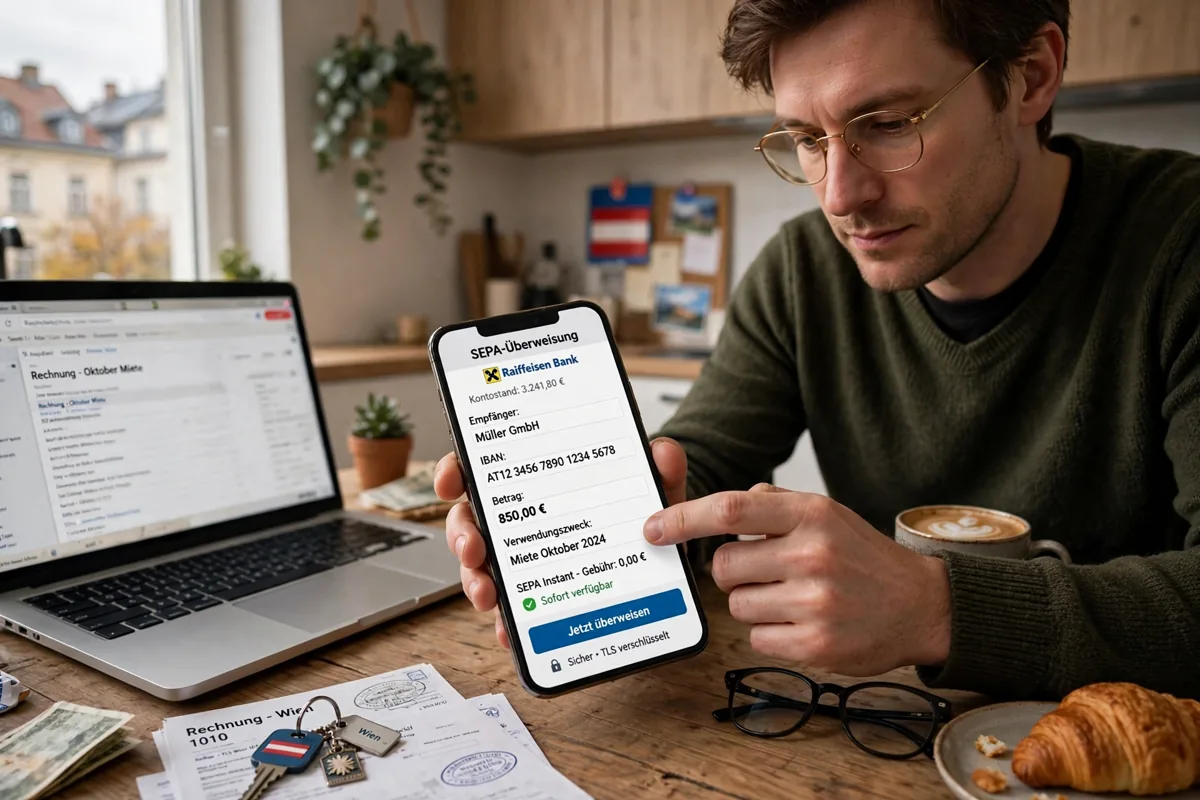
Step 4: Deposit euros by SEPA transfer
Send money from a bank account in your own name to the deposit details the platform shows you. SEPA deposits are free on Bitpanda, and standard transfers usually arrive within one business day.
SEPA Instant lands in minutes where your bank supports it, and cards cost extra, so SEPA wins for most people. Our walkthrough on how to buy Bitcoin with bank transfer explains bank funding in more detail.
Step 5: Open the BTC/EUR market
Find the Bitcoin market priced in euros, shown as BTC/EUR. You will usually see two ways to buy: a simple instant buy button, and a trading screen with the live order book.
The instant button is easy, but the standard Bitpanda app builds a premium near 0.99% into the price. The Fusion trading screen starts at 0.25%, so learn it on your first small buy while a mistake is still cheap.
Step 6: Enter your amount and confirm
Type the euro amount, not a coin amount. Before you confirm, check three numbers on the preview screen: the Bitcoin price, the fee, and the exact amount of Bitcoin you will receive.
At the 13 October 2026 price near EUR 74,258 per coin, a EUR 100 order buys about 0.00135 BTC before fees. Prices move every second, so a tiny gap from the headline price is normal and a big one is not.
Step 7: Move bigger amounts to your own wallet
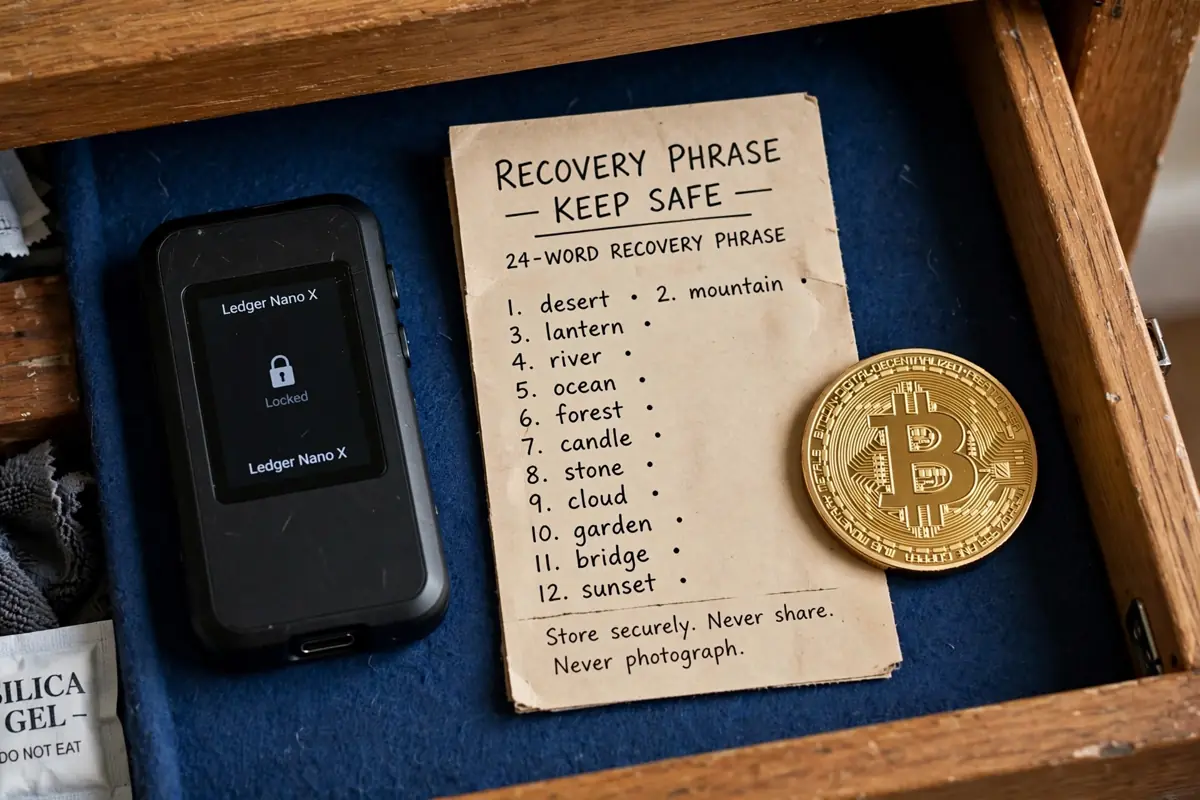
For a small learning amount, leaving Bitcoin on an authorised platform is common and practical. Once the value would hurt to lose, withdraw it to a wallet you control and write the recovery phrase on paper, offline.
Start with our picks for the best Bitcoin wallets for beginners, and for long term holdings read how to store Bitcoin offline for the long term. Send a tiny test withdrawal first and wait for it to arrive before you move the rest.
Bitpanda vs Kraken vs Bybit EU vs Bitstamp: which one fits you?
All four platforms serve Austrian users, price Bitcoin in euros, and hold MiCA authorisation through an EU regulator. The real differences are fee style, tax handling, and how much hand holding the app gives you.
Fee figures below are the published entry rates found in October 2026. Platforms change fees without much notice, so treat the preview screen at checkout as the final word.
| Platform | Best for | Trading cost | Euro deposit | Watch out for |
|---|---|---|---|---|
| Bitpanda | Most Austrians: Vienna based, German app, automatic tax withholding | Premium near 0.99% on standard buys, Fusion starts at 0.25% | Free by SEPA and SEPA Instant | The standard app costs about four times the Fusion rate |
| Kraken | Active traders who want low order book fees | Pro maker fees start near 0.16% in published comparisons | Free by SEPA and SEPA Instant | No Austrian KeSt withholding, so you report gains yourself |
| Bybit EU | Traders who want an Austria authorised platform with low entry fees | Spot entry tier near 0.25% | Free by SEPA and SEPA Instant | No Austrian KeSt withholding, and the app suits experienced users |
| Bitstamp | Conservative buyers who value a long track record | Entry rate near 0.30%, falling with volume | Free by SEPA | Smaller coin range than Bitpanda or Kraken |
Bitpanda lists hundreds of coins plus stocks, ETFs and metals in one account. Kraken lists hundreds of coins too and rewards active traders with its Pro screen.
Bybit EU holds its MiCA authorisation from the FMA itself, granted in May 2025. Bitstamp, founded in 2011, built its name on simple spot trading and a conservative style.
So which should a beginner choose?
Pick Bitpanda if you want the German app and zero tax paperwork, and use its Fusion screen to cut the fee. Pick Kraken if low fees matter most and you accept the yearly tax reporting work.
Pick Bybit EU or Bitstamp if you already know order books. Honestly, any authorised platform beats a stranger on social media who offers a better rate and zero protection.
How much does a first buy really cost?
Take a EUR 1,000 first buy at the 13 October 2026 price of about EUR 74,258 per Bitcoin. Before fees, that buys roughly 0.0135 BTC.
The fee then decides how much less lands in your account, and the chart below uses the published entry rates from the table above.
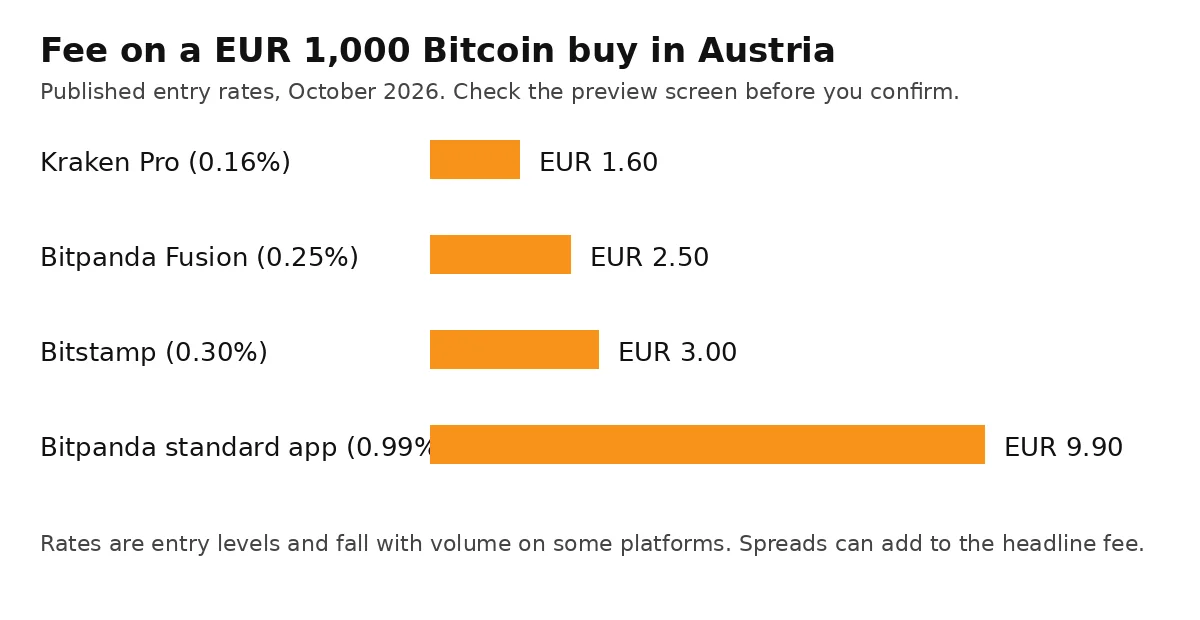
On Kraken Pro at 0.16%, the fee on EUR 1,000 is EUR 1.60. On Bitpanda Fusion at 0.25%, the same order costs EUR 2.50, and Bitstamp at 0.30% takes EUR 3.00.
The standard Bitpanda app at a 0.99% premium takes EUR 9.90 on that same buy. None of those amounts ruins anyone on a first buy, but the habit matters on bigger orders later.
After a withdrawal, you can check if your Bitcoin transaction is confirmed before you relax.
Bank apps, cash and P2P: what else works in Austria?
Some Austrians buy through their own bank. Raiffeisen banks in several regions offer Bitpanda access inside the Mein ELBA app, with trading from EUR 1 and recurring plans from EUR 10.
You still need a Raiffeisen account, the app, a separate Bitpanda registration, photo ID, Austrian residence, and age 18 or older. The friendly front end does not remove the regulated sign up behind it.
Bitcoin ATMs also operate in Austrian cities, and they sell small amounts for cash after a phone or ID check. Their fees run far above exchange fees, so treat an ATM as a costly convenience, never as your main route.
Peer to peer markets exist too, and escrow protects you only inside the platform. The moment a seller asks you to chat or pay outside the app, the protection disappears, so treat that request as the end of the deal.
Three red flags that end any deal
Walk away if a seller promises fixed monthly returns, because no honest platform can promise that. Walk away if anyone asks for your recovery phrase or a photo of your ID outside the app verification flow.
And walk away if a deal only works today and the seller rushes you. Pressure is the oldest trick in this market.
Common mistakes Austrian beginners make
Most first losses in Austria have little to do with the Bitcoin price. They come from the expensive buy button, unauthorised platforms, and missing tax records.
Three mistakes show up again and again.
Paying the standard premium by habit
The standard Bitpanda app builds a premium near 0.99% into Bitcoin buys, and Fusion starts at 0.25%. On a EUR 10,000 buy, that gap is about EUR 99 against EUR 25.
Learn the trading screen once, on a small order, and you keep that saving on every buy after it.
Skipping the authorisation check
Authorised platforms verify your identity, follow EU anti money laundering rules, and answer to a regulator. A copycat app with a similar name does none of that.
Checking the ESMA and FMA registers takes one minute. Skipping that minute is how people send euros to a platform that vanishes in a month.
Ignoring tax records until the letter arrives
Austrian providers withhold the 27.5% KeSt for you, and foreign platforms do not. If you mix both, only your own records show the full picture, and the new reporting law means the tax office sees platform data too.
Save every trade receipt, date and euro amount from day one. Read how to store Bitcoin safely as well, and never type your recovery phrase into any website, including a site that claims to be support.
Frequently Asked Questions
Is it legal to buy Bitcoin in Austria?
Yes. Buying, holding and selling Bitcoin is legal in Austria, platforms that serve Austrians need MiCA authorisation, the FMA supervises Austrian providers, and Bitcoin is not legal tender, so nobody has to accept it as payment.
What is the minimum amount I need to buy Bitcoin in Austria?
You can start with very little. Raiffeisen customers can start trading from EUR 1 through the Mein ELBA route and set recurring plans from EUR 10, while one full Bitcoin traded near EUR 74,258 on 13 October 2026.
Which exchange is cheapest for buying Bitcoin in Austria?
On the published entry rates in this guide, Kraken Pro starts near 0.16%, Bitpanda Fusion starts at 0.25%, and Bitstamp starts near 0.30%. The standard Bitpanda app charges a premium near 0.99% on Bitcoin buys, so the trading screen matters more than the brand.
Do I need ID verification to buy Bitcoin in Austria?
Yes. Authorised platforms must verify your identity under anti money laundering rules, so you will need photo ID such as a Personalausweis or Reisepass, plus a video, selfie or liveness check, and most accounts clear in about 5 to 15 minutes when the photos are sharp.
Do I pay tax on Bitcoin in Austria?
Buying Bitcoin creates no tax bill by itself. Austria taxes crypto gains at a flat 27.5% KeSt with no holding period exemption, Austrian providers such as Bitpanda withhold it automatically since 1 January 2024, and foreign platforms do not withhold it, so you report those gains yourself.
Conclusion
Learning how to buy Bitcoin in Austria comes down to three habits: use a MiCA authorised platform, fund it by free SEPA transfer from your own bank account, and use the trading screen instead of the pricey standard buy button. Bitpanda, Kraken, Bybit EU and Bitstamp all do the job.
They differ on fees and tax handling, not on the basic path.
Your next step: open one account today, finish the identity check, and send a small test deposit before you buy anything. Start small, check every number twice, and let the first buy teach you the screens while the stakes are low.