



BlackRock filed the blackrock pbit bitcoin etf paperwork with the US Securities and Exchange Commission on October 19, 2026. The proposed fund, the iShares Bitcoin Managed Protect ETF with the proposed ticker PBIT, aims to cap the loss on each options tranche near 10 percent while it gives up part of the upside.
Most early reports stopped at the words downside protection. This article reads the filing itself, works the tranche math in plain numbers, and shows exactly where the protection ends.

Key takeaways
- BlackRock filed the PBIT registration statement on October 19, 2026. A registration is not an approval, and the fund does not trade yet.
- PBIT holds no Bitcoin and no Bitcoin products directly. It buys call option spreads linked to IBIT and holds short-term fixed income.
- Purchased options sit near 90 percent of the reference value when a tranche starts. That sets an initial maximum loss exposure of about 10 percent for that one tranche, before fees and expenses.
- The filing says plainly that this is not a guaranteed loss floor for the whole fund. Investors could still lose some or all of their money.
- Bitcoin traded near $82,000 on the morning of October 20. US spot Bitcoin ETFs also posted a second straight week of outflows, about $229 million last week per SoSoValue.
What BlackRock Actually Filed for PBIT
BlackRock filed a registration statement for an actively managed fund, not a simple spot product. You can compare it with the plain spot route in our guide to what Bitcoin ETF approval means for investors.
- What BlackRock Actually Filed for PBIT
- How the 10 Percent Buffer Works, in the Filing’s Own Terms
- Our Scenario Table: One Tranche at Five Price Moves
- PBIT Against IBIT and BITA: BlackRock’s Three Bitcoin Bets
- Why This Filing Lands Right Now
- The Risks and Open Questions Before Anyone Buys
- FAQs
- What is the BlackRock PBIT Bitcoin ETF?
- Does PBIT hold Bitcoin?
- Does PBIT guarantee you cannot lose more than 10 percent?
- How much does PBIT cost and when does it launch?
- How is PBIT different from IBIT and BITA?
- Conclusion
The fund seeks upside exposure to the iShares Bitcoin Trust ETF, known as IBIT, and similar Bitcoin exposure up to an approximate limit. At the same time, it seeks a level of downside protection for nervous buyers.
The Fund Holds No Bitcoin at All
The prospectus structure uses options and fixed income instead of coins. PBIT buys call options linked to IBIT and sells call options at higher prices to help pay for them.
The rest of the money sits in cash equivalents and money market instruments. It also sits in short-term government obligations and investment-grade securities, and that fixed income earns interest that helps cover option costs.
A Filing Is Not a Launch
The registration carries a proposed 75-day effectiveness period, and the SEC can still ask for changes. BlackRock has not disclosed the management fee or a launch date.

So nobody can buy PBIT today. Any site that lists a PBIT price or a PBIT fee right now is guessing.
How the 10 Percent Buffer Works, in the Filing’s Own Terms
The filing says purchased options generally carry strike prices near 90 percent of the reference asset value when staff set a tranche. That one line creates the headline number.
If the reference sits at 100 and the purchased call sits at 90, the tranche starts with about 10 points of loss exposure. Fees and expenses come on top of that, and the filing calls this an initial maximum loss exposure for the individual tranche only.
Three Tranches, Three Different Start Lines
BlackRock plans three overlapping options tranches. Staff generally start a new tranche each month as an older one expires.
Each tranche starts at a different market level, so each one carries a different strike and a different cap. Two investors who buy PBIT a month apart can therefore hold funds with different protection levels on the day they buy.
Why the Sold Call Caps Your Gain
Selling a call at a higher strike brings in cash that pays for the purchased call. That same sale hands away gains above the higher strike.
The filing does not set one fixed upside cap for the fund. The cap changes with each tranche, with market prices, and with volatility at the time staff set the tranche.

Our Scenario Table: One Tranche at Five Price Moves
No early brief worked the numbers, so we built this simple illustration from the mechanics the filing states. It follows one tranche with the reference asset starting at 100, and it shows direction, not a promise.
Treat every row as a teaching model at expiry, before fees and expenses. Real results will differ because the fund holds three tranches at once and managers can adjust positions.
| IBIT move | What the illustration shows for one tranche | Plain meaning |
|---|---|---|
| Falls 30 percent | The loss stops near the stated 10 percent tranche exposure in this simple model. | The buffer does its job for that tranche. |
| Falls 10 percent | The loss approaches the stated maximum for the tranche. | You still lose real money on a bad month. |
| Stays flat | The tranche shows little change before option costs and fees. | A flat market still costs you something. |
| Rises 10 percent | The tranche gains, and the sold upper call starts to limit extra gains. | You keep part of the rise, not all of it. |
| Rises 30 percent | The gain stops at the cap the sold call sets for that tranche. | IBIT holders keep the full rise. PBIT holders do not. |
The Warning the Filing Prints in Plain Sight
The prospectus warns that the fund gives no fixed protection floor and no fixed upside cap. It also warns that shareholders could lose some or all of their money.
Market moves between tranche dates can change outcomes a lot. An investor who buys after a sharp fall may hold tranches struck at low levels, while an earlier buyer holds very different ones.
PBIT Against IBIT and BITA: BlackRock’s Three Bitcoin Bets
PBIT is BlackRock’s third Bitcoin ETF filing, a point Bloomberg Intelligence analyst James Seyffart noted on X on October 19. He added that BlackRock still offers only Bitcoin and Ethereum products, while rivals chase other coins.
IBIT launched in January 2024 and holds more than $65 billion in assets, which makes it the largest fund of its kind. BlackRock’s digital asset ETF assets reached about $80 billion in the third quarter of 2026, and our earlier report on IBIT’s record monthly inflow day shows how fast that money can move.
| Fund | Status | How it gets Bitcoin exposure | Upside | Downside |
|---|---|---|---|---|
| IBIT | Trading since January 2024, over $65 billion in assets | Holds Bitcoin through the trust | Full price rise | Full price fall |
| BITA, Bitcoin Premium Income | Launched June 2026 | IBIT exposure plus sold call options for monthly income | Gives up part of the rise to fund income | Full fall, softened only by income |
| PBIT, Managed Protect | Filed October 19, 2026, not trading, fee not disclosed | Call option spreads linked to IBIT plus short-term fixed income, no Bitcoin held directly | Capped at the sold call strike of each tranche | Buffered near 10 percent per tranche at setup, not guaranteed for the fund |
Which Buyer Each Fund Suits
IBIT suits a buyer who wants the raw price and accepts the raw fall. Our coverage of Bitcoin ETF inflows at the start of October shows that most buyers still pick that raw route.
PBIT targets a different person. It targets the buyer who wants Bitcoin in a portfolio but cannot defend a 30 percent drop to a family, a boss, or an investment committee.
Why This Filing Lands Right Now
Bitcoin traded near $82,000 on the morning of October 20, 2026, and it has chopped sideways rather than run. That kind of market scares new buyers more than a clean crash does.
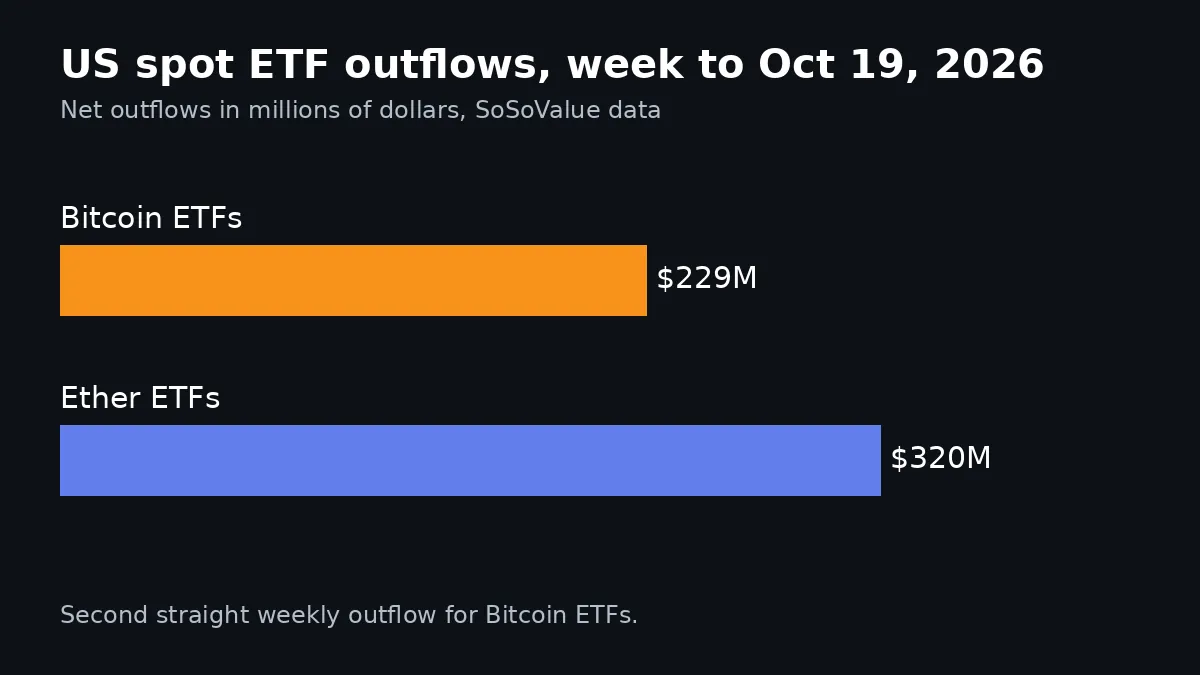
US spot Bitcoin ETFs posted about $229 million in net outflows last week, a second straight weekly loss per SoSoValue. Ether ETFs lost about $320 million in the same week, and you can see the recent flow pattern in the September inflow record that came just before this reversal.
A Product Built for the Nervous Buyer
A buffered fund answers the exact fear that drives outflows. It lets an adviser offer Bitcoin exposure with a stated loss plan, even though that plan has limits.
It also widens BlackRock’s shelf without touching a new coin. If you want the long view on price instead, our Bitcoin price prediction for 2026 compares the main year-end targets, and our explainer on what Bitcoin is and how it works covers the basics for new readers.
The Risks and Open Questions Before Anyone Buys
The fee matters more here than it does for a spot fund. Options cost money every month, fixed income earns only a little, and an undisclosed fee will decide how much return the buffer eats.
The cap matters just as much. A low cap in a strong rally would leave PBIT far behind IBIT, and buyers often feel that pain more than they value the buffer.
Common Mistakes Readers Will Make With PBIT
The biggest mistake is treating 10 percent as a promise. The filing ties that number to one tranche at setup, before fees, and it refuses to guarantee it for the whole fund.
The second mistake is buying on day one without checking the live strikes. Your outcome depends on the tranches already inside the fund on the day your money goes in.
FAQs
Readers keep asking the same five questions about this filing. We answer each one from the prospectus terms and the facts BlackRock has published so far.
What is the BlackRock PBIT Bitcoin ETF?
PBIT is the proposed ticker for the iShares Bitcoin Managed Protect ETF. BlackRock filed its registration statement with the SEC on October 19, 2026, and the fund does not trade yet.
Does PBIT hold Bitcoin?
No. The filing says PBIT holds no Bitcoin and no Bitcoin products directly, and it gains exposure through call option spreads linked to IBIT plus short-term fixed income.
Does PBIT guarantee you cannot lose more than 10 percent?
No. The roughly 10 percent figure is the initial maximum loss exposure of one tranche before fees and expenses, and the prospectus says it is not a guaranteed loss floor for the whole fund.
How much does PBIT cost and when does it launch?
BlackRock has not disclosed the fee yet. The filing is a registration with a proposed 75-day effectiveness period, so no launch date is set and trading still needs the SEC process to finish.
How is PBIT different from IBIT and BITA?
IBIT tracks the Bitcoin price directly. BITA sells IBIT calls to create monthly income and gives up some upside, while PBIT uses call spreads to buffer losses and caps gains.
Conclusion
The blackrock pbit bitcoin etf filing shows BlackRock packaging Bitcoin for buyers who fear the fall more than they love the rise. The mechanics are real, the 90 percent strike and the three tranches sit in the filing, and so does the warning that nobody guarantees your loss.
Watch two things next: the fee, and the first live tranche strikes if the fund reaches the market. Until BlackRock publishes both, PBIT is a smart idea on paper, not a product you can judge by results.