



Strategy buys back STRC for $192.4 million in one week, and it buys only $21.5 million of Bitcoin in the same week. The October 12 filing shows a clear shift: the company now spends almost nine times more on its own preferred shares than on new Bitcoin.
That shift does not mean Strategy stopped buying Bitcoin. It still added 250 BTC and lifted its stack to 848,250 BTC, so readers need the full filing to read this story right.

Key takeaways
- Strategy spent $192.4 million buying back 1,932,145 STRC shares at an average of $99.69 between October 5 and October 11.
- The company bought 250 BTC for $21.5 million at an average of $86,194, its smallest Bitcoin buy of 2026.
- Holdings now stand at 848,250 BTC, bought for $64.00 billion at an average of $75,444 per coin.
- Our math shows the buyback retires about $193.2 million of stated value and cuts about $23.2 million a year in dividend payments at the current 12% rate.
- Strategy holds $4.88 billion in its USD Reserve and $640.5 million in USD Cash, about $5.5 billion in total.
What the October 12 Filing Actually Shows
Strategy filed its update on October 12 and covered activity from October 5 to October 11. The company split the update into four parts: share sales, Bitcoin holdings, buybacks, and its dollar balances.
- What the October 12 Filing Actually Shows
- How STRC Works, in Plain Words
- Why Buying Back STRC Below $100 Makes Math Sense
- The Bitcoin Buy Was the Smallest of 2026
- The $5.5 Billion Dollar Cushion Behind the Move
- What This Means for Bitcoin and MSTR Holders
- Common Mistakes Readers Make With This Headline
- Frequently Asked Questions
- How much did Strategy spend buying back STRC?
- How much Bitcoin did Strategy buy in the same week?
- How much Bitcoin does Strategy hold now?
- Why does Strategy buy back STRC below $100?
- How much money does Strategy hold in dollars?
- Conclusion
Michael Saylor summed up the week in one short post on X on October 12. He confirmed the 250 BTC buy, the $192 million STRC buyback, the 848,250 BTC stack, and the $5.5 billion of dollar assets.
The two spends, side by side
The table below uses only the filing numbers. It shows why this week looks so different from a normal Strategy buying week.
| Item | Amount | Detail |
|---|---|---|
| STRC buyback | $192.4 million | 1,932,145 shares at an average of $99.69 |
| Bitcoin buy | $21.5 million | 250 BTC at an average of $86,194 |
| Total of both | $213.9 million | STRC took about 90% of the two spends |
| Ratio | About 8.9 to 1 | STRC spend divided by Bitcoin spend |
The company sold no preferred shares that week. It funded the Bitcoin buy mainly by selling its own common stock, a point the next sections explain.
How STRC Works, in Plain Words
STRC is a preferred share, so its holders stand ahead of common stock holders when the company pays dividends. Holders collect a steady dividend, but they cannot convert their shares into MSTR common stock.

Strategy sets the STRC dividend rate each month, and it held the rate at 12% for October. The rate can move up or down, so holders trade a fixed claim for a rate that the company controls.
Why Buying Back STRC Below $100 Makes Math Sense
STRC is a preferred share with a $100 stated value, and Strategy pays a 12% yearly dividend rate on it right now. A share that trades below $100 still carries dividend payments based on that $100 value.
So a buyback below $100 does two jobs at once. It supports the share price near $100, and it retires future dividend payments at a small discount.
Our dividend saving calculation, step by step
We built this calculation from the filing numbers, and no other report in our research published it in this form. Strategy paid an average of $99.69, so it saved about $0.31 on each of the 1,932,145 shares, or roughly $599,000 against stated value.
The bigger saving comes from dividends. At $12 a year per share, the retired shares remove about $23.2 million in yearly dividend payments, as long as the 12% rate would have stayed in place.
That math explains the priority order in the filing. Each buyback dollar lowers a fixed yearly cost, while each Bitcoin dollar adds an asset that pays nothing until the price rises.
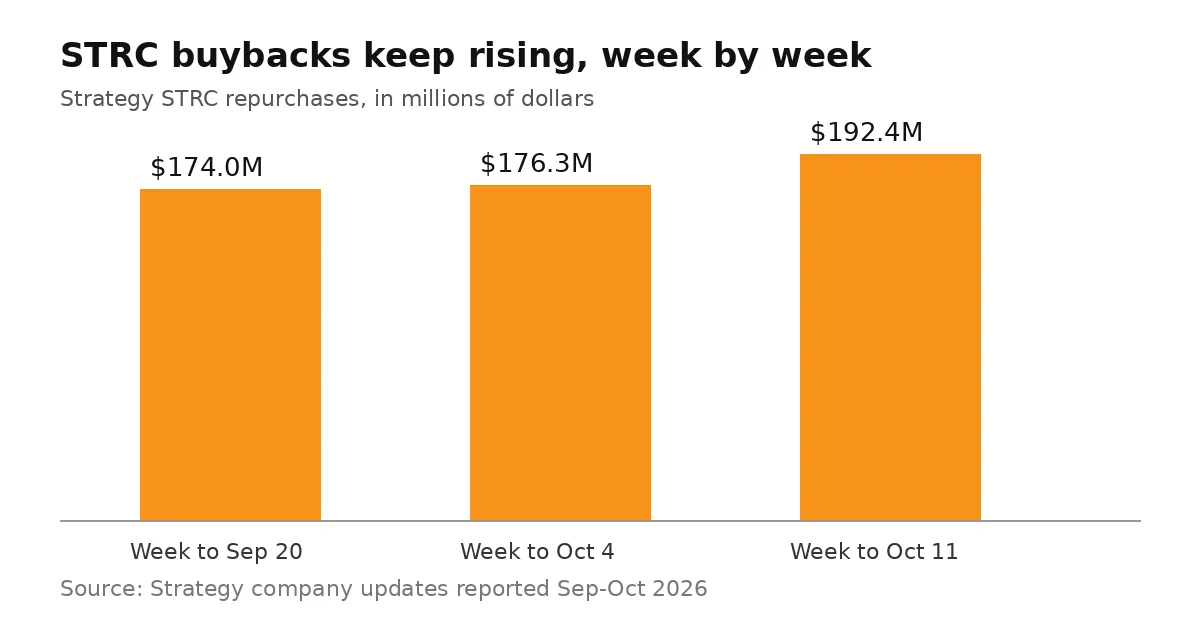
The chart below shows this was not a one week choice. STRC buybacks rose from $174 million in the week to September 20, to $176.3 million in the week to October 4, and then to $192.4 million this week.
The Bitcoin Buy Was the Smallest of 2026
The company bought 250 BTC at an average of $86,194, and reports called it the smallest Bitcoin buy of 2026 for Strategy. One report also ranked it among the smallest weekly buys in the company history as a Bitcoin treasury firm.
Funding tells the same careful story. Strategy sold 125,183 MSTR common shares for $21.0 million and used $0.5 million from USD Cash to complete the $21.5 million buy.
Where the full stack stands now
Holdings reached 848,250 BTC on October 11. Strategy paid $64.00 billion for that stack, which works out to an average of $75,444 per coin including fees.
The stack equals about 4% of the fixed 21 million Bitcoin supply. Our earlier report on Strategy holding 848,000 BTC after its third quarter gain showed weekly buying already slowing before this filing.
The slowdown also fits the last big buy we covered. In late September, Strategy bought 1,665 BTC for $142.7 million, a spend more than six times the size of this week buy.
The $5.5 Billion Dollar Cushion Behind the Move
Strategy keeps two dollar piles, and the filing treats them very differently. The USD Reserve held $4.88 billion, and USD Cash held $640.5 million, for a combined total of about $5.5 billion.
The reserve exists to pay preferred stock dividends and interest on company debt. Company policy aims to keep at least 12 months of those payments covered, and a drop below that level needs board approval.

How much buyback room remains
The filing leaves $354.8 million of capacity under the digital credit buyback program. A separate $1.0 billion of capacity remains under the MSTR common stock buyback program.
That remaining room matters for next week. Strategy can keep buying back STRC at this pace for a while, but the pace will eat the $354.8 million capacity fast if it stays near $192 million a week.
What This Means for Bitcoin and MSTR Holders
A small buy is not a sale, and this filing shows no Bitcoin leaving the stack. The stack grew, the reserve stayed large, and the company cut a yearly cost at the same time.
Market timing still shapes the mood around the stock. Bitcoin slid hard this week, as our report on Bitcoin falling below $82,000 after long liquidations explains, and MSTR traded near $152 in the latest finance data with a market value near $65 billion.
At a Bitcoin price near $83,100 on October 12, the 848,250 BTC stack was worth about $70.5 billion. That value sits above the $64.00 billion cost, but a few weak days can shrink that gap fast.
Rate news can move both assets in the same hour. Our explainer on how Fed rate hike fears move Bitcoin shows why treasury firms feel macro moves twice, once in Bitcoin and once in their own shares.
Forecasts still treat Strategy as a leveraged Bitcoin bet. Readers who want the wider price picture can compare this filing with our Bitcoin price prediction for 2026 and its year end targets.
Fund flows add one more signal. Our coverage of September Bitcoin ETF inflows shows big buyers still added Bitcoin through funds, even as Strategy slowed its own direct buys.
Common Mistakes Readers Make With This Headline
The first mistake is reading the buyback as a bearish Bitcoin call. The filing shows capital management, not an exit, and the company still spent $21.5 million on new Bitcoin.
The second mistake is treating the $5.5 billion as free buying cash. Most of it sits in a reserve with a clear job, paying dividends and interest through rough markets.
The third mistake is treating the $99 to $100 STRC goal as a promise. Company materials call that range a target, not a price guarantee, and the policy can change.
Frequently Asked Questions
Readers asked the same questions after the filing landed. The short answers below use only the filing numbers and the verified context in this report.
How much did Strategy spend buying back STRC?
Strategy spent $192.4 million buying back 1,932,145 STRC shares between October 5 and October 11, at an average price of $99.69 per share.
How much Bitcoin did Strategy buy in the same week?
Strategy bought 250 BTC for $21.5 million at an average price of $86,194, and reports called it the company smallest Bitcoin buy of 2026.
How much Bitcoin does Strategy hold now?
Strategy holds 848,250 BTC as of October 11, bought for $64.00 billion at an average price of $75,444 per coin including fees.
Why does Strategy buy back STRC below $100?
Strategy buys back STRC below its $100 stated value to support the price near $100 and to retire future dividend payments at a discount.
How much money does Strategy hold in dollars?
Strategy holds $4.88 billion in its USD Reserve and $640.5 million in USD Cash, which gives it about $5.5 billion in total dollar assets.
Conclusion
Strategy buys back STRC because the math pays the company back every year in lower dividend costs. The $192.4 million buyback, not the $21.5 million Bitcoin buy, is the real story in this filing.
Watch two numbers next week. A STRC buyback near this size again would confirm the new priority, and a jump in the Bitcoin buy would show the balance swinging back.