

People have lost Bitcoin to hacks. To exchange collapses. To forgotten passwords. To phishing emails. To house fires. To relatives who did not know what a seed phrase was. The technology that enables you to store Bitcoin securely is also the technology that makes losing it permanent. There is no customer service line.
No fraud department. No chargeback. If your Bitcoin is gone, it is gone.

Storing Bitcoin safely is not complicated once you understand the principles. But those principles are not forgiving. This guide covers every serious method for storing Bitcoin in 2026, from a basic mobile wallet to an air-gapped multisig vault.
- Key Takeaways
- Why Storing Bitcoin Correctly Is the Most Critical Decision You Will Make
- How Bitcoin Wallets Actually Work: Keys, Seeds, and Addresses
- Public Keys, Private Keys, and Addresses
- Seed Phrases: The Master Key to Everything
- Custodial vs Non-Custodial Wallets
- 7 Proven Methods to Store Bitcoin Safely in 2026
- Method 1: Exchange Wallets (Custodial)
- Method 2: Mobile Software Wallets (Hot)
- Method 3: Desktop Software Wallets (Hot)
- Method 4: Hardware Wallets (Cold)
- Method 5: Paper Wallets (Cold)
- Method 6: Steel Seed Phrase Backups
- Method 7: Multisig Wallets
- Bitcoin Storage Methods Compared: The Complete 2026 Breakdown
- Seed Phrase Security: The Real Battlefield for Bitcoin Safety
- 5 Critical Threats to Bitcoin Storage and How to Defeat Them
- Threat 1: Exchange Collapse or Hack
- Threat 2: Phishing and Social Engineering
- Threat 3: Malware and Keyloggers
- Threat 4: Physical Theft
- Threat 5: Loss or Destruction of Your Device
- Advanced Bitcoin Security Practices for Serious Holders
- The Passphrase: Your 25th Word
- Running Your Own Bitcoin Node
- Using Coin Control
- Geographic Distribution of Keys
- Choosing the Right Bitcoin Storage Method for Your Situation
- Bitcoin Inheritance Planning: The Problem Most Holders Ignore
- How Institutions Store Bitcoin: What Individual Holders Can Learn
- Bitcoin-Specific Software Wallets Worth Knowing
- Frequently Asked Questions About Storing Bitcoin
- What is the safest way to store Bitcoin?
- Can Bitcoin stored in a hardware wallet be hacked?
- What happens if I lose my hardware wallet?
- Is it safe to store Bitcoin on Coinbase or Binance?
- How many seed phrase copies should I have?
- What is a passphrase and should I use one?
- Can I store Bitcoin and other cryptocurrencies in the same wallet?
- What is multisig and do I need it?
- Store Your Bitcoin Like You Mean to Keep It
It explains what each method protects against, what it does not, and which approach fits which situation. Whether you hold $100 or $100,000 in BTC, the right storage decision is the most important one you will make as a Bitcoin holder.
Key Takeaways
| Principle | Why It Matters |
| Not your keys, not your coins | If an exchange holds your Bitcoin, you hold an IOU. The FTX collapse proved this costs billions. |
| The threat determines the storage method | Online threats need cold storage. Physical threats need geographic redundancy. Both need proper backups. |
| Hardware wallets are the gold standard for most holders | Ledger and Trezor store keys in a secure chip offline. They cost $59 to $149 and protect against almost all remote attacks. |
| Seed phrase security is the real vulnerability | The most secure hardware wallet is worthless if your 12 or 24-word seed phrase is stored in a photo on your phone. |
| Paper wallets are largely obsolete in 2026 | Fragile, single-use, and easy to destroy. Hardware wallets solve the same problem with better recovery options. |
| Multisig is the serious standard for large holdings | Requiring multiple keys to authorise a transaction eliminates single points of failure completely. |
| Never buy hardware wallets from third parties | Compromised devices have been shipped to victims pre-loaded with malware. Buy direct from manufacturers only. |
Why Storing Bitcoin Correctly Is the Most Critical Decision You Will Make
The losses are not theoretical. Mt. Gox, the first major Bitcoin exchange, was hacked in 2014. Approximately 850,000 BTC belonging to customers disappeared.
A decade later, creditors were still receiving partial repayments. FTX collapsed in November 2022, leaving an estimated $8 billion in customer funds inaccessible. Bybit was hacked for $1.5 billion in February 2025, the largest single crypto theft in history.
BitConnect, QuadrigaCX, Celsius, Voyager, and BlockFi all resulted in customers losing access to Bitcoin they believed was safe.

Every single one of those losses had one thing in common: the victim did not control their own private keys. They trusted a third party. That third party failed. The lesson is not that Bitcoin is unsafe. It is that Bitcoin held by someone else is only as safe as that someone else.
Understanding what Bitcoin is and how it works at a fundamental level makes the importance of self-custody immediately obvious. Bitcoin exists on the blockchain as entries in a public ledger.
Your wallet does not hold Bitcoin. It holds the private key that authorises spending from your address. Whoever holds the private key controls the Bitcoin. Full stop.
How Bitcoin Wallets Actually Work: Keys, Seeds, and Addresses
Before choosing a storage method, understanding the mechanics eliminates a lot of confusion. Most people misunderstand what a Bitcoin wallet is and what it actually does.
Public Keys, Private Keys, and Addresses
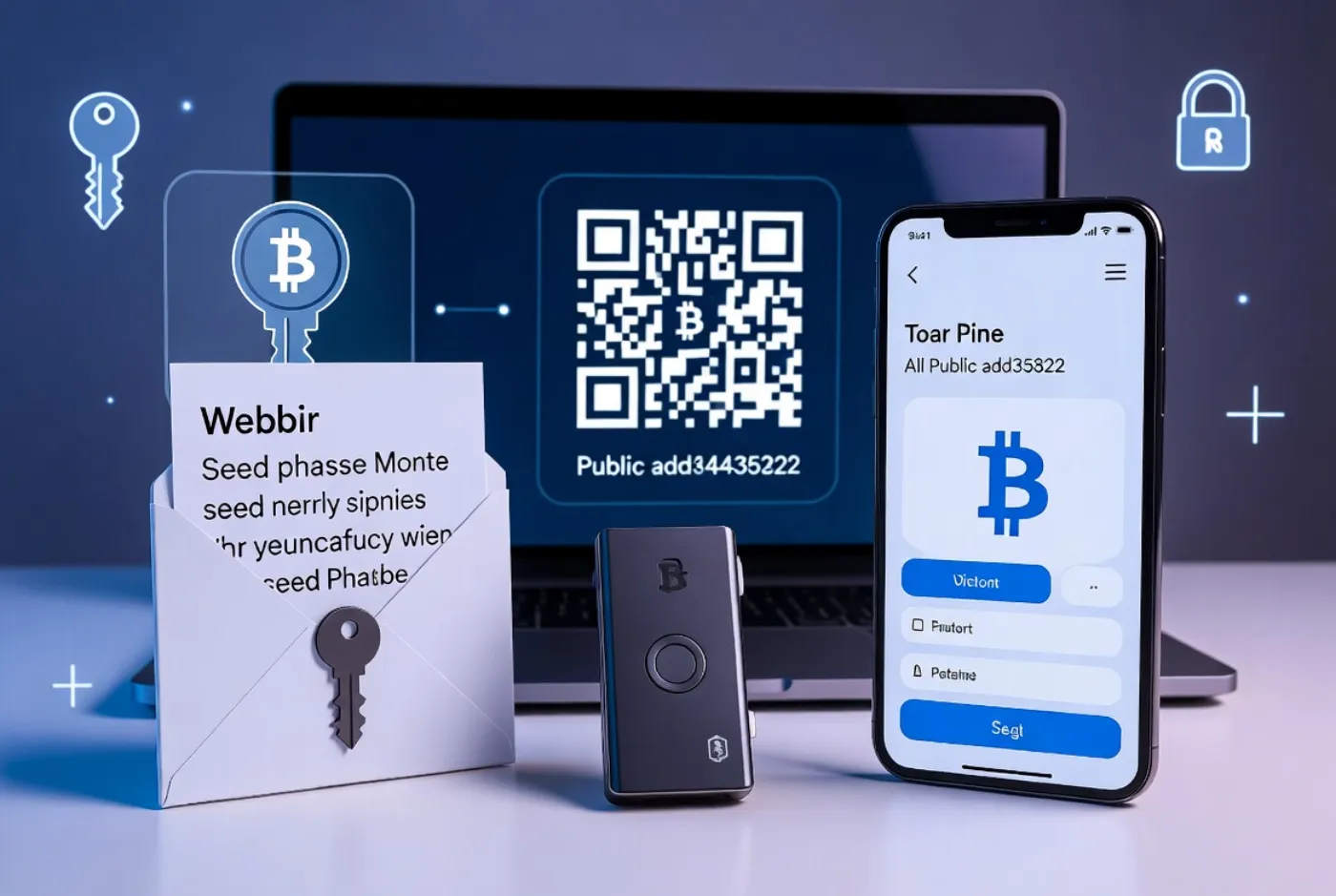
A Bitcoin wallet generates a cryptographic key pair: a public key and a private key. The public key is transformed into a Bitcoin address, which you share freely to receive funds.
The private key is the secret that authorises spending from that address. Anyone who holds your private key can spend every Bitcoin at that address.
Anyone who knows your Bitcoin address can see your balance and transaction history but cannot spend your funds without the private key.
Think of it this way: your Bitcoin address is a locked letterbox slot. Anyone can drop funds in. Only the private key opens it.
The blockchain is the permanent public record of what is in every letterbox on earth. Your wallet is the key, not the letterbox itself.
Seed Phrases: The Master Key to Everything
When you set up a modern Bitcoin wallet, it generates a seed phrase of either 12 or 24 random words. This seed phrase is the master key from which all your wallet’s private keys are mathematically derived.
Lose the seed phrase and lose the wallet device, and your Bitcoin is permanently inaccessible. Have the seed phrase and lose the device, and you can restore full access to your funds on any compatible wallet.
This is the single most important concept in Bitcoin storage. The seed phrase is everything. Hardware wallet, paper wallet, software wallet, any wallet: the security of your Bitcoin ultimately reduces to the security of your seed phrase. Every decision in this guide flows from that reality.
To understand the broader blockchain mechanics that underpin this system, our dedicated guide covers the technology in full detail.
Custodial vs Non-Custodial Wallets
A custodial wallet is one where a third party holds your private keys on your behalf. Every exchange wallet is custodial. Coinbase holds your keys.
Binance holds your keys. When you hold Bitcoin on an exchange, you hold a balance in the exchange’s system, not Bitcoin on the blockchain.
If the exchange freezes withdrawals, you cannot access your Bitcoin regardless of what your account says.
A non-custodial wallet puts your private keys entirely under your control. Nobody else can access or freeze your funds. The trade-off is complete personal responsibility.
There is no recovery if you lose your seed phrase. The best decentralized crypto wallets all operate on this non-custodial principle.
7 Proven Methods to Store Bitcoin Safely in 2026
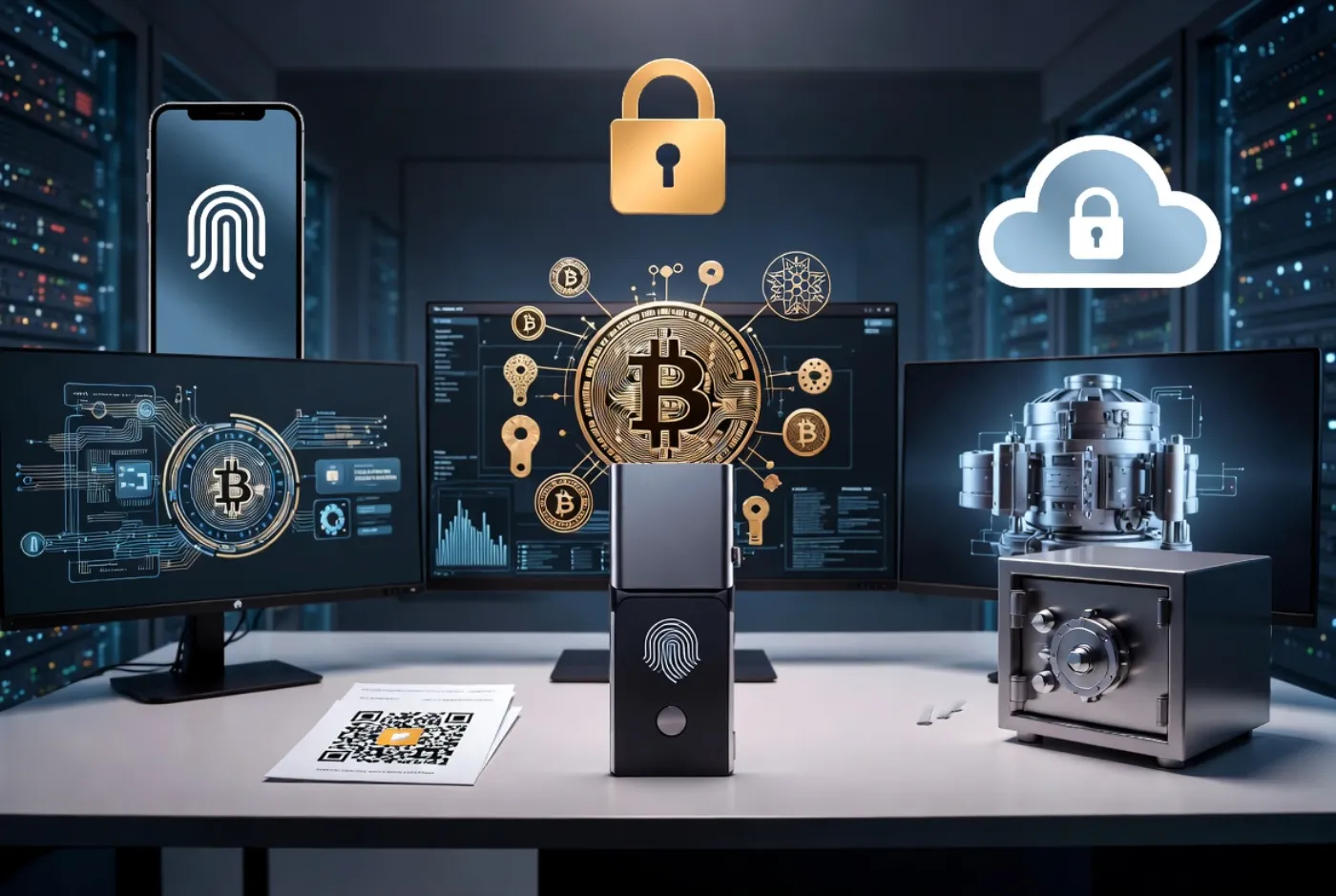
The right storage method depends on three variables: how much Bitcoin you are storing, how frequently you need to access it, and what your primary threat model is.
This section covers every serious option from least to most secure, with honest assessments of each.
Method 1: Exchange Wallets (Custodial)
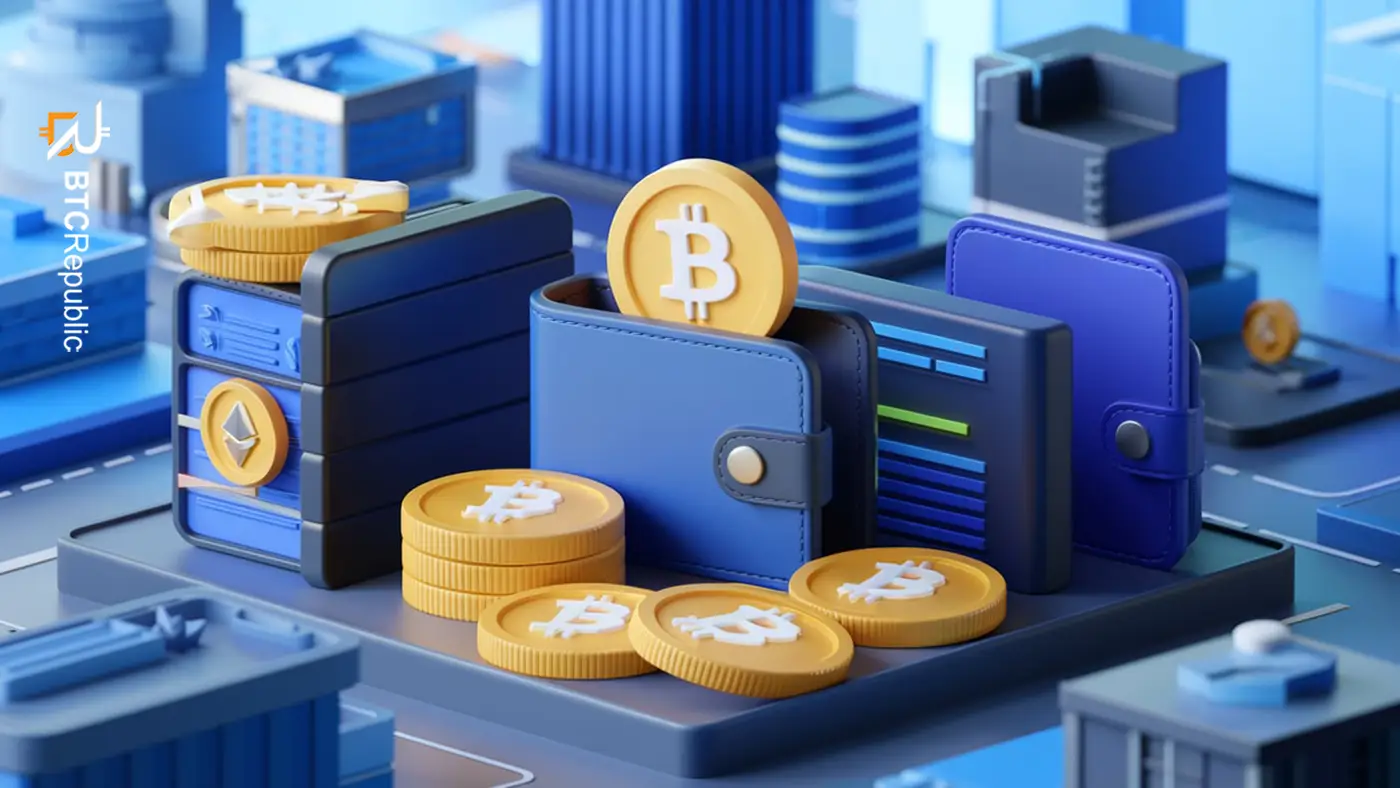
Storing Bitcoin on an exchange is the most convenient option and the most dangerous for any amount you plan to hold long-term. Exchanges are custodians.
They hold your keys. Every exchange in the list of major collapses over the past decade was once considered trustworthy.
- Who this suits: Active traders who need to execute quickly and hold small balances relative to their total holdings. Not suitable for long-term storage of any significant amount.
- Risk profile: Exchange hack, exchange insolvency, regulatory seizure, withdrawal freeze, phishing of your account credentials. All have precedent.
- The rule: Only leave on an exchange what you can afford to lose entirely or need for imminent trading. Everything else moves to self-custody.
Method 2: Mobile Software Wallets (Hot)

Mobile wallets are non-custodial software applications that store your private keys on your smartphone. You control the keys.
The wallet is connected to the internet. Popular options include Trust Wallet, BlueWallet, and Muun Wallet. They are free, instant to set up, and ideal for small amounts used for regular payments or purchases.
- Who this suits: People using Bitcoin for payments, sending small amounts, or getting started with self-custody for the first time.
- Risk profile: Phone theft or loss, malware, phishing, SIM-swap attacks. For amounts up to a few hundred dollars, this risk is acceptable. For larger amounts, it is not.
- The rule: Treat a mobile wallet like a physical wallet. Do not keep more in it than you would carry in cash.
Method 3: Desktop Software Wallets (Hot)

Desktop wallets store your private keys on your computer. Electrum is the most established Bitcoin-specific desktop wallet, with active development since 2011.
Sparrow Wallet is the modern alternative, with excellent privacy features, coin control, and compatibility with hardware wallets for transaction signing.
Desktop wallets offer more features and control than mobile wallets but are only as secure as the computer they run on.
- Who this suits: Bitcoin users who want full control, coin control features, privacy tools, or who run their own Bitcoin node.
- Risk profile: Computer malware, ransomware, keyloggers, and the general attack surface of any internet-connected device. Sparrow paired with a hardware wallet for signing is an excellent security model.
- The rule: If you use a desktop wallet for significant amounts, use it paired with a hardware wallet. The desktop wallet handles the interface. The hardware wallet handles the signing.
Method 4: Hardware Wallets (Cold)
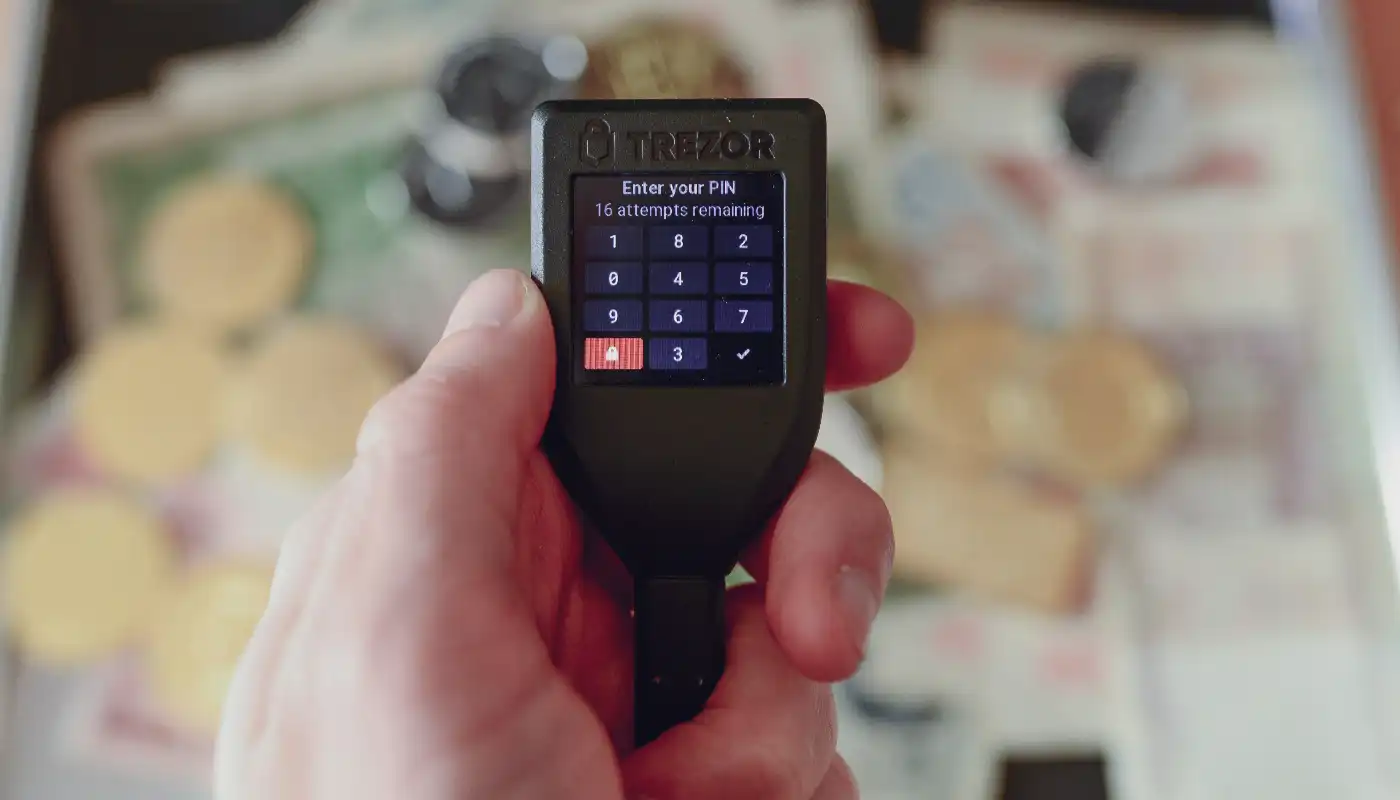
Hardware wallets are the gold standard for individual Bitcoin storage. They are physical devices that store your private keys in a secure element chip that never exposes the keys to the internet or to the computer they connect to.
Transactions are signed inside the device. Your keys never leave the device. Even if your computer is infected with malware, a hardware wallet keeps your Bitcoin safe.
The two most established hardware wallet manufacturers are Ledger and Trezor. Ledger uses a proprietary Secure Element chip and has closed-source firmware.
Trezor uses open-source code, which allows independent security researchers to audit the code for vulnerabilities. Both are legitimate and widely used.
Trezor Safe 7 is the newest flagship from Trezor, notable for being the first hardware wallet to include quantum-resistant security features.
For Bitcoin maximalists who want a device built exclusively for BTC, Coldcard is the most security-hardened option available.
It supports air-gapped operation, advanced multisig configurations, and is the preferred device among serious Bitcoin security practitioners. It is not beginner-friendly but it is arguably the most secure consumer hardware wallet available.
| Device | Price | Security Chip | Open Source? | Bitcoin Only? | Best For |
| Ledger Nano X | ~$99 | EAL5+ Secure Element | Partial (firmware closed) | No | Multi-coin holders, beginners |
| Ledger Flex | ~$149 | EAL6+ Secure Element | Partial | No | Premium experience, larger touchscreen |
| Trezor Safe 3 | ~$59 | EAL6+ Secure Element | Yes (fully) | No (BTC model available) | Budget buyers, transparency-first |
| Trezor Safe 7 | ~$169 | EAL6+ Secure Element | Yes (fully) | No | Quantum-resistant security, future-proof |
| Coldcard Mk4 | ~$148 | EAL5+ Secure Element | Yes (fully) | Yes (Bitcoin only) | Advanced users, Bitcoin maximalists |
| BitBox02 | ~$99 | EAL6+ Secure Element | Yes (fully) | Yes (BTC model available) | Privacy-focused, minimalist design |
| Tangem | ~$54 (3-card set) | EAL6+ Secure Element | Partial | No | Seedless design, beginners, portability |
- Who this suits: Anyone holding Bitcoin worth more than a few hundred dollars for more than a few days.
- Risk profile: Physical theft of the device (funds still safe with seed phrase). Phishing campaigns targeting hardware wallet users (protect your seed phrase, not just the device). Supply chain attacks from unauthorised resellers (buy direct from manufacturers only, always).
- The rule: Always buy hardware wallets directly from the manufacturer or official authorised resellers. Never buy second-hand. Compromised devices pre-loaded with malware have been shipped to victims who bought from third-party marketplaces. This is not hypothetical. It has happened.
Method 5: Paper Wallets (Cold)
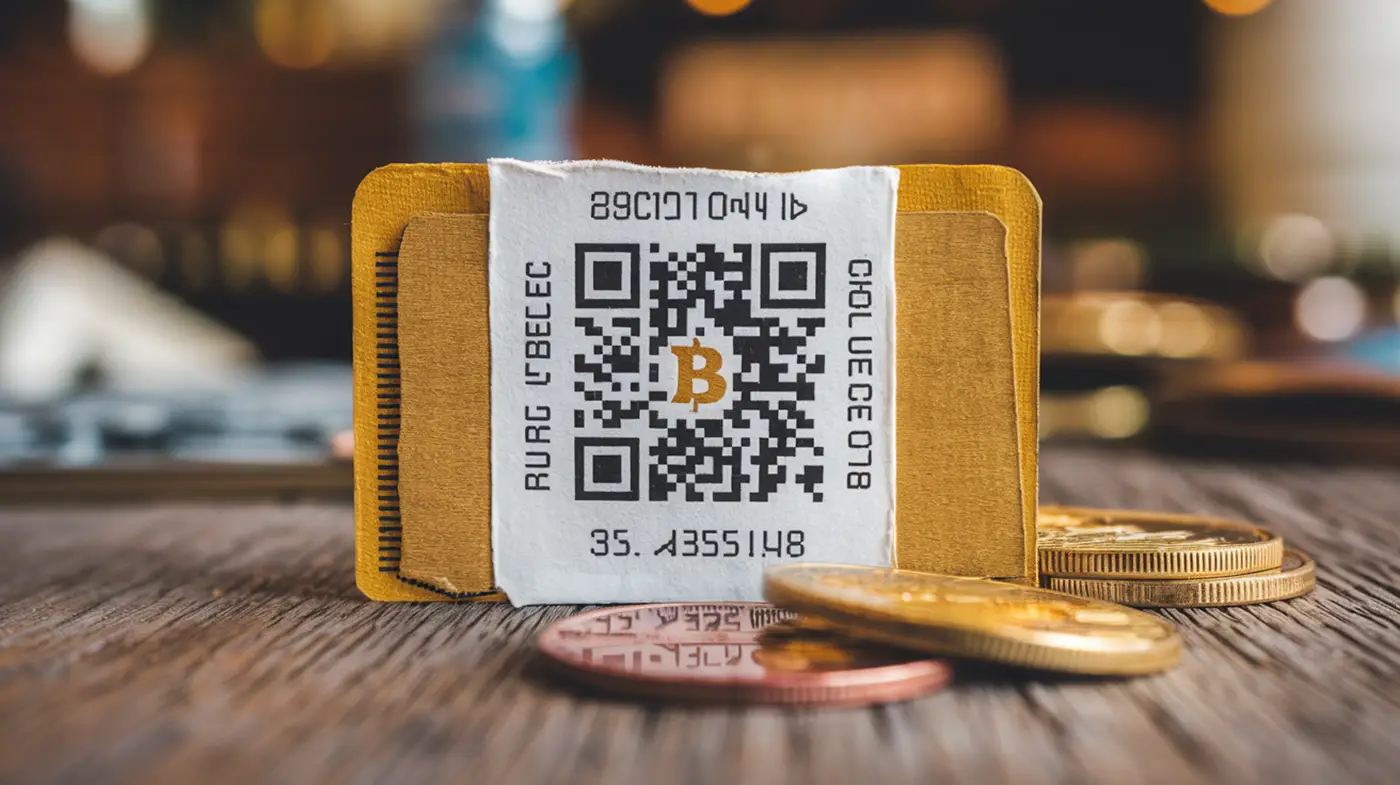
A paper wallet is a physical document containing your Bitcoin public address and private key, typically printed as QR codes. It costs nothing and stores keys completely offline.
It is also fragile, irreversible to spend from without careful process, and largely obsolete in 2026 now that affordable hardware wallets exist.
The specific problems with paper wallets: paper burns, fades, gets wet, and deteriorates over time. Printers often cache data digitally, which creates unexpected security exposure.
Spending from a paper wallet requires importing the private key into software, which momentarily exposes it. And unlike a hardware wallet, there is no second factor of authentication if someone finds the paper.
- Who this suits: Very long-term cold storage as a backup only, not a primary method. Consider steel or titanium seed phrase backups instead.
- The rule: If you generate a paper wallet, do it on an air-gapped computer that has never connected to the internet, using an offline tool. Store it in a fireproof, waterproof safe. Never reuse the address after spending from it.
Method 6: Steel Seed Phrase Backups

This is not a wallet itself but a critical upgrade for any storage method. Paper seed phrase backups are vulnerable to fire, water, and physical deterioration.
Steel or titanium seed phrase backup plates solve all three problems. Products like the Cryptosteel Capsule, Bilodeau Steel Wallet, and Keystone tablet allow you to stamp or engrave your 12 or 24-word seed phrase into metal that withstands fire temperatures exceeding 1,500 degrees Celsius.
For anyone using a hardware wallet to store meaningful amounts of Bitcoin, a metal seed phrase backup is not optional.
It is the essential companion that ensures your hardware wallet’s recovery capability survives house fires, floods, and anything else the physical world throws at it.
- Who this suits: Every hardware wallet user. Everyone. No exceptions.
- The rule: Store your steel backup in a separate physical location from your hardware wallet. If your home burns down and both are in it, you need neither to be accessible to lose everything.
Method 7: Multisig Wallets
Multisig, short for multi-signature, requires multiple private keys to authorise a transaction. A standard multisig configuration might require 2 of 3 keys, meaning any 2 of 3 designated keys must sign before Bitcoin can move.
Other configurations include 3 of 5 or 2 of 2. No single key can authorise a transaction alone.
This eliminates every single point of failure in Bitcoin storage. A thief who steals one hardware wallet and knows your PIN still cannot spend your Bitcoin.
A fire that destroys one key location does not affect your funds. A key vendor that turns malicious and tampers with one device is not sufficient to breach your security.
Multisig distributes trust across multiple keys, multiple devices, and ideally multiple geographic locations.
Sparrow Wallet and Electrum both support multisig natively. Casa and Unchained provide managed multisig services with professional key holders for users who want the security without managing the technical complexity themselves.
- Who this suits: Anyone storing more than $50,000 in Bitcoin, businesses, institutions, or individuals who want the strongest possible security model.
- The rule: Store each key in a different hardware wallet brand and in a different physical location. Using three Ledgers defeats the point. Use a Ledger, a Trezor, and a Coldcard to eliminate single manufacturer risk.
Bitcoin Storage Methods Compared: The Complete 2026 Breakdown
| Method | Internet Connected? | Cost | Security Level | Best For | Key Risk |
| Exchange (Custodial) | Yes | Free | Low | Active trading only | Exchange hack or collapse |
| Mobile Software Wallet | Yes | Free | Medium-Low | Small amounts, payments | Phone malware, theft |
| Desktop Software Wallet | Yes | Free | Medium | Technical users, coin control | Computer malware |
| Hardware Wallet | No (keys offline) | $59 to $169 | High | Most serious holders | Physical theft without seed backup |
| Paper Wallet | No | Free (printing cost) | Medium (if done correctly) | Long-term backup only | Physical damage, deterioration |
| Steel Seed Backup | N/A (backup method) | $30 to $150 | High (protection layer) | Companion to any wallet | Stored with the wallet it backs up |
| Multisig Vault | No (keys offline) | $200+ (3 devices) | Very High | Large holdings, institutions | Setup complexity, key management |
Seed Phrase Security: The Real Battlefield for Bitcoin Safety

Every Bitcoin theft that involves self-custody comes down to one of two things: the private key was compromised, or the seed phrase was obtained.
Hardware wallets protect the private key. Nothing protects the seed phrase except your own behaviour.
What Never to Do With Your Seed Phrase
- Never photograph it. Cloud backups of your camera roll are accessible to anyone who compromises your account. Photos sync automatically to iCloud, Google Photos, and other services without most users realising.
- Never type it into any website or application. If any platform ever asks you to enter your seed phrase online, it is a scam. No legitimate wallet, exchange, or support team ever needs your seed phrase.
- Never store it in a password manager. Password managers are valuable but they are also targets. A seed phrase in a digital password vault is a digital target.
- Never email or message it to yourself or anyone. Emails are accessible to your provider. Messages are accessible to platforms. Both are targets for law enforcement and hackers.
- Never store it in a note on your phone or computer. Any file accessible from an internet-connected device is a potential target for malware and backup exposure.
What to Do With Your Seed Phrase
- Write it on paper immediately when generating your wallet. Double-check every word against the wallet screen. A single wrong word means permanent loss.
- Transfer it to a steel backup as soon as possible. Paper deteriorates. Steel does not.
- Store it in a secure, physical location separate from your hardware wallet. A fireproof safe at home is good. A bank safety deposit box for one copy adds redundancy.
- Store a second copy in a different physical location. A trusted family member’s home, a separate safe deposit box, or a secure offsite location.
- Test it before you need it. Restore your wallet from the seed phrase on a fresh device before you store significant funds. Confirm every word is correct and recovery works.
For a complete walkthrough of every backup option, see our guide on how to back up your Bitcoin seed phrase safely, which ranks five methods from paper to steel plates.
5 Critical Threats to Bitcoin Storage and How to Defeat Them
Understanding the actual threat landscape helps you choose the right defences. Most Bitcoin losses come from a small number of consistent attack patterns.
Threat 1: Exchange Collapse or Hack
The solution is self-custody. There is no other answer. Once you understand that how to buy Bitcoin is only the first step and moving it off the exchange is the second, this threat is eliminated entirely.
Withdraw your Bitcoin to a hardware wallet the same day you buy it.
Threat 2: Phishing and Social Engineering
Phishing campaigns target Bitcoin holders with fake wallet websites, fake exchange login pages, fake support staff who ask for seed phrases, and fake hardware wallet software.
The defences are consistent: bookmark every crypto site you use and only access them through those bookmarks. No legitimate service ever asks for your seed phrase.
If anyone asks, hang up, close the tab, and report the attempt. Our analysis of how crypto scams and fraud work covers the specific tactics used against Bitcoin holders in detail.
Threat 3: Malware and Keyloggers
Malware specifically designed to steal Bitcoin private keys and monitor clipboard content for wallet addresses is widespread and sophisticated.
Hardware wallets defeat most of this by keeping keys off the computer entirely.
Additional defences include: a dedicated device for crypto that you do not use for general browsing, antivirus software with real-time monitoring, careful verification of every wallet address before sending, and avoiding browser extensions you do not absolutely need.
Threat 4: Physical Theft
A hardware wallet that is physically stolen, if the PIN is not known and the seed phrase is stored separately, is useless to the thief. Most hardware wallets erase themselves after a set number of incorrect PIN attempts.
The seed phrase stored in a separate secure location is your actual insurance. Never store your hardware wallet and seed phrase backup in the same location.
Never tell people how much Bitcoin you hold. The Bitcoin community term for publicly disclosing holdings is ‘doxing your stack’ and the advice is consistently: do not do it.
Threat 5: Loss or Destruction of Your Device
Your hardware wallet is destroyed in a house fire. Your phone is dropped in the ocean. Your computer crashes irreparably. None of these events should cost you a single satoshi if your seed phrase backup is properly stored.
The device is replaceable. The seed phrase recovers everything. This is why testing your seed phrase recovery before you need it is essential, not optional.
Replace the device, enter the seed phrase, and your full Bitcoin balance restores instantly.
Advanced Bitcoin Security Practices for Serious Holders
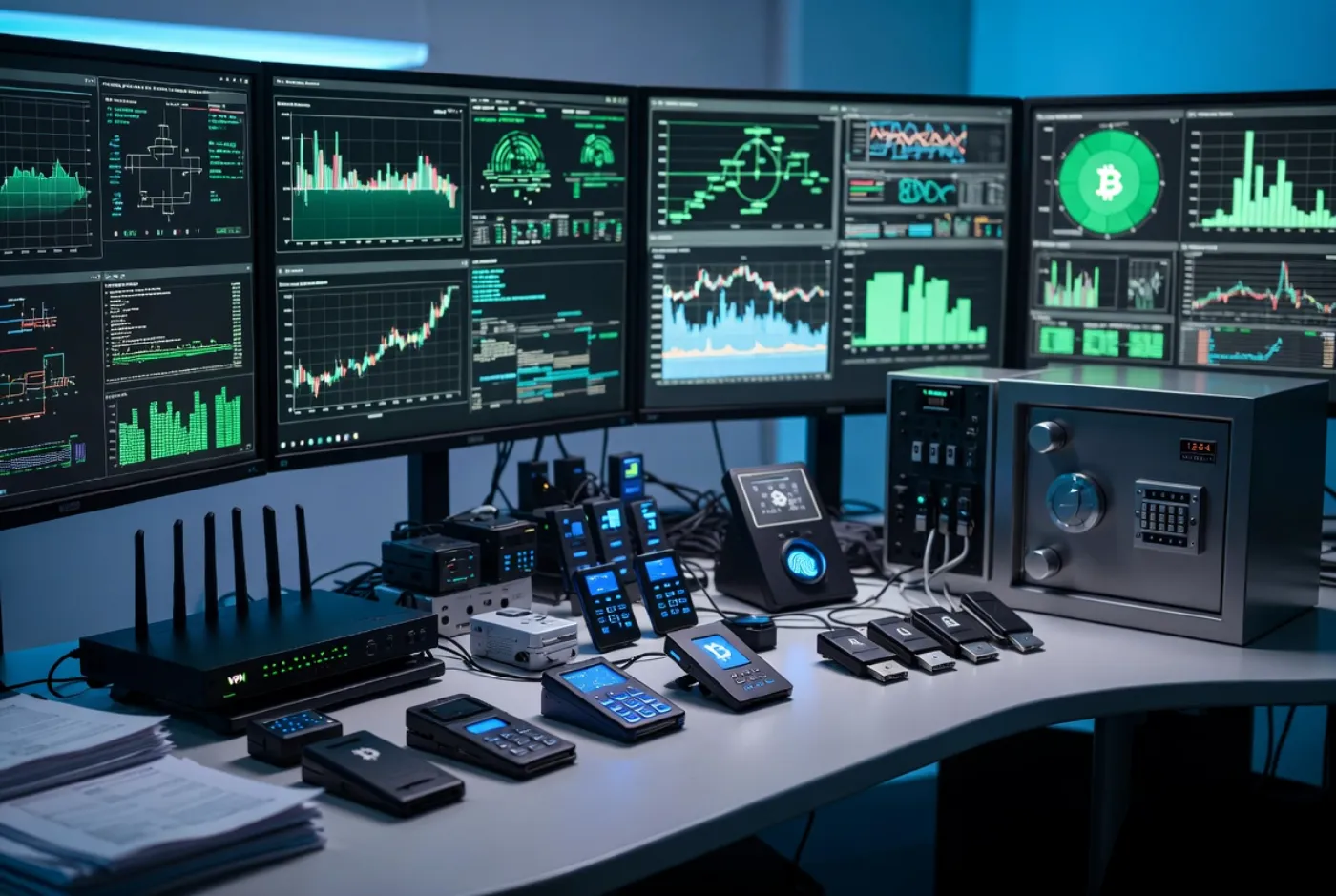
Once you have a hardware wallet and a properly secured seed phrase, there are several additional practices that meaningfully strengthen your security posture.
The Passphrase: Your 25th Word
Most hardware wallets support an optional passphrase, sometimes called the 25th word. This is a custom word or phrase you add to your seed phrase to create an entirely separate wallet.
Even if someone obtains your 12 or 24-word seed phrase, they cannot access your Bitcoin without also knowing your passphrase.
It is not stored anywhere on the device. It exists only in your memory or in a separate secure location from your seed phrase.
This adds a powerful second layer of protection that completely defeats anyone who finds your seed phrase alone.
Running Your Own Bitcoin Node
When you verify a transaction using a third-party node, you are trusting that node’s information about the blockchain.
Running your own Bitcoin full node, on dedicated hardware like a Raspberry Pi with Bitcoin Core, means you verify every transaction independently against your own copy of the blockchain.
This is the highest level of trustlessness available and is increasingly accessible as hardware costs have fallen. Paired with a hardware wallet, a self-hosted node provides complete sovereignty over your Bitcoin experience. For a complete beginner walkthrough, see our guide on how to run a Bitcoin node at home.
Using Coin Control
Coin control is the practice of deliberately selecting which unspent transaction outputs (UTXOs) to use when making a Bitcoin payment. Wallets like Sparrow Wallet and Electrum offer full coin control.
It prevents accidental merging of UTXOs that could compromise your privacy by linking otherwise separate Bitcoin addresses. For privacy-conscious holders, coin control is an essential practice when spending Bitcoin.
Geographic Distribution of Keys
For multisig configurations or multiple backup copies of a seed phrase, geographic distribution means storing keys or backups in different cities or countries.
This protects against regional disasters, legal jurisdictional seizures, and scenarios where accessing one location becomes impossible.
Professional institutional Bitcoin custody uses geographic distribution as a core principle. Individual holders with significant amounts can apply the same logic at a smaller scale.
Choosing the Right Bitcoin Storage Method for Your Situation
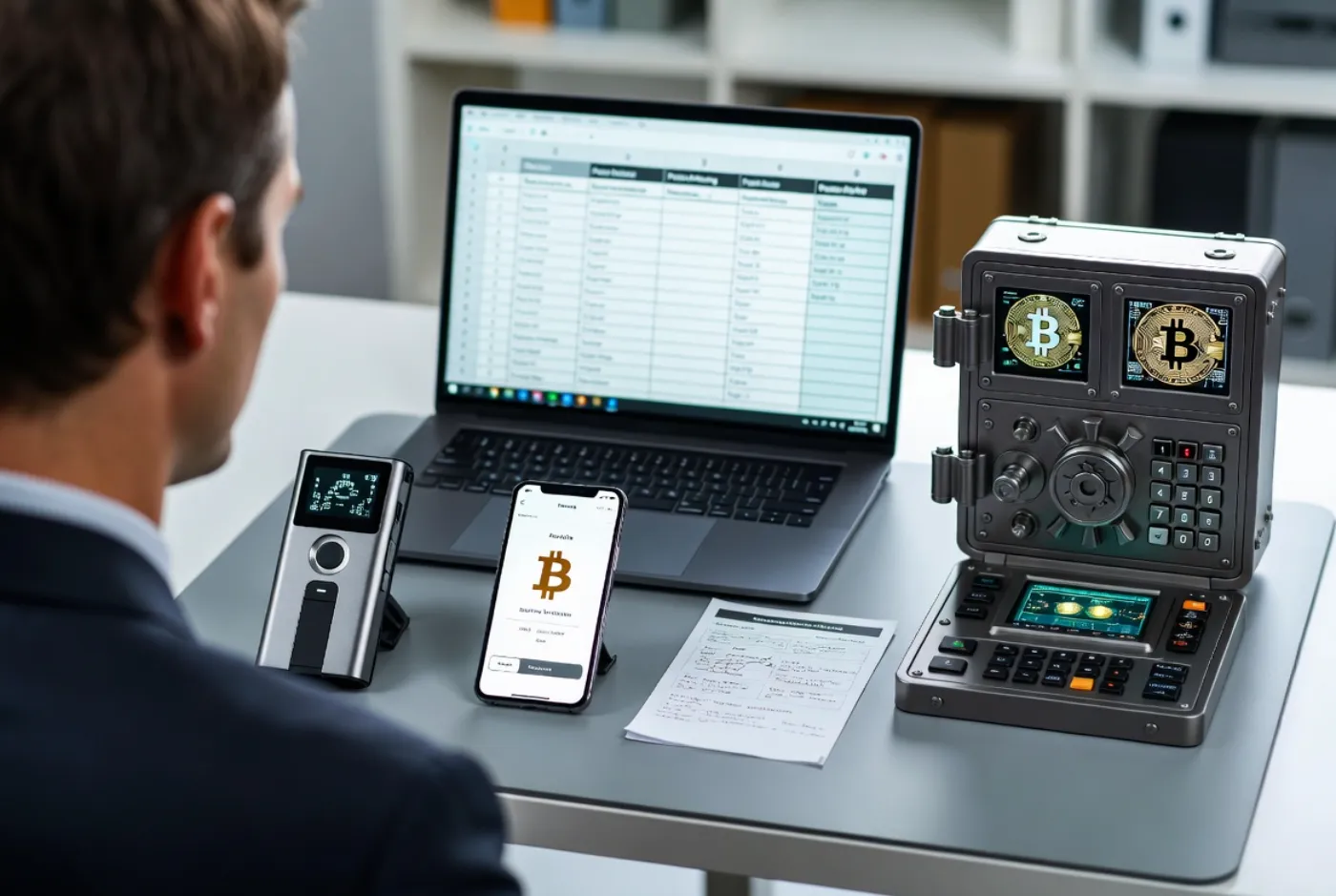
There is no single right answer. The right storage setup depends entirely on your Bitcoin holdings, your technical comfort level, how frequently you need to access funds, and your specific risk concerns.
| Your Situation | Recommended Setup |
| Getting started, holding under $500 | Mobile software wallet like BlueWallet or Trust Wallet for self-custody basics |
| Holding $500 to $5,000, occasional access | Entry-level hardware wallet (Trezor Safe 3 or Ledger Nano X) with steel seed backup |
| Holding $5,000 to $50,000, long-term investor | Mid-range hardware wallet, steel seed backup in 2 separate locations, passphrase enabled |
| Holding $50,000+, serious long-term holder | Multisig 2-of-3 using 3 different hardware wallet brands, 3 steel seed backups in 3 locations |
| Active trader needing quick access | Small balance on regulated exchange for trading, remainder in hardware wallet |
| Business or institution | Professional multisig custody (Casa, Unchained) or self-managed institutional multisig |
| UK-based Bitcoin holders | Setup remains the same; see our guide to the best crypto wallets available in the UK for UK-specific considerations |
For UK-specific wallet considerations and regulated options available to British Bitcoin holders, our guide to the best crypto wallets in the UK covers the regulatory landscape and available products in detail.
Bitcoin Inheritance Planning: The Problem Most Holders Ignore
Bitcoin’s greatest strength, that only the keyholder can access the funds, is also its greatest estate planning challenge. When you die, your Bitcoin dies with you unless you have made deliberate, careful arrangements.
This is not a morbid topic. It is a responsible one for anyone holding a meaningful amount.
The challenge: telling a family member your seed phrase directly creates a security risk.
Storing the seed phrase in a will makes it public record in many jurisdictions when probate is opened. Using a third party as a custodian reintroduces custodial risk.
Several approaches exist. Multisig is the most elegant: configure a 2-of-3 multisig where your executor or trusted family member holds one key, you hold two.
They cannot access funds during your lifetime without your cooperation. After your death, combining your key held in estate documents with theirs gives the required 2-of-3 without requiring your involvement.
Casa and Unchained offer managed services specifically designed for Bitcoin inheritance planning.
At minimum, ensure someone you trust has written instructions for how to access your seed phrase backup and enough knowledge to use it.
The psychology of long-term Bitcoin holding extends beyond market cycles. It includes planning for what happens to your stack when you are no longer here to manage it.
How Institutions Store Bitcoin: What Individual Holders Can Learn

Since the approval of US spot Bitcoin ETFs in January 2024, institutions including BlackRock, Fidelity, and dozens of others have entered the Bitcoin market at scale.
Their custody arrangements reveal what serious Bitcoin security looks like at the professional level.
Institutional Bitcoin custody universally uses cold storage for the vast majority of assets, typically 95% or more of holdings. Hot wallets hold only the small percentage needed for daily operations.
Geographic distribution means keys are stored in multiple secure locations, often across multiple countries. Hardware Security Modules (HSMs) are used rather than consumer hardware wallets.
Multisig requires multiple authorised parties to sign any transaction. And regular audits, including Proof of Reserves verification, confirm that custodians actually hold the Bitcoin they claim to hold.
Individual holders cannot replicate institutional infrastructure exactly.
But the principles translate directly: cold storage for long-term holdings, geographic distribution of backups, multisig for large amounts, and only moving funds to accessible wallets when actually needed.
Bitcoin-Specific Software Wallets Worth Knowing
Most guides recommend the same two hardware wallets and call it done.
But the software wallet layer matters significantly, particularly for privacy, coin control, and Lightning Network access.
BlueWallet
BlueWallet is a mobile-first Bitcoin and Lightning wallet with a clean interface and genuine non-custodial control.
It supports multisig, hardware wallet integration, and connects to your own Bitcoin node for maximum privacy.
It is consistently recommended for both beginners taking their first steps into self-custody and intermediate users who want Lightning Network access.
Sparrow Wallet
Sparrow Wallet is the leading desktop Bitcoin wallet for privacy-conscious and technically sophisticated users.
It supports full coin control, hardware wallet signing from Ledger, Trezor, Coldcard, and BitBox, multisig configuration, connection to your own node, and detailed UTXO management.
Sparrow is the software layer most serious Bitcoin holders pair with their hardware wallet of choice.
BitBox02
BitBox02 deserves mention as both a hardware wallet and as a company whose software stack is designed with privacy first.
The Bitcoin-only edition of BitBox02 is fully open-source, supports microSD seed phrase backup in addition to the standard recovery phrase approach, and is designed specifically for users who hold only Bitcoin and want no distractions from altcoin feature bloat.
Frequently Asked Questions About Storing Bitcoin
What is the safest way to store Bitcoin?
A hardware wallet with a steel seed phrase backup stored in a separate physical location from the device is the safest practical option for individual holders. For amounts above $50,000, a 2-of-3 multisig configuration using three different hardware wallet brands eliminates every single point of failure. The hardware wallet protects against remote attacks. The steel backup protects against device loss or destruction. Multisig protects against any single key being compromised.
Can Bitcoin stored in a hardware wallet be hacked?
Not remotely. Hardware wallets keep private keys in a secure element chip that never exposes them to the internet or to the computer they connect to. The only way to steal Bitcoin from a hardware wallet is to physically obtain the device, know the PIN, or obtain the seed phrase. None of these requires a remote hack. This is why hardware wallets are considered the gold standard for individual security.
What happens if I lose my hardware wallet?
Nothing, provided you have your seed phrase stored securely. Purchase a replacement hardware wallet, enter your seed phrase, and your full Bitcoin balance restores instantly. The device is the interface, not the storage. Your Bitcoin exists on the blockchain. Your seed phrase is what accesses it.
Is it safe to store Bitcoin on Coinbase or Binance?
For short periods while trading, regulated exchanges are acceptable for small amounts. For long-term storage of significant amounts, no. Exchanges are custodians who hold your keys, not you. Exchange collapses, hacks, and regulatory seizures have resulted in billions in losses for customers who left funds on platforms. The rule is consistent: buy on an exchange, then withdraw to a wallet you control.
How many seed phrase copies should I have?
At minimum, two copies stored in two different physical locations. Three copies in three locations is better for larger holdings. Use a steel backup for at least one copy. Never store any copy digitally. Test that at least one copy works for recovery before trusting it completely.
What is a passphrase and should I use one?
A passphrase, sometimes called the 25th word, is a custom word or phrase added to your seed phrase that creates a completely separate wallet. If someone obtains your seed phrase but not your passphrase, they cannot access your Bitcoin. It is a powerful additional security layer. The trade-off: if you forget your passphrase, your Bitcoin is permanently inaccessible. Write it down and store it in a separate location from your seed phrase.
Can I store Bitcoin and other cryptocurrencies in the same wallet?
Most hardware wallets support multiple cryptocurrencies simultaneously. Ledger and Trezor both support thousands of assets. If you hold Bitcoin and other assets, they can live on the same hardware wallet with separate addresses for each asset. For Bitcoin-only holders, dedicated Bitcoin wallets like Coldcard or the BitBox02 Bitcoin edition are often preferred for their simplified security model and focused development.
What is multisig and do I need it?
Multisig requires multiple private keys to authorise any transaction. A 2-of-3 setup means any two of three designated keys must sign before Bitcoin can move. It eliminates every single point of failure: no single device theft, location loss, or key compromise can access your funds. For holdings above $50,000 or for businesses, multisig is worth the additional setup complexity. Below that threshold, a properly used hardware wallet with secure seed phrase storage provides excellent security for most people.
Store Your Bitcoin Like You Mean to Keep It
Bitcoin’s design is uncompromising. It gives you complete control over your money and asks for complete responsibility in return.
That trade-off has produced extraordinary outcomes for people who took storage seriously and devastating outcomes for people who did not.
The right storage setup is not complicated. A hardware wallet from a reputable manufacturer, a seed phrase written on paper and then transferred to steel, stored in two separate physical locations.
That combination, costing under $200 in hardware, protects against virtually every threat that has historically resulted in Bitcoin loss.
Adding a passphrase brings an extra layer of protection at zero additional cost. Moving to multisig when your holdings justify it eliminates the last remaining single points of failure.
The process of setting up your first Bitcoin wallet is a natural next step once you have decided on your storage approach.
Bitcoin has survived every hack, collapse, bear market, and regulatory threat thrown at it over 15 years because the network itself is secure. The losses were never the network’s fault. They were storage failures.
Do not let that be your story.