


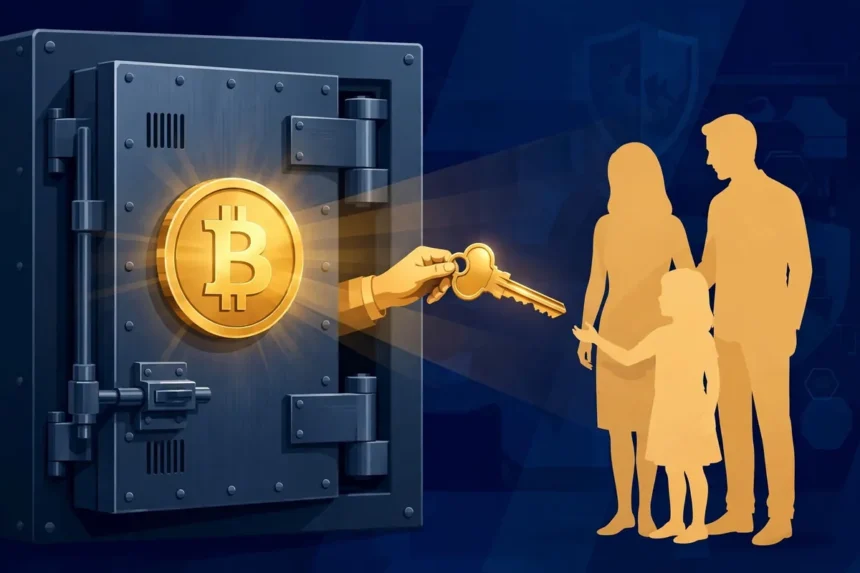
Here is the hard truth most Bitcoin holders avoid: if you die tomorrow without a plan, your bitcoin probably dies with you. A regular will is not enough, because the blockchain does not care about wills. It only recognizes one thing: the private key.
Bitcoin inheritance planning means giving your heirs two things at the same time. First, the legal right to your coins. Second, a working path to actually reach them, without handing anyone control while you are still alive. This guide shows you six ways to do it, the mistakes that destroy most plans, and a simple five-step checklist you can finish this weekend.

- A will alone cannot move bitcoin. Your heirs need the seed phrase or key access, not just a death certificate.
- An estimated 3 to 4 million BTC are already lost forever, much of it because owners died without a plan.
- The simplest solid plan: seed words stamped on metal, a plain-language recovery guide stored separately, and your will pointing to both.
- Never write your seed words inside your will. Wills go through probate, and probate records can become public.
- New in 2026: wallets like Bitkey and Uphold Vault now offer built-in inheritance features.
Why a Regular Will Is Not Enough for Bitcoin
When someone with a bank account dies, the family brings a death certificate to the bank. The law forces the bank to hand over the money. Bitcoin works in the opposite way. There is no bank. No manager can reset your password. No court order can crack the math that locks your coins.
- Why a Regular Will Is Not Enough for Bitcoin
- The 6 Ways to Pass Bitcoin to Your Heirs
- 1. The Simple Way: Seed Phrase Plus Written Instructions
- 2. Multisig Wallets: Split Control So No One Person Can Lose Everything
- 3. Put It in Your Will (But Never the Seed Words)
- 4. Trusts and LLCs for Bigger Stacks
- 5. Use Built-In Inheritance Features (New in 2026)
- 6. Professional Inheritance Services
- Which Method Should You Choose?
- 5 Mistakes That Can Destroy Your Plan
- Do Heirs Pay Tax on Inherited Bitcoin?
- Build Your Plan This Weekend: 5 Steps
- Frequently Asked Questions
- What happens to my bitcoin if I die without a plan?
- Can I just put my seed phrase in my will?
- Is a multisig wallet better than a single hardware wallet for inheritance?
- How much does bitcoin inheritance planning cost?
- Do I need a lawyer for bitcoin inheritance planning?
- Can my family inherit bitcoin held on an exchange?
- The Bottom Line
This creates a strange paradox. Your heirs can have the full legal right to your bitcoin and still be unable to touch a single satoshi. Legal ownership and cryptographic control are two different things, and only the second one moves coins.
The most famous warning is QuadrigaCX. In 2018, the founder of the Canadian exchange, Gerald Cotten, died unexpectedly. He was reportedly the only person with the private keys to customer wallets holding about $190 million in crypto. Customers fought in court for years, and most never got their money back. One man’s missing keys erased a fortune.
And this is not rare. Chainalysis estimates that 17 to 23 percent of all bitcoin is already lost, worth hundreds of billions of dollars. Research from River puts permanently lost coins at about 1.57 million BTC. Uphold, which launched an inheritance product in September 2026, cites nearly 4 million BTC, worth roughly $331 billion, stranded in wallets whose owners died or lost their keys. A 2025 study found that only 23 percent of crypto holders have any estate plan at all, and just 7 percent explicitly include their digital assets.
The 6 Ways to Pass Bitcoin to Your Heirs
Every method below solves the same problem in a different way: how do the right people get access at the right time, without the wrong people getting it too early? Start with the simplest method that fits your stack size. You can upgrade later.

1. The Simple Way: Seed Phrase Plus Written Instructions
This is the foundation of every good plan, and for most people it is enough. Back up your seed phrase on metal, not paper, since paper burns and fades. Then write a separate plain-language guide that explains, step by step, how to restore the wallet: which wallet app to download, where the seed words are, and what to do after the balance appears.
Store the seed backup and the instructions in two different secure places, for example a home safe and a bank deposit box. Tell your executor or a trusted family member that both exist and where to find them, but do not hand over the words themselves. This single habit puts you ahead of most Bitcoin holders.
2. Multisig Wallets: Split Control So No One Person Can Lose Everything
A multisig wallet needs more than one key to move coins. In a 2-of-3 setup, three keys exist and any two can sign a transaction. You might hold one key, your spouse holds the second, and a lawyer or inheritance service holds the third. If you pass away, your heirs combine their keys and recover the funds. Nobody can steal the coins alone while you are alive.
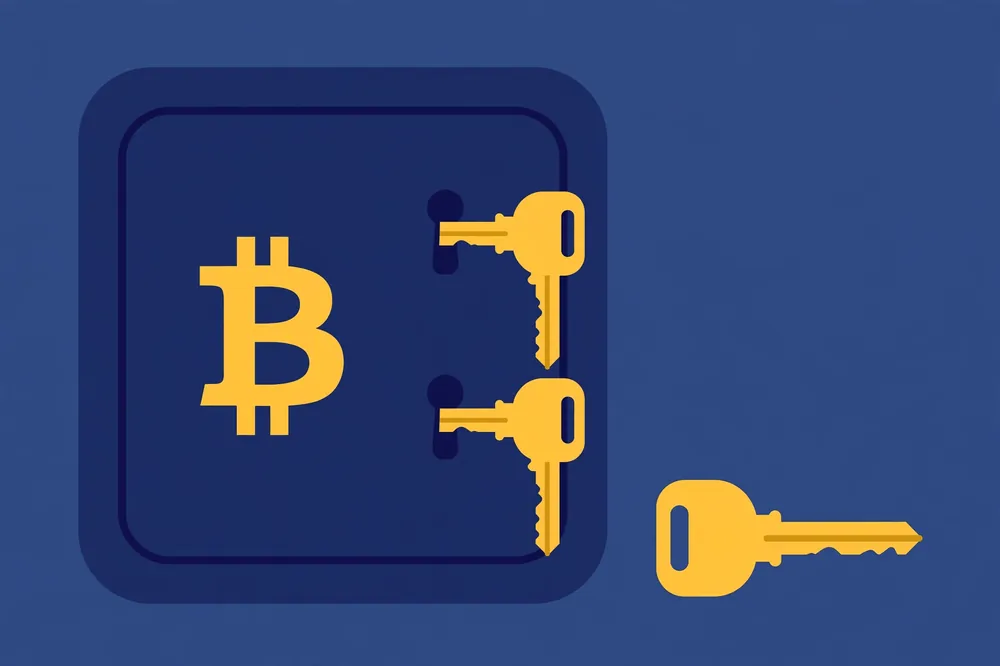
This is the strongest option for larger stacks. Sparrow Wallet is a free wallet that supports multisig setups and runs on your own computer. Pair it with two hardware wallets stored in different places, and you have a plan that survives fire, theft, and forgetfulness. If you are new to cold storage methods, start with a single hardware wallet first and graduate to multisig when your holdings grow.
3. Put It in Your Will (But Never the Seed Words)
Your will should name your bitcoin and say who gets it. Something like “I bequeath all my digital assets to my daughter” gives your heirs a clear legal claim and helps the executor find the coins. It also stops the assets from sitting invisible, since crypto holdings generate no bank statements.
But never write the seed phrase or private keys inside the will itself. Wills go through probate, and probate filings can become public records. A seed phrase in a public document is the same as giving your bitcoin away. The will should point to where the keys are kept, for example “recovery instructions are in the safe deposit box at First National Bank, box 214”, without revealing the keys.
4. Trusts and LLCs for Bigger Stacks
When the amount is life-changing, a legal structure adds order. You can hold your bitcoin inside a trust or an LLC. The operating agreement names a successor who legally steps into your role when you die or become incapacitated. Your heirs inherit control of the entity, while the keys stay locked in custody the whole time.
This approach also keeps clean records of when you bought the coins and at what price, which protects your heirs at tax time. It costs more to set up and needs a lawyer who understands crypto, so it makes sense mainly for six-figure stacks and above.
5. Use Built-In Inheritance Features (New in 2026)
Wallet makers finally started solving this problem directly. Bitkey, the hardware wallet from Block, has a built-in inheritance feature: you invite a beneficiary in the app, and after your passing they can claim the funds following a waiting period, with safeguards against false claims. It costs nothing beyond the beneficiary’s own device.
In September 2026, Uphold added Vault Inheritance to its assisted self-custody wallet, letting customers name a beneficiary for their bitcoin, XRP, and HBAR. The beneficiary gets no access while you are alive, and Uphold’s compliance team verifies the legal documents before transferring control. It costs $19.99 per month. These features are the easiest on-ramp for heirs who are not technical, though they do ask you to trust a company instead of pure self-custody.
6. Professional Inheritance Services
Collaborative custody companies act as the experienced third key in your plan. They guide your heirs through recovery when the time comes, which matters if your family would stare blankly at a seed phrase. You pay an ongoing fee, but you buy something valuable: a human being who answers the phone and walks your family through each step. For non-technical heirs, this can be the difference between a plan that works and a plan that exists only on paper.
Which Method Should You Choose?
Match the method to your situation. Most people should start at level 1 and move down the list as their stack and family complexity grow.
| Method | Cost | Difficulty | Best for |
|---|---|---|---|
| Seed phrase + written guide | Under $100 | Easy | Most holders, first plan |
| Multisig (2-of-3) | $200-400 in hardware | Medium | Serious stacks, technical users |
| Will naming digital assets | Lawyer fees vary | Easy | Everyone, as a legal layer |
| Trust or LLC structure | $1,000+ | Hard | Large estates |
| Built-in wallet inheritance | Free to $20/month | Easy | Non-technical heirs |
| Professional service | Ongoing fee | Easy | Families wanting guided help |
5 Mistakes That Can Destroy Your Plan
Most inheritance failures are not technical. They are human. Avoid these five.
1. Putting seed words in the will. Probate can make your will public. Twelve or twenty-four words in a public record means your bitcoin is gone. Point to the location of the keys, never print the keys.
2. Sharing access too early. Giving a relative your seed phrase today hands them full, irreversible control. Bitcoin has no undo button. Share the existence and location of the plan, not the keys themselves.
3. One copy in one place. A single paper backup in a drawer is a hope, not a plan. Fire, flood, or a curious visitor can end it. Use metal backups in at least two separate locations.
4. Never testing the plan. A plan nobody has tried is a guess. Once a year, walk through the recovery steps yourself, or have a trusted person do a dry run with you watching. Update the written guide whenever you change wallets.
5. Ignoring scammers who target heirs. Grieving families are prime targets for fake “recovery services” and phishing. Teach your heirs one rule: nobody legitimate will ever ask for the seed phrase. Our bitcoin security tips and the list of fake bitcoin wallets to avoid are worth sharing with them before they ever need them.
Do Heirs Pay Tax on Inherited Bitcoin?
Tax rules depend on your country, and you should talk to a tax professional for your situation. In the United States, the IRS treats bitcoin as property, not currency. In general, heirs receive inherited crypto at its fair market value on the date of death, which becomes their cost basis for any future sale, and estates above certain thresholds may owe estate tax.
The practical takeaway is simple: keep clean records. Save the dates and prices of your purchases, and make sure your executor knows where those records live. Good records turn a stressful tax season into a routine filing.
Build Your Plan This Weekend: 5 Steps
You do not need a lawyer to start. You need an afternoon and honest answers to five questions.
- Inventory. List every place your bitcoin lives: hardware wallets, phone apps, exchange accounts. If it is not on the list, your heirs will never find it.
- Secure the keys. Back up every seed phrase on metal and make sure your cold storage setup is simple enough for your heirs to follow.
- Write the guide. A one-page, plain-language document: what you own, where it is, and exactly how to recover it, written for someone who has never touched crypto.
- Name your people. Choose an executor who is organized and honest, update your will to name your digital assets, and tell your executor where the guide lives.
- Test and calendar it. Do a recovery dry run, then put a yearly reminder on your calendar to review the plan. Wallets change, people move, and plans rot.
Bitcoin Inheritance Explained: why access alone is not a plan.
A full walkthrough of setting up bitcoin inheritance with Casa multisig.
Frequently Asked Questions
These are the questions readers ask most about passing bitcoin to the next generation. If yours is not answered here, the five-step checklist above covers the core of every plan.
What happens to my bitcoin if I die without a plan?
It most likely becomes permanently inaccessible. The blockchain does not recognize death certificates or court orders. Without the seed phrase or private keys, no one can move the coins, and they sit frozen on the blockchain forever.
Can I just put my seed phrase in my will?
No. Wills pass through probate, and probate records can become public. Anyone who reads your seed words can take your bitcoin instantly and irreversibly. Your will should name your digital assets and point to where the recovery instructions are stored, without including the keys.
Is a multisig wallet better than a single hardware wallet for inheritance?
For larger amounts, yes. A 2-of-3 multisig means no single lost key or single dishonest person can lose or steal the funds. Your heirs combine two of the three keys to recover the coins. For smaller stacks, a single hardware wallet plus a metal seed backup and written instructions is enough.
How much does bitcoin inheritance planning cost?
A solid basic plan costs under $100: a metal seed backup plate and a safe place to store it. Multisig adds the cost of two or three hardware wallets. Trust or LLC structures cost $1,000 or more in legal fees. Built-in options range from free (Bitkey) to about $20 per month (Uphold Vault Inheritance).
Do I need a lawyer for bitcoin inheritance planning?
Not for the basic plan: inventory, metal backups, a written guide, and telling your executor. You should involve a lawyer when your holdings are large enough that taxes, trusts, or business entities matter, or when your family situation is complicated.
Can my family inherit bitcoin held on an exchange?
Sometimes, but it is slow and uncertain. Exchanges have their own claims processes and may require extensive documents. Some now offer beneficiary features, like Uphold’s Vault Inheritance launched in 2026. Coins in self-custody with a proper plan transfer far more smoothly, which is one more reason not to leave your stack sitting on an exchange long term.
The Bottom Line
Bitcoin gives you something no bank ever could: money that nobody can take, freeze, or devalue without your keys. The price of that freedom is total responsibility, and responsibility does not end when you do. An afternoon of planning now is the difference between a legacy and a locked wallet nobody can open.
Start with the basics today: set up proper self-custody, back up your seed words on metal, write the one-page guide, and tell your executor it exists. Your future heirs cannot thank you now, but they will.