

To identify the best blockchain projects in 2026, you need to look beyond price action and white papers. The landscape has changed dramatically. First-generation blockchains like Bitcoin proved that a decentralized ledger could work and could be trusted.
Second-generation projects like Ethereum expanded that vision with smart contracts, enabling a wave of decentralized applications (dApps) that nobody had imagined when Satoshi published the original Bitcoin whitepaper in 2008.

Both generations, however, struggled with the blockchain trilemma. That is the challenge of optimizing for decentralization, security, and scalability all at once. Improve one corner of the triangle and you typically sacrifice another.
- Understanding Modern Blockchain Innovation
- Top Blockchain Projects to Watch in 2026
- Ethereum (ETH): The Foundation of Decentralized Innovation
- Solana (SOL): Speed and Scalability for Web3 Apps
- Polygon (MATIC): The ZK Scaling Leader for Ethereum
- Avalanche (AVAX): Fast, Flexible, and Enterprise-Ready
- Cardano (ADA): Academic Rigour Meets Decentralised Governance
- Polkadot (DOT): The Multi-Chain Operating System
- Chainlink (LINK): The Bridge Between Blockchains and the Real World
- Cosmos (ATOM): The Internet of Sovereign Blockchains
- Arbitrum (ARB): The Layer 2 with the Most Traction
- Base (by Coinbase): The Mainstream On-Ramp for Web3
- Aptos: Safety-First High Performance
- Sui
- Near Protocol
- Top Blockchain Projects: 2026 Comparison at a Glance
- Innovative Blockchain Startups & Real-World Use Cases
- VeChain: Supply Chain Transparency at Enterprise Scale
- Power Ledger: Decentralising the Energy Market
- OriginTrail: Building a Decentralised Knowledge Graph for AI
- Worldcoin: Proof-of-Humanity in the Age of AI
- Enterprise Blockchain Solutions Shaping the Future
- Supply Chain Management & Logistics
- Financial Services & Cross-Border Payments
- Digital Identity & Data Management
- Healthcare
- Real Estate & Asset Tokenization
- The Future of Blockchain Technology
- Expert Insight
- Challenges Blockchain Projects Must Overcome
- Frequently Asked Questions (FAQs)
- What is blockchain technology?
- Can businesses benefit from adopting blockchain technology?
- What is a Layer 2 network and why is it important?
- Why is Real-World Asset tokenisation a major trend in 2026?
- How does AI integrate with blockchain projects?
- What is the main problem modular blockchains are trying to solve?
- Which blockchain is best for enterprise use in 2026?
- Is it still worth investing in blockchain projects in 2026?
- Conclusion: The Path Ahead for Blockchain Utility
This tension shaped every major blockchain project that came after, and it still shapes the space today. The difference is that in 2026, the best teams are not trying to solve the trilemma on a single chain. They are solving it in layers.
Understanding how blockchain technology works is the essential starting point before evaluating any individual project. Once you have that foundation, the architecture decisions each project makes start to make a lot more sense.
In this guide, we cover the top Layer 1 platforms, the Layer 2 networks dominating transaction volume, the startups turning blockchain into real-world infrastructure, and the enterprise solutions reshaping entire industries.
Understanding Modern Blockchain Innovation

The evolution of blockchain technology from a speculative cryptocurrency tool into foundational infrastructure is one of the most significant technological transitions of our time.

The first wave, led by Bitcoin and early Ethereum, demonstrated the power of decentralized and immutable ledgers. At the same time, it exposed the limits of trying to do everything on one chain.
Smart contracts changed the game. They eliminate trusted intermediaries — banks, lawyers, brokers — and replace them with code that executes automatically when conditions are met.
This drove innovation in Decentralized Finance (DeFi), supply chain management, real estate, gaming, and non-fungible tokens (NFTs). Today, smart contracts are the foundation of the entire multi-chain ecosystem.
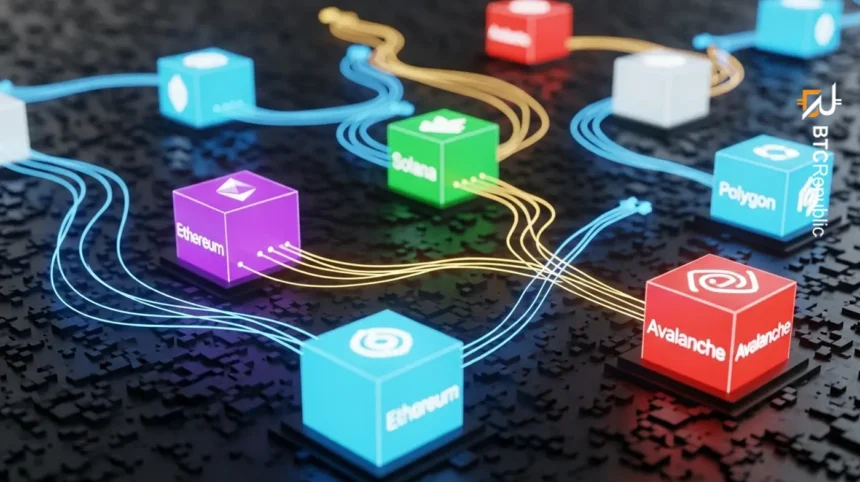
Four forces are driving modern blockchain innovation right now. Interoperability removes the silos between isolated chains. Scalability enables mass adoption by making transactions fast and cheap. Governance gives communities control over protocol decisions.
And modularity, the newest and most important force, separates the blockchain stack into specialised layers, each optimised for one job instead of trying to do all three poorly at once.
Decentralized Finance (DeFi)
Using smart contracts, lending and borrowing platforms like Aave and Compound let users earn interest on their crypto or borrow assets using on-chain collateral.
Peer-to-peer exchange protocols like Uniswap and SushiSwap allow direct token swaps without a centralised order book.
Furthermore, real-world assets like real estate and commodities can now be tokenised on-chain, enabling fractional ownership and dramatically improving liquidity for previously illiquid asset classes.
Supply Chain Management
Businesses like Walmart and Nestlé use IBM Food Trust, built on Hyperledger Fabric, to trace the origin of food products in seconds. What used to take seven days during a contamination outbreak now takes under two seconds.
Companies with high counterfeit risk, like Pfizer, use blockchain to assign digital identities to product batches that cannot be faked.
Logistics firms like UPS and DHL create a single shared source of truth for shipment data, eliminating the manual reconciliation that used to cost days and millions of dollars in errors.
Gaming and NFTs
Blockchain is giving players genuine ownership of in-game assets. Platforms like Decentraland and The Sandbox let users own, build on, and monetise virtual land.
Axie Infinity pioneered the play-to-earn model, where participation in the game earns real cryptocurrency or non-fungible tokens (NFTs) with real-world value.
These models are maturing rapidly as Solana and Sui attract game developers who need sub-second finality and low transaction costs.
Energy
Blockchain enables peer-to-peer energy trading. Microgrids like the Brooklyn Microgrid use smart contracts to let residents with solar panels sell excess energy directly to their neighbours, cutting out the utility company entirely.
Grid operators also use blockchain-verified data to optimize energy distribution and reduce blackout risk in real time.
Healthcare
Hyperledger-based pharmaceutical supply chain solutions help companies track drugs from manufacturer to pharmacy, combating counterfeits that kill hundreds of thousands of people globally every year.
Clinical trial data management on-chain prevents post-trial manipulation and gives regulators an immutable audit trail.
Additionally, blockchain-based digital identity systems are transforming how healthcare providers verify patient credentials and manage data consent.
Top Blockchain Projects to Watch in 2026
The blockchain landscape in 2026 is defined by fierce competition for scalability, cross-chain interoperability, and institutional adoption. Layer 1 projects are solidifying their technical foundations.
Layer 2 scaling solutions are absorbing most of the user and transaction volume. And enterprise chains are quietly processing more real economic activity than most public networks combined. The projects below are ranked by real-world traction, not hype.
Each has demonstrated measurable utility, a strong and growing developer ecosystem, and clear momentum.
For broader context on where these projects sit in the overall market, our guide to the top cryptocurrencies by market cap covers the full rankings picture.
Ethereum (ETH): The Foundation of Decentralized Innovation
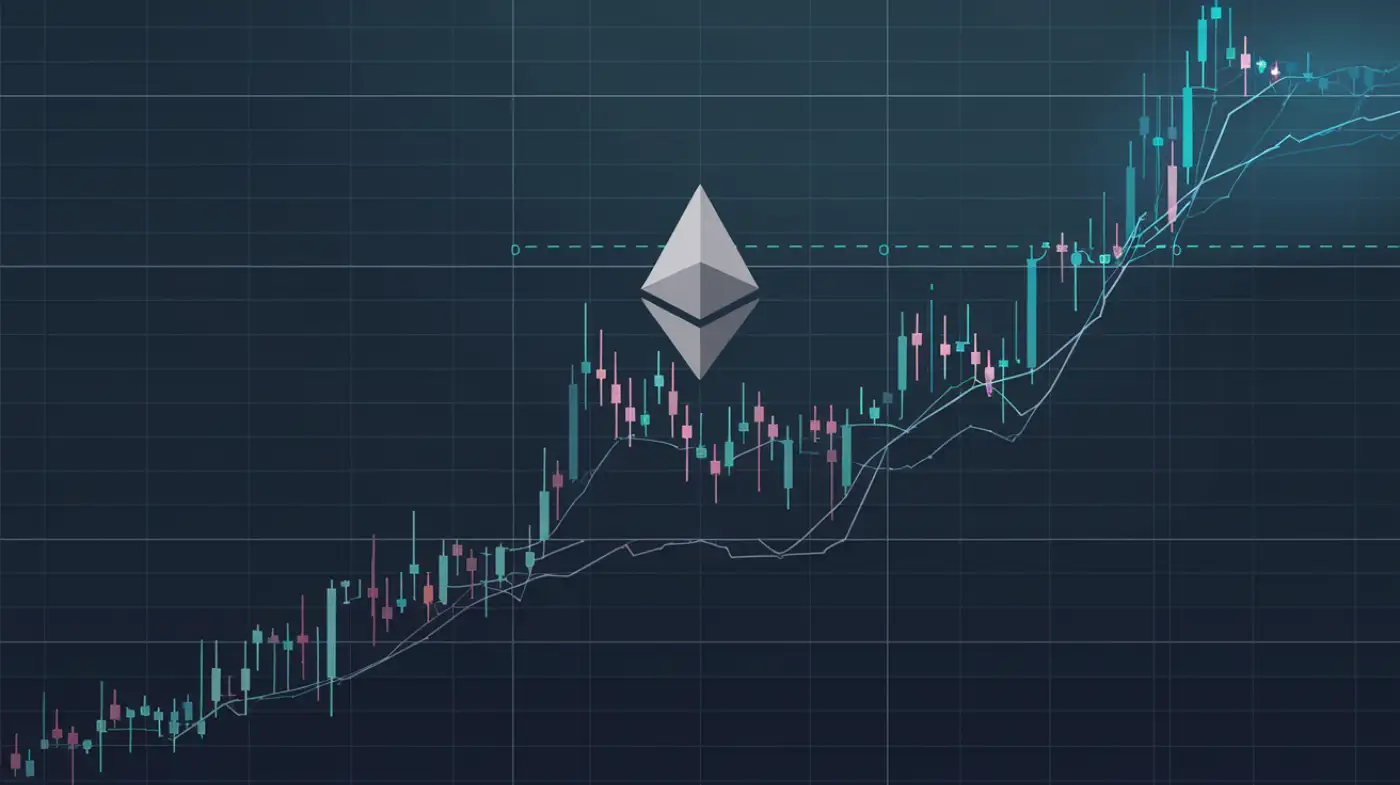
Ethereum remains the undisputed foundation of decentralized innovation. It introduced smart contracts to the world and, in 2026, it has cemented its role as the institutional settlement layer for the global decentralised economy.
The network’s rollup-centric roadmap is fully in motion, and the results are visible in the numbers.
According to blockchain analytics, Ethereum processed approximately $40 billion in lending activity through protocols like Aave alone — placing it among the top 50 US banks by that metric.
Meanwhile, its Layer 2 ecosystem pushed throughput from around 200 transactions per second in early 2025 to nearly 4,800 by mid-2026. The scalability criticism that defined Ethereum’s early years has been effectively answered by its own ecosystem, not by its competitors.
The Pectra upgrade was a landmark moment for user experience. It implemented EIP-7702, which allows standard user wallets to temporarily behave like smart contract accounts, bridging the gap to full account abstraction.
EIP-7251 raised the validator staking limit to 2,048 ETH, reducing the total validator count and streamlining block finality.
Furthermore, the upcoming Fusaka upgrade introduces PeerDAS, a data availability system that lets nodes share verification work rather than each downloading everything independently.
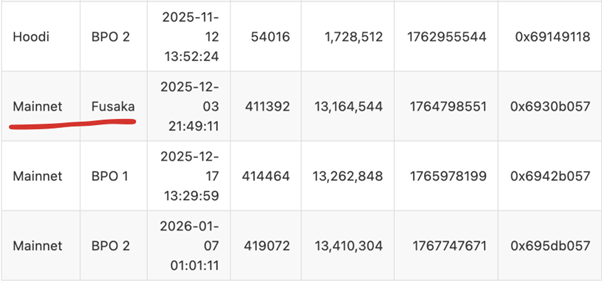
Ethereum’s key strengths in 2026 are its role as the global settlement layer for tokenised real-world assets, its position as the primary DeFi hub, and its unmatched security inherited by Layer 2 networks.
The Ethereum price prediction for 2030 has become a major topic as institutional demand through ETFs continues to grow.
Ethereum is not competing with Solana for retail transactions. It is competing with JPMorgan and Citibank for institutional settlement.
Solana (SOL): Speed and Scalability for Web3 Apps
Solana has solidified its position as the default platform for consumer-facing Web3 applications and high-frequency trading. Its proof-of-history architecture delivers sub-second transaction finality at costs measured in fractions of a cent.
No other Layer 1 matches this combination for consumer-grade applications at scale.
The defining development of 2025-2026 for Solana is the full rollout of Firedancer, a new independent validator client developed by Jump Crypto.
Before Firedancer, Solana ran on a single validator client, meaning a bug in that codebase could — and occasionally did — take the entire network offline.
Firedancer diversifies the validator ecosystem, mitigating single points of failure and significantly improving institutional confidence in Solana’s reliability.
The upcoming Alpenglow upgrade promises to optimise transaction management and reduce validator data loads, with theoretical throughput targets in the millions of transactions per second.
Solana’s real-world use cases are growing fast: DePIN networks for decentralised physical infrastructure, payment rails processing stablecoin transfers, and gaming platforms that need instant confirmation.
Anyone thinking about investing in Bitcoin or broader crypto should understand that Solana represents the consumer-payments end of a market where Bitcoin represents the store-of-value end.
Polygon (MATIC): The ZK Scaling Leader for Ethereum
Polygon started as a simple proof-of-stake sidechain built to make Ethereum transactions cheaper.
It has since completed one of the most significant pivots in blockchain history, repositioning itself as the leading zero-knowledge scaling platform for the entire Ethereum ecosystem.
The Polygon 2.0 vision is fully realised in 2026, centred on the zkEVM as the core scaling engine.
The Polygon zkEVM is fully Ethereum-equivalent. Developers can migrate existing Solidity smart contracts seamlessly while benefiting from cryptographic proof-based security and dramatically lower transaction costs.
Zero-knowledge proofs allow the network to verify transaction validity mathematically rather than relying on fraud proofs, producing faster settlement finality and stronger security guarantees.
The POL token, which replaced MATIC, now serves as the staking and governance asset across Polygon’s entire interconnected ecosystem of chains. Polygon’s Supernets framework allows enterprises and large dApp developers to launch application-specific chains that inherit security from Polygon’s network.
This enterprise focus, combined with ZK’s natural advantage for privacy-preserving computation, makes Polygon particularly attractive for regulated financial applications where confidentiality matters as much as speed.
Avalanche (AVAX): Fast, Flexible, and Enterprise-Ready

Avalanche’s subnet architecture is its defining competitive advantage. Any organisation can launch its own customised, application-specific blockchain with tailored security parameters and performance configurations.
This feature has made Avalanche the preferred platform for institutional use cases in finance and asset tokenisation, where regulatory compliance and custom performance parameters are non-negotiable.
The HyperSDK is now the centrepiece of Avalanche’s developer offering.
It simplifies the creation of high-throughput subnets, enabling teams to build networks that handle transaction volumes far beyond what Avalanche’s C-Chain can process.
Avalanche’s C-Chain remains the bustling home of its public DeFi ecosystem and is EVM-compatible, meaning Ethereum developers can deploy directly.
The major growth story, however, is institutional subnet expansion.
Cardano (ADA): Academic Rigour Meets Decentralised Governance
Cardano takes a longer and more cautious path than its competitors. Every protocol upgrade goes through peer-reviewed academic research before implementation.
That approach has frustrated some in the community but has produced a remarkably stable network with no major security incidents in its operating history.
The second phase of Cardano’s Voltaire era finalised the transition to full decentralised governance. ADA holders now vote directly on treasury spending, protocol upgrades, and technical direction through an on-chain system.
No development team can impose changes without community approval.
Hydra, Cardano’s Layer 2 scaling solution, provides off-chain state channels capable of near-instant private transactions before settling on the main chain.
The Midnight sidechain adds privacy-preserving smart contract functionality for compliant applications handling sensitive data.
Polkadot (DOT): The Multi-Chain Operating System

Polkadot’s shared security model is undergoing a transformative upgrade with Polkadot 2.0.
The rigid two-year parachain slot auctions have been replaced with Coretime, a flexible demand-driven model where developers purchase compute time in bulk or on demand.
This removes the capital barrier that previously prevented smaller projects from building on Polkadot.
The XCMP cross-chain messaging protocol allows Polkadot parachains to communicate and transfer assets in a trust-minimised way.
This makes Polkadot genuinely useful as an interoperability hub rather than just another smart contract platform.
Projects building niche Web3 services that need seamless communication between specialised chains find Polkadot’s architecture uniquely suited to the task.
Chainlink (LINK): The Bridge Between Blockchains and the Real World
Chainlink occupies a unique and irreplaceable position in the blockchain ecosystem. It is not competing for users or transaction volume in the way that Layer 1 platforms do.
Instead, it provides the oracle infrastructure that connects smart contracts to real-world data and enables secure cross-chain communication.
Without Chainlink, most DeFi protocols would not have reliable price feeds and could not function safely.
The Cross-Chain Interoperability Protocol (CCIP) is Chainlink’s most significant product in 2026. CCIP enables secure, reliable, and auditable transfer of tokens and data between any connected blockchain, whether public or private.
Major financial institutions tokenising real-world assets need a way to move those assets between multiple regulated chains.
CCIP is fast becoming the industry standard for this use case, already integrated across Arbitrum, Base, Polygon, and most other major Layer 2 ecosystems.
Chainlink’s decentralised oracle networks also power the proof-of-reserve systems, automation tools, and volatility feeds that the entire DeFi sector depends on.
LINK is arguably the most quietly essential token in the ecosystem, valuable not because of speculation but because of genuine, irreplaceable utility.
Anyone reading about whether Bitcoin is a pyramid scheme or a legitimate asset should note that Chainlink is the kind of infrastructure project that real institutions, not speculators, are building on top of.
Cosmos (ATOM): The Internet of Sovereign Blockchains

Cosmos is built around a powerful idea: every application deserves its own blockchain.
General-purpose platforms force all applications to compete for the same block space.
Cosmos lets teams build application-specific blockchains using the Cosmos SDK, each with its own rules and validator sets, that communicate seamlessly using the Inter-Blockchain Communication (IBC) Protocol.
IBC has processed billions of dollars in cross-chain transfers and remains the most battle-tested interoperability solution in the blockchain industry.
Projects like dYdX, one of the largest decentralised derivatives exchanges, migrated to a dedicated Cosmos chain specifically to escape Ethereum’s throughput limitations.
Interchain Security now allows smaller chains to lease security from the Cosmos Hub, combining the customisation benefits of a sovereign chain with the security benefits of a large established network.
Arbitrum (ARB): The Layer 2 with the Most Traction
Arbitrum has the highest total value locked of any Layer 2 network and the most active DeFi ecosystem outside of Ethereum mainnet.
Its optimistic rollup architecture inherits Ethereum’s security while processing transactions at a fraction of the cost.
Furthermore, daily transaction volume on Arbitrum has surpassed Ethereum mainnet itself, demonstrating that most user activity has migrated to scaling layers.
The Arbitrum Orbit framework is the major growth story of 2026. It allows any project to launch a customised Layer 3 chain settling back to Arbitrum’s mainnet rather than directly to Ethereum.
These Layer 3 chains can have their own gas tokens, custom rules, and performance profiles.
The Stylus upgrade adds support for smart contracts in Rust, C, and C++, dramatically expanding the developer pool beyond Solidity specialists.
Base (by Coinbase): The Mainstream On-Ramp for Web3
Launched by Coinbase in February 2023 and built on the OP Stack, Base has a strategic advantage that no other Layer 2 can replicate: direct integration with one of the world’s most trusted and regulated crypto exchanges.
In 2026, Base serves as the default on-ramp for Coinbase’s massive user base, connecting tens of millions of mainstream investors to the decentralised economy without requiring them to understand bridges, seed phrases, or gas tokens.
Base’s focus on consumer-facing SocialFi applications has produced some of the fastest-growing user metrics in the Layer 2 space.
Consumer apps built on Base regularly attract users with no prior crypto experience. For developers who want to reach mainstream audiences, Base offers the lowest-friction path available today.
Users can fund their Base wallet using the same methods they use to buy Bitcoin through Coinbase, making the experience seamless.
Aptos: Safety-First High Performance

Aptos was built by former Meta engineers who worked on the Diem blockchain project.
It uses the Move smart contract language, designed to prevent the class of vulnerabilities that have caused hundreds of millions of dollars in losses on Solidity-based chains.
Move treats assets as resources that can only exist in one place at a time, making entire categories of attack mathematically impossible.
Its Block-STM parallel execution engine and Byzantine Fault Tolerance consensus mechanism deliver high throughput with fast and reliable finality.
Sui

Sui also uses the Move language but implements a fundamentally different execution model.
Assets are treated as objects owned by addresses rather than balances in accounts.
Simple transactions involving objects owned by a single address can bypass the full consensus process entirely, settling in milliseconds.
Sui hit 297,000 transactions per second in testing with under 400 milliseconds of finalisation time. Total value locked surpassed $2 billion in early 2025.
These metrics make Sui genuinely competitive with traditional gaming backends, which is precisely the use case it was built to serve.
Near Protocol

Near Protocol uses Nightshade sharding to divide the network’s processing load into parallel segments called shards.
As more validators join, the network adds more shards and capacity grows horizontally.
Near’s developer experience is deliberately designed to feel like Web2 development: human-readable account names, predictable transaction fees, and Aurora, an Ethereum Virtual Machine running on Near that lets developers deploy existing Solidity contracts with Near’s speed and low costs.
Top Blockchain Projects: 2026 Comparison at a Glance
The table below summarises the core positioning of each major project, helping you identify which platform best fits a specific use case.
| Project | Category | Best For | Key 2026 Development |
| Ethereum (ETH) | Layer 1 | Institutional DeFi, RWA settlement | Pectra upgrade, Fusaka / PeerDAS |
| Solana (SOL) | Layer 1 | Consumer apps, payments, gaming | Firedancer multi-client, Alpenglow |
| Polygon (POL) | Layer 2 / ZK | Enterprise DeFi, ZK scaling | Polygon 2.0 / zkEVM, POL token |
| Avalanche (AVAX) | Layer 1 | Custom enterprise subnets | HyperSDK, institutional tokenisation |
| Cardano (ADA) | Layer 1 | Governance, identity, government | Voltaire / Plomin, Hydra, Midnight |
| Polkadot (DOT) | Layer 0 | Cross-chain infrastructure | Polkadot 2.0 / Coretime model |
| Chainlink (LINK) | Oracle middleware | Real-world data, cross-chain transfers | CCIP as industry standard |
| Cosmos (ATOM) | App-chain hub | Sovereign DeFi chains | Interchain Security adoption |
| Arbitrum (ARB) | Layer 2 | High-volume DeFi, institutional | Orbit Layer 3, Stylus multi-language VM |
| Base | Layer 2 | Consumer onboarding, SocialFi | Coinbase integration, mass adoption |
| Aptos | Layer 1 | Safety-critical applications | Move language, Block-STM execution |
| Sui | Layer 1 | Gaming, NFTs, consumer apps | $2B+ TVL, 297K TPS tested |
| Near Protocol | Layer 1 | Sharded throughput, AI integration | Nightshade 2.0 / stateless validation |
Innovative Blockchain Startups & Real-World Use Cases
The most interesting blockchain projects in 2026 are not always the ones with the largest market caps.
Several startups are using blockchain technology to solve problems that centralised systems simply cannot address as effectively.
Each of the four projects below has moved beyond concept-stage pilots into real, operational deployments serving real users.
VeChain: Supply Chain Transparency at Enterprise Scale
VeChain is an enterprise-grade Layer 1 smart contract platform focused on supply chain management and business process verification.
Unlike general-purpose blockchains, it was designed from the start for business use, with a dual-token system (VET and VTHO) that separates value transfer from transaction fee payment, making enterprise cost forecasting predictable.
Walmart China uses VeChain to trace food products from farm to store shelf.
Consumers can scan a QR code and retrieve a product’s full verified history in seconds. BMW partnered with VeChain to store vehicle service records immutably on the blockchain, creating a tamper-proof digital logbook that cannot be faked by used car dealers.
These are not pilot programmes. They are live deployments processing millions of real transactions in daily operations.
Power Ledger: Decentralising the Energy Market
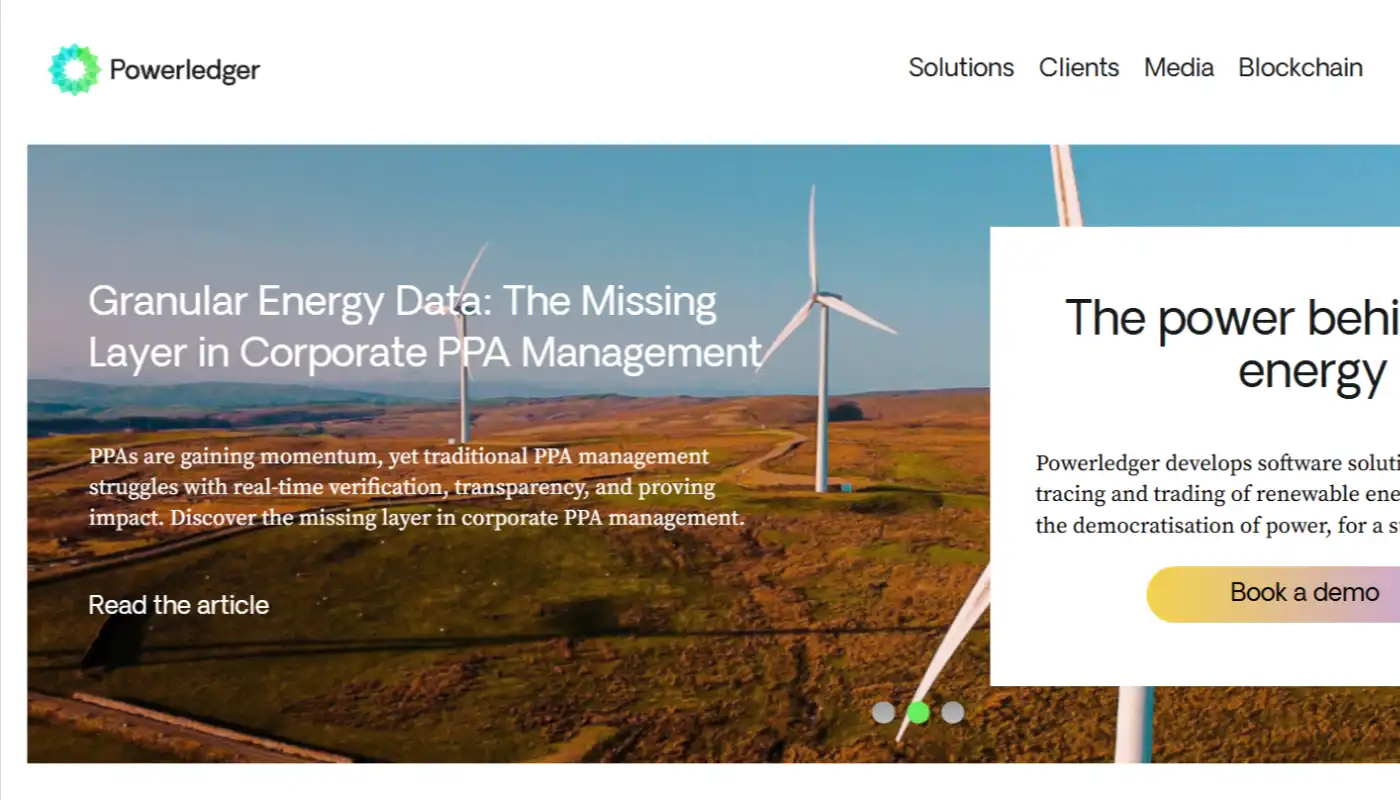
Power Ledger develops software solutions for tracking, tracing, and trading renewable energy, aiming to eliminate traditional utility intermediaries from the peer-to-peer energy market.
The platform lets individuals with rooftop solar panels sell their excess energy directly to their neighbours through blockchain-enforced smart contracts.
Real pilots are running in India with Tata Power-DDL and across multiple Australian cities. These deployments demonstrate that decentralised energy markets are technically viable and economically attractive.
As renewable energy production becomes more distributed, the need for a transparent settlement layer for energy trading only grows.
OriginTrail: Building a Decentralised Knowledge Graph for AI
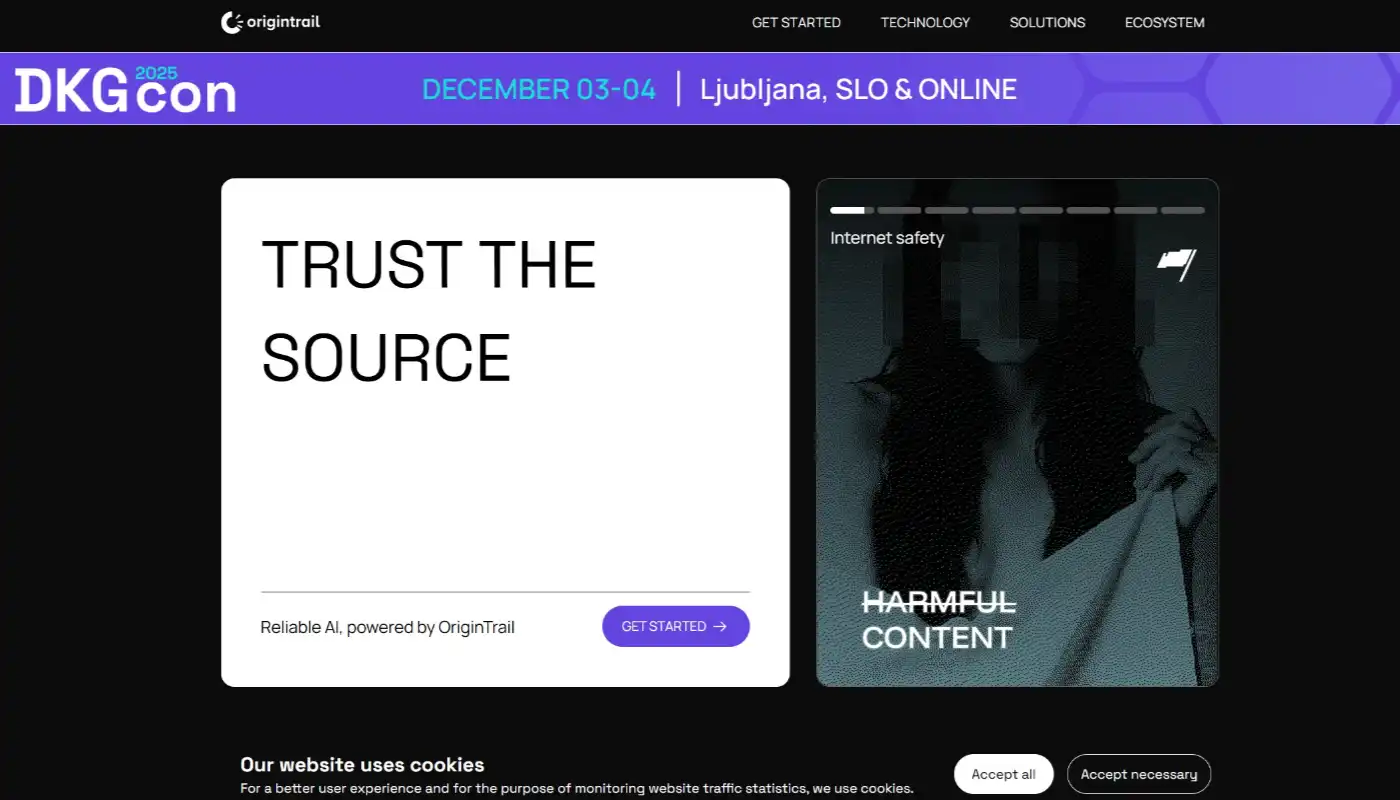
OriginTrail is building a Decentralised Knowledge Graph (DKG), a verifiable structured database of facts about the world that both humans and AI systems can query and trust.
The DKG stores information with blockchain-backed provenance, meaning every claim can be traced to its original source and independently verified.
This is particularly relevant in 2026, when AI-generated content has made distinguishing verified facts from fabricated ones significantly harder.
OriginTrail has already been integrated into EU Digital Building Logbook compliance infrastructure and adopted by supply chain compliance networks for US import verification.
As blockchain-based identity systems become more important, the DKG sits at the intersection of trusted data and AI accountability.
Worldcoin: Proof-of-Humanity in the Age of AI

Worldcoin’s core mission is solving one of the most urgent problems of the AI era: how do you prove you are a real human being online when AI can convincingly simulate one?
The World ID protocol does this through an iris scan via the Orb device, creating a privacy-preserving cryptographic hash that proves uniqueness without revealing identity.
The iris scan is hashed locally and immediately discarded. What gets stored is a mathematical proof of uniqueness, not biometric data.
As AI agents proliferate and bot-driven manipulation becomes more prevalent, this type of proof-of-personhood infrastructure becomes increasingly valuable.
Following its price surge when OpenAI dropped new AI models, Worldcoin has attracted both significant interest and ongoing debate about data privacy.
The tokenomics and privacy concerns are legitimate topics that any investor should research carefully before exposure.
Enterprise Blockchain Solutions Shaping the Future
Public blockchains attract most of the attention, but enterprise blockchain, permissioned networks designed for business use, is quietly processing more real economic activity than almost any public chain.
These networks restrict participation to verified members but inherit blockchain’s core benefits: immutability, transparency among participants, and smart contract automation.
The results are measured in billions of dollars in operational savings and fraud reduction, not token prices.
Here are some key examples of enterprise blockchain solutions that are shaping the future:
Supply Chain Management & Logistics
The IBM Food Trust, built on Hyperledger Fabric, is used by major retailers including Walmart, Carrefour, and Wakefern Food Corp.
When a contamination outbreak occurs, identifying the source dropped from nearly a week to under two seconds.
DHL and UPS use blockchain to create a single shared source of truth for shipment tracking, eliminating disputes, delays, and manual reconciliation across international logistics chains.
Financial Services & Cross-Border Payments
JPMorgan’s Onyx platform, built on a private Ethereum-based blockchain called Quorum, processes interbank information exchange and wholesale payment settlements.
Onyx has processed over a trillion dollars in transactions. Settlements that previously required days now complete in minutes.
RippleNet connects banks and payment providers for cross-border transfers, reducing transfer costs by up to 60% and cutting transfer times from three to five days to under ten minutes.
R3’s Corda is specifically designed for financial services, sharing transaction data only with directly involved parties rather than broadcasting it publicly.
Digital Identity & Data Management
The Sovrin Network, a public-permissioned blockchain, provides decentralised global identity infrastructure.
Individuals hold verifiable credentials — government IDs, professional certifications, educational qualifications — in a digital wallet they control.
Third parties verify those credentials cryptographically without seeing the underlying personal data.
ConsenSys collaborated with Dubai to launch Smart Dubai, enabling digital identity for citizens across government services.
As blockchain-based identity systems mature, this space represents one of the most consequential real-world applications of the technology.
Healthcare
Pharmaceutical supply chain tracking on Hyperledger-based networks combats counterfeit drugs that kill hundreds of thousands of people annually.
Pfizer and other major pharmaceutical companies have piloted blockchain-based drug authentication.
Clinical trial data management on-chain creates immutable records of protocols, patient consent, and outcomes, preventing the post-trial data manipulation that has historically compromised medical research integrity.
Real Estate & Asset Tokenization
Propy uses blockchain for secure, streamlined property transactions. Real estate transfers that previously required weeks of paperwork now complete with verifiable on-chain records.
More broadly, real-world asset tokenisation, converting ownership of physical assets into digital tokens on a blockchain, is one of the fastest-growing sectors of 2026.
BlackRock’s tokenised treasury fund on Ethereum, Fidelity’s on-chain products, and JPMorgan’s tokenised assets all represent the same underlying trend: traditional financial assets are migrating to blockchain rails because settlement efficiency, programmability, and fractional ownership capabilities are simply better than legacy systems.
The Future of Blockchain Technology

The future of blockchain technology is utility and convergence. The speculative era is behind us. Growth is now driven by real institutional adoption, real consumer applications, and real enterprise deployments. Several key trends are shaping where the technology goes from here.
- Real-World Asset (RWA) Tokenisation: Converting physical assets like real estate, commodities, and financial instruments into digital tokens on-chain. This attracted 30-40% of all crypto funding in 2025 and is expected to grow significantly through 2026.
- Interoperability and Cross-Chain Solutions: Protocols like Chainlink’s CCIP and Cosmos’s IBC allow different blockchain networks to communicate and transfer assets seamlessly, enabling the multi-chain economy to function as a unified ecosystem.
- AI and Blockchain Integration: Combining blockchain’s immutable record-keeping with AI’s analytical power. Sam Altman’s Worldcoin is the most prominent example, using AI to process biometric data and blockchain to store the resulting proof-of-personhood credentials. Blockchain-based digital identity is becoming essential for AI accountability.
- Blockchain-as-a-Service (BaaS): Cloud providers including Amazon Web Services, Microsoft Azure, and Google Cloud now offer pre-built blockchain infrastructure. This dramatically lowers the barrier for traditional businesses to adopt blockchain without specialist engineering teams.
- Privacy-Enhancing Technologies: Zero-Knowledge Proofs allow transaction validity to be verified without revealing the underlying data. Polygon’s zkEVM and Cardano’s Midnight sidechain are leading implementations of this technology at scale.
- Modular Blockchain Architecture: Separating execution, settlement, and data availability into specialised layers, allowing each layer to be optimised independently. This is the most significant architectural development of the past three years and the primary answer to the blockchain trilemma.
Expert Insight
I have been writing about Bitcoin, Ethereum, and blockchain technology for over twelve years. The most striking change between the 2017 ICO boom and 2026 is not the technology. It is the quality of institutional commitment.
In 2017, banks published research reports about blockchain’s potential and did very little else. In 2026, JPMorgan processes wholesale payments on its own blockchain every day.
BlackRock tokenises treasury assets on Ethereum. The US government established a Bitcoin Strategic Reserve. These are not press releases. These are operational systems processing real money.
The projects that have survived and thrived share common characteristics. They solve a specific problem better than any alternative. They have genuine community or institutional adoption, not just speculative interest. And they have continuously upgraded their technology rather than resting on early success.
Ethereum passed every test thrown at it. Chainlink has become invisible infrastructure that everything else depends on. Solana recovered from the FTX collapse and built stronger than before.
My recommendation for anyone evaluating blockchain projects in 2026: ignore market cap rankings and look at real usage. Daily active transactions. Total value locked. Developer activity. Enterprise partnerships. Quality of governance. Those metrics separate genuine value from speculation.
Understanding Bitcoin’s history provides essential context for why this distinction matters. The psychology of HODLing also explains why many retail investors make the same mistakes across every cycle, regardless of which project they are holding. — Ali Raza, Crypto Writer and Analyst, BTCRepublic
Challenges Blockchain Projects Must Overcome
Despite the significant progress of 2026, real challenges remain. Being honest about these separates credible analysis from promotional content.
Regulatory Uncertainty
Despite the EU’s MiCA framework, US spot Bitcoin ETF approvals, and the Bitcoin Strategic Reserve, global regulatory environments remain fragmented.
A project that is fully compliant in Europe may face challenges in Asia or the Middle East. Tax treatment, custody requirements, and classification rules vary significantly by jurisdiction and continue to evolve.
Large institutional players cannot commit fully without regulatory certainty, and that certainty does not yet exist everywhere.
User Experience
Despite years of improvement, using most blockchain applications still requires more technical knowledge than mainstream users have.
Private keys, seed phrases, bridge transactions, and gas fees are barriers to the mass adoption that most projects claim as their goal. Projects like Base and Solana have made real progress.
The gap between blockchain UX and mainstream app UX, however, remains substantial. Until this gap closes, growth will remain constrained to users who are willing to learn.
Cross-Chain Security
As more assets move between chains through bridges and cross-chain protocols, the attack surface for exploits grows. Cross-chain bridge hacks have resulted in billions of dollars in losses over the past three years.
Chainlink’s CCIP is designed to address this systematically, but it is not yet universally adopted.
Until secure cross-chain asset movement is as routine as moving money between bank accounts, the multi-chain ecosystem remains vulnerable to sophisticated attacks.
Scalability at the Base Layer
Layer 2 solutions have largely solved scalability for most users. However, as those networks grow and settle more transactions back to the base layer, base layer capacity will again become a constraint.
The modular blockchain movement is the long-term answer, and it is being built and tested in production.
Nevertheless, there are still scaling challenges ahead, particularly as tokenised real-world assets increase on-chain transaction volumes substantially.
Frequently Asked Questions (FAQs)
What is blockchain technology?
Blockchain technology is a decentralised and distributed ledger that records transactions in a secure and immutable manner. Each block contains a set of verified transactions, a timestamp, and a cryptographic link to the previous block. Once recorded, data cannot be altered without changing all subsequent blocks, making the system resistant to fraud and manipulation. For a full explanation of how it works, our complete blockchain guide covers all the fundamentals.
Can businesses benefit from adopting blockchain technology?
Yes, significantly. Blockchain can enhance supply chain transparency, reduce transaction costs, eliminate intermediaries, improve security, and create new business models through tokenisation and smart contract automation. Walmart, JPMorgan, Pfizer, and DHL are among the major companies already using blockchain in daily operations. The question for most businesses in 2026 is not whether to adopt blockchain but which platform fits their specific use case.
What is a Layer 2 network and why is it important?
A Layer 2 is a secondary protocol built on top of a primary blockchain (Layer 1). It processes transactions off the main chain to increase speed and reduce costs, then settles the final result back to the base layer. Arbitrum and Base now process more daily transactions than Ethereum mainnet itself. Layer 2 networks are important because they make blockchain practical for everyday applications that would be too slow or expensive to run on the base layer.
Why is Real-World Asset tokenisation a major trend in 2026?
RWA tokenisation bridges the gap between blockchain technology and traditional assets like real estate, bonds, commodities, and fund shares. Tokenised assets settle in seconds instead of days, can be fractionalised for broader ownership, and can be programmed to automatically comply with regulatory requirements. BlackRock, Fidelity, and JPMorgan have all launched tokenised asset products, validating the trend with institutional credibility. RWA tokenisation attracted 30-40% of all crypto venture funding in 2025.
How does AI integrate with blockchain projects?
Blockchain and AI are converging in important ways. Blockchain provides immutable data provenance, ensuring AI models are trained on verifiable, traceable data. Blockchain enables decentralised AI compute markets where node operators are rewarded for contributing processing power. Worldcoin sits at the direct intersection of both: AI processes biometric data locally, and blockchain stores the resulting cryptographic proof of human identity. Additionally, blockchain-based identity systems are becoming essential for proving human authenticity in an environment where AI agents can convincingly simulate human behaviour.
What is the main problem modular blockchains are trying to solve?
The blockchain trilemma, first articulated by Ethereum founder Vitalik Buterin, states that a blockchain cannot simultaneously achieve decentralisation, security, and scalability. In 2026, the answer from the industry is that it is best solved through specialisation rather than compromise. Modular blockchains separate the concerns: Ethereum handles security and decentralisation, Layer 2 networks handle scalability, and data availability layers handle storage efficiency. Each layer is optimised for one job rather than all three at once.
Which blockchain is best for enterprise use in 2026?
For enterprise use cases requiring customisation and regulatory compliance, Avalanche’s subnet architecture and Hyperledger Fabric are the most widely adopted. Avalanche subnets allow enterprises to configure their own rules, validators, and performance parameters on a public blockchain foundation. Hyperledger Fabric is a permissioned blockchain designed specifically for business use. JPMorgan’s Onyx platform, built on Hyperledger Quorum, is the most prominent example of enterprise blockchain at scale, processing over a trillion dollars in transactions.
Is it still worth investing in blockchain projects in 2026?
This depends entirely on your goals, risk tolerance, and research depth. The speculative bubble phase is largely behind us. Growth is now driven by genuine utility and institutional adoption. However, volatility remains significant across the sector. Understanding the specific use case and competitive position of any project is essential before investing. Our guide to investing in Bitcoin covers the risk management principles that apply equally to any blockchain asset. And our Trust Wallet review covers safe self-custody practices, which matter as much as which projects you choose.
Conclusion: The Path Ahead for Blockchain Utility
The best blockchain projects in 2026 are those successfully moving from theoretical promises to practical, high-throughput utility. Ethereum remains the dominant settlement layer while Solana and Avalanche compete on speed and institutional subnets. Chainlink connects every chain to the real world.
Arbitrum and Base absorb most consumer transaction volume. And enterprise solutions from IBM, JPMorgan, and others are processing real economic activity at scale that public blockchains cannot yet match.
The shift is away from generic platforms toward specialised, high-performance solutions optimised for specific verticals.
The convergence of blockchain technology with traditional finance (TradFi), artificial intelligence, and modular architecture is creating a seamless, interconnected multi-chain ecosystem that looks nothing like the speculative landscape of 2017 or 2021.
Investors, developers, and business leaders who understand the trilemma, the modular architecture solving it, and the distinction between genuine utility and speculation are well positioned to make good decisions in this environment.
The history of Bitcoin provides crucial context for how a technology moves from fringe experiment to foundational infrastructure.
We recommend prioritising projects with demonstrable real-world usage, strong institutional or community backing, and superior scalability architecture. The noise in this space is loud. The signal is in the on-chain data.