
Read this first: Bangladesh Bank does not permit Bitcoin trading, so you cannot buy Bitcoin in Bangladesh through a licensed local exchange or a bank. People who still buy use offshore platforms and peer to peer escrow with bKash, Nagad or Rocket, and they carry the legal and account risk themselves.
This guide explains how to buy Bitcoin in Bangladesh through that P2P route, step by step, so you can see the real risks before you spend a single taka. If the legal risk worries you, stop here and wait for the rules to change.

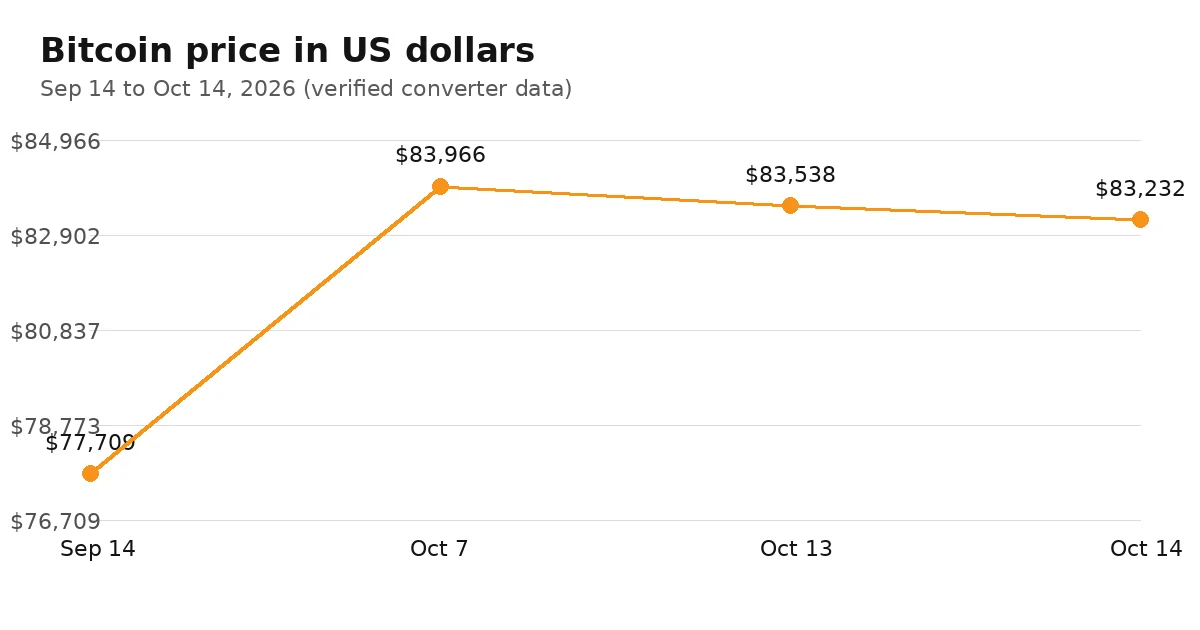
On October 14, 2026, converter data put one Bitcoin near $83,232. You do not need that much, because P2P sellers sell tiny parts of a coin for a few thousand taka.
- Is Bitcoin legal in Bangladesh in 2026?
- How to buy Bitcoin in Bangladesh: the P2P first route
- Step 1: Pick a global platform with a busy P2P market
- Step 2: Verify your identity with your NID
- Step 3: Turn on two factor security before you deposit
- Step 4: Choose a merchant like you would choose a money changer
- Step 5: Pay from an account in your own name only
- Step 6: Mark paid and wait for escrow release
- Step 7: Swap USDT for Bitcoin on the spot market
- bKash, Nagad and Rocket: which rail fits your trade?
- What will your first buy actually cost?
- How Bangladesh compares with its neighbours
- Store your Bitcoin safely after you buy
- Common mistakes and scams in Bangladesh P2P trades
- FAQs
- Conclusion: buy small, use escrow, respect the legal risk
If the basics still feel fuzzy, read our complete guide to what Bitcoin is and how it works first. Then come back here for the Bangladesh payment rails.
Key takeaways
- Bangladesh Bank says virtual currency trades are not permitted, and banks and mobile money firms must not help with them.
- No local exchange holds a Bangladesh licence, so buyers use global platforms such as Binance and Bybit.
- The usual route buys USDT first through P2P escrow, then swaps USDT for BTC on the spot market at a 0.1% fee.
- You pay the seller from a bKash, Nagad, Rocket or bank account in your own name, and the name must match your NID.
- Escrow protects you only inside the app, so you never pay off platform and you never trust a screenshot.
Is Bitcoin legal in Bangladesh in 2026?
No, not in the way buying shares or gold is legal. Bangladesh Bank has warned since 2014 that Bitcoin is not legal tender, and it repeated that warning in a caution notice on December 24, 2017.
In September 2022 the central bank told all people and firms to refrain from dealing in virtual assets, and it barred banks and mobile money firms from helping with such trades. The Business Standard reported that 2022 circular in detail, including the penalty warning.
What law creates the risk?
The central bank links unauthorised virtual currency trades to the Foreign Exchange Regulation Act, 1947. Reports of the circular cite punishment under section 23(1), which can mean a fine, prison up to seven years, or both.

Officials also link crypto trades to the Money Laundering Prevention Act, 2012 and the Anti Terrorism Act, 2009. You should treat that mix as a real legal risk, not as fine print.
What does that mean in daily life?
Banks and wallet firms watch for crypto linked payments and can freeze or close an account they flag. A freeze can trap your salary or family money, not just your trading money.
So smart readers use a separate account, keep amounts small, and keep records of every trade. This guide gives information only and does not give legal or financial advice.
How to buy Bitcoin in Bangladesh: the P2P first route
Most buyers in Bangladesh follow one simple path: they buy USDT from a verified P2P merchant, then they swap that USDT for Bitcoin. Direct BTC P2P ads exist, but USDT ads run deeper and sellers price them tighter.
A recent test of this route found that buying USDT in escrow and converting it on the spot market worked in about thirty minutes after ID approval. DataWallet documented that same USDT first method for Bangladesh in its 2026 exchange review.
Step 1: Pick a global platform with a busy P2P market
Binance offers the most P2P merchants for taka, and Bybit offers the widest list of taka payment methods. KuCoin, OKX and Bitget also run P2P markets that accept Bangladeshi users.
Pick one main platform and learn its escrow screen well. Splitting small money across five apps only adds confusion and extra passwords.
Step 2: Verify your identity with your NID
Every major platform asks for Know Your Customer checks before it unlocks P2P trading. You upload your National Identity Card or passport, then you complete a selfie check.
Enter your name and address exactly as your NID shows them. A small spelling gap between your NID, your platform account and your bKash account causes the delay most beginners hit.
Step 3: Turn on two factor security before you deposit
Turn on an authenticator app for two factor login, and set an anti phishing code if the platform offers one. SMS codes alone leave you weak if someone swaps your SIM.
Write your recovery codes on paper and store that paper offline. Never store those codes in a phone screenshot.
Step 4: Choose a merchant like you would choose a money changer
Open the P2P page, select Buy, choose USDT, and set the currency to BDT. Then filter by bKash, Nagad, Rocket or bank transfer.
Pick a verified merchant with thousands of finished orders and a completion rate near 99%. Read the merchant terms before you tap Buy, because some merchants reject certain wallets or ask for a specific payment note.
Step 5: Pay from an account in your own name only
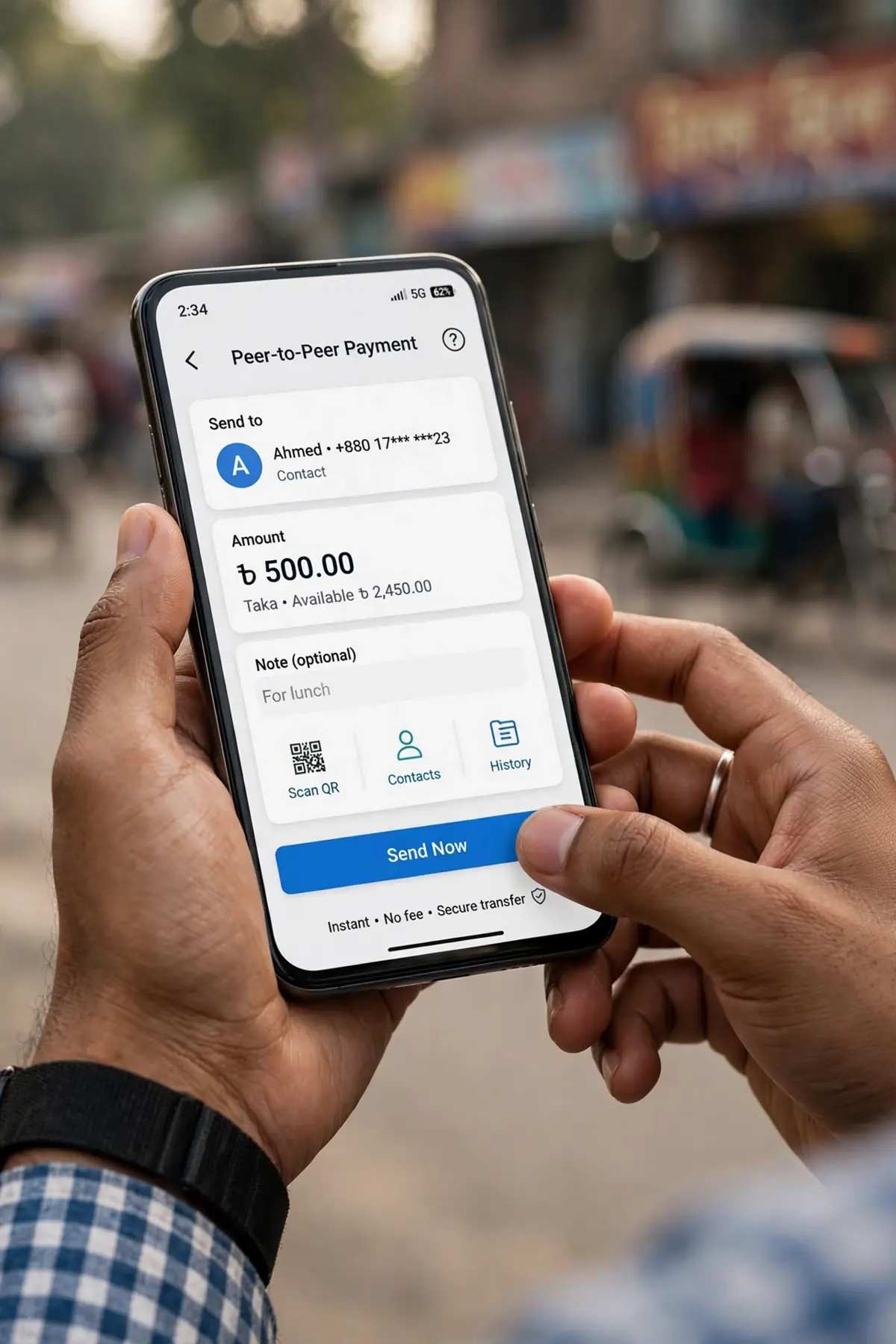
The platform locks the seller USDT in escrow as soon as you open the order. You then send the exact taka amount from your own wallet to the account number the order screen shows.
Never pay from a friend account, a shop agent account or your brother bKash number. A name mismatch gives the seller a reason to delay release and gives the platform a reason to suspend your account during an appeal.
Step 6: Mark paid and wait for escrow release
Tap Paid only after your wallet app confirms the transfer. Then wait while the seller checks his balance and releases the USDT into your funding wallet.
Keep all chat inside the order page. If a seller asks you to cancel and pay off platform, you refuse and you open an appeal instead.
Step 7: Swap USDT for Bitcoin on the spot market
Move your USDT from the funding wallet to the spot wallet. Then open the BTC/USDT market and place a limit order at a price you accept.
Binance and Bybit both publish a standard spot fee near 0.1%, so a 10,000 taka swap costs about 10 taka in trading fee. One click buy screens look easier, but they hide a markup inside the quote.
bKash, Nagad and Rocket: which rail fits your trade?
All three mobile rails move taka fast, and all three sit under firms that must not knowingly help crypto trades. That tension explains the account freeze risk, and it also explains why payment notes matter.
Never write Bitcoin, crypto, USDT or Binance in a payment reference. A plain reference or a blank reference draws less attention, though no note makes a trade safe or legal.
| Payment rail | Best for | Watch out for |
|---|---|---|
| bKash | The widest merchant choice on P2P ads | Daily wallet limits and name checks |
| Nagad | Low cash out costs and fast transfers | Fewer merchants than bKash on some apps |
| Rocket | Buyers who already bank with Dutch-Bangla Bank | Slower support when a payment stalls |
| Bank transfer | Larger orders that pass wallet limits | The clearest paper trail and freeze risk |
This table comes from our own cluster research across South Asian P2P markets, and no other guide builds it around these three Bangladeshi rails alone. Compare it with how buyers in Pakistan fund P2P trades and you will see how local rails shape each country route.
Readers who compare regions should also open our country guides hub for buying Bitcoin around the world. The hub lines up payment rails, ID checks and legal cautions side by side.
What will your first buy actually cost?
P2P trading on Binance carries no platform trading fee for the buyer, but the seller builds his margin into the taka price. You pay that spread every time, even when the screen says zero fee.
Your real cost stack holds three parts: the P2P spread over the dollar rate, the 0.1% spot fee when you swap USDT for BTC, and any wallet cash in fee. A careful buyer keeps the total near 1% to 2% on a normal day.
A worked example with real October 2026 prices
Bitcoin traded near $83,232 on October 14, 2026, down from $83,966 on October 7. A 10,000 taka buy therefore lands near 0.0012 BTC before costs, once a merchant quotes you a taka rate.
Small buys feel expensive because the spread eats a bigger share. Test with a small amount first, finish the full swap, and only then send a larger sum.
How Bangladesh compares with its neighbours
Neighbours give you a useful reality check. Buyers in India use licensed local exchanges and pay tax under a clear, though strict, regime.
Buyers in Argentina also use registered local platforms and fund them by bank transfer. Bangladesh stands apart because its buyers get no local licensed route at all.
That gap explains why escrow skill matters more in Dhaka than in Delhi or Buenos Aires. You carry the payment risk, the legal risk and the storage risk yourself.
Store your Bitcoin safely after you buy
An exchange account works for a first small buy, but it does not give you full control. If the platform freezes withdrawals, your coins sit stuck with it.
Move long term savings to a wallet where you control the private keys. Our guide on how to store Bitcoin safely with hot and cold wallets walks through that choice in plain words.
The seed phrase rule you must not break
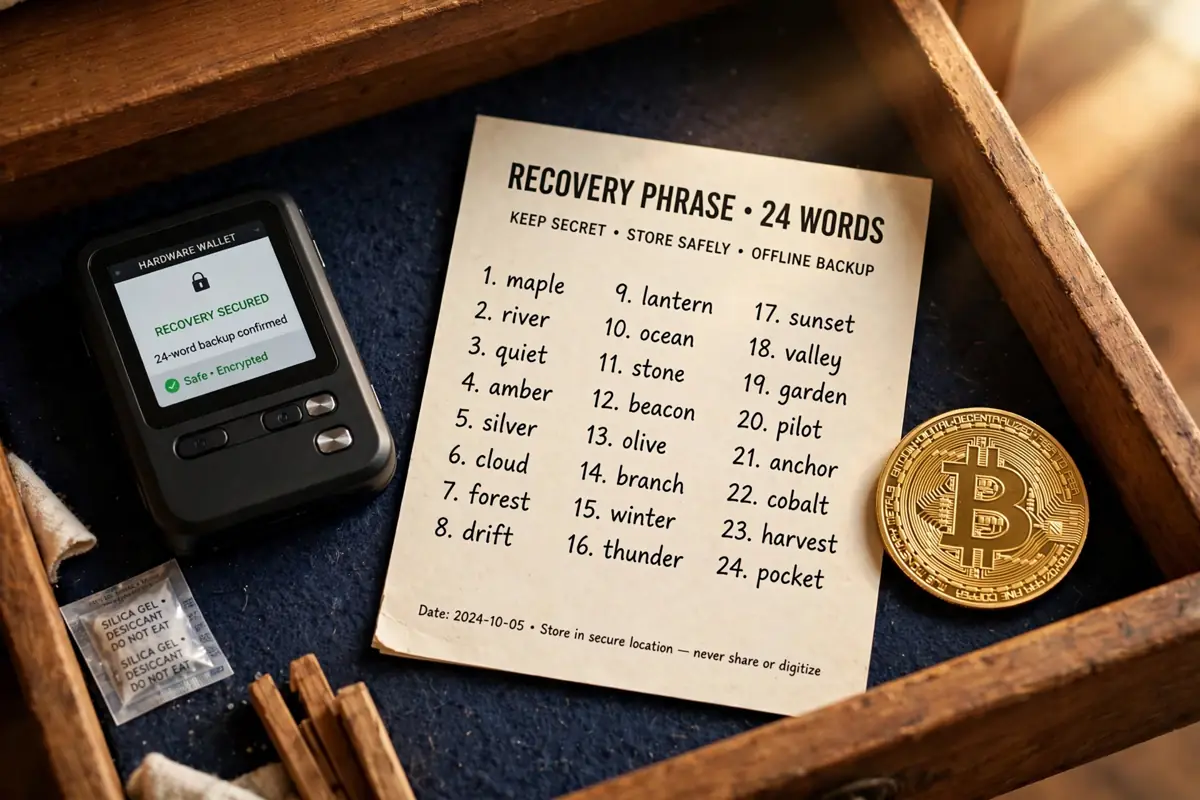
Your wallet shows you 12 or 24 recovery words during setup. You write those words on paper, in order, and you never type them into a website or a phone note.
Anyone who holds those words holds your Bitcoin. For larger amounts, follow our offline long term storage steps and test a small recovery before you trust the setup.
Common mistakes and scams in Bangladesh P2P trades
Fake payment screenshots cause the most losses on the sell side. A screenshot proves nothing, so you check your own wallet balance before you release any coin.
Telegram and Facebook traders cause the next wave of losses. They offer a sweet rate, take your taka outside escrow, and then vanish.
Five red flags to walk away from
Walk away when a seller asks you to cancel an escrow order and pay directly. Walk away when a trader asks for your password, PIN, one time code or wallet recovery words.
Also walk away from rates that sit far below every other ad. A price that looks too good usually marks a stolen account or a fake payment trick.
What to do when a trade goes wrong
Open an appeal on the order page and upload your payment proof, chat screenshots and bank or wallet statement. Platform support can force a release when your proof holds up.
Appeals work only for trades that stayed inside the platform. That single fact explains why escrow discipline matters so much.
FAQs
Q: How to buy Bitcoin in Bangladesh as a beginner?
A: You verify your identity on a global platform with your NID, buy USDT from a verified merchant through P2P escrow with bKash or Nagad, then swap USDT for BTC on the spot market. Remember that Bangladesh Bank does not permit these trades, so you carry the legal risk.
Q: Is Bitcoin legal in Bangladesh in 2026?
A: No. Bangladesh Bank says virtual currency trades are not permitted, banks and mobile money firms must not help with them, and offenders can face action under the Foreign Exchange Regulation Act.
Q: Can I buy Bitcoin with bKash or Nagad?
A: P2P merchants accept bKash, Nagad and Rocket as payment methods on global platforms. You pay from an account in your own name, because a name mismatch with your NID can delay or block the release.
Q: Why do most buyers purchase USDT first?
A: USDT ads in taka run deeper than direct BTC ads, and sellers price them tighter. You then swap USDT for Bitcoin on the spot market for a standard fee near 0.1%.
Q: What fees will I pay on a first buy?
A: Binance P2P charges the buyer no trading fee, but the seller builds a margin into the taka price. Add the 0.1% spot swap fee, and a careful buyer lands near 1% to 2% in total costs.
Q: Can my bKash account get frozen over a crypto trade?
A: Yes. Mobile money firms must not facilitate virtual currency trades under the central bank rules, and firms can freeze or close accounts they flag.
Conclusion: buy small, use escrow, respect the legal risk
You now know the full route: verify with your NID, buy USDT in escrow, pay only from your own name, and swap to BTC. You also know the hard truth that Bangladesh Bank does not permit this market.
Start with a test amount you can afford to lose, and move your coins to your own wallet once the trade clears. When you feel ready, compare other country routes in the hub and pick the storage setup that fits your savings.
For a useful contrast, read about buying Bitcoin in Brazil with Pix, where a CPF check and a regulated exchange replace the P2P escrow route that buyers in Bangladesh must use.