


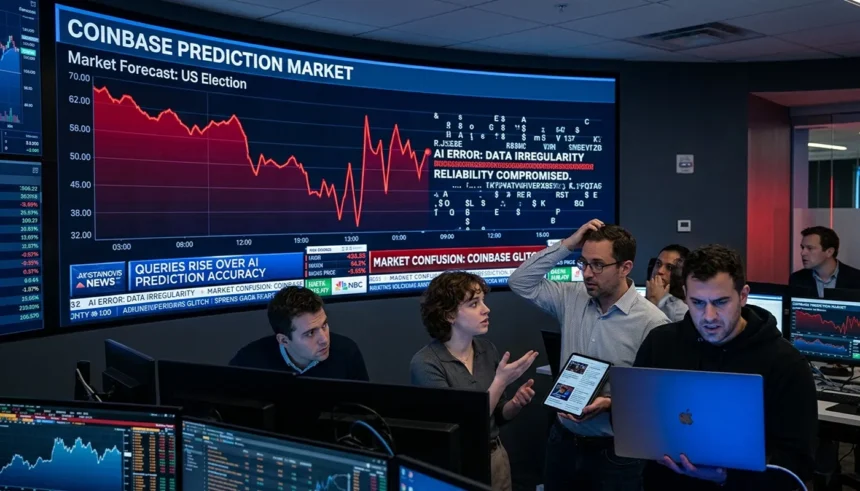
Coinbase sparked criticism after it sent an AI-generated notification falsely claiming Norway had beaten Brazil 3-2 before the match had started in the 2026 FIFA World Cup.
The incorrect alert quickly spread across social media, raising questions about the accuracy of the exchange’s AI-powered updates.

The alert also claimed that Erling Haaland scored twice, even though Coinbase’s own market page showed the match was delayed because of bad weather.
Brian Armstrong responded by apologizing for the mistake and confirming that the team is investigating how the false result was generated. Armstrong has often praised prediction markets as a reliable way to find the truth.
However, the problem goes beyond one incorrect score. The mistaken World Cup alert has now put the spotlight on AI’s role in prediction markets. The incident highlights the need for accurate data, proper checks, and human oversight before sending real-time updates.
The fake alert also follows recent criticism of betting-style features in Coinbase’s app, with some industry figures warning that inexperienced users may not fully understand the risks involved.
However, the actual match later ended with Norway winning 2 to 1, with Haaland scoring two goals.

Coinbase Expands Prediction Markets Despite FIFA Alert Error
Coinbase has been increasing its use of AI across its platform. The AI technology has helped speed up account reviews, while human teams continue to make the final compliance decisions.
This new error comes as Coinbase is in the process of expanding its prediction markets as part of its broader trading platform.
This has earned the exchange a major player in the 2026 FIFA World Cup prediction market, with analysts estimating that the tournament could generate billions of dollars in trading volume.
The company also plans to make prediction markets a key part of its vision to allow users to trade event contracts alongside crypto, stocks, and other digital markets on a single regulated platform.