


You buy Bitcoin in Brazil on a regulated exchange, and Pix does the hard work. You verify your account with your CPF, send reais by Pix in seconds, and buy BTC on the spot market.
This guide walks through that Pix-first route step by step. It also covers CPF checks, real fees in reais, and the Receita Federal tax rules that many guides still get wrong.

One Bitcoin traded near $83,764 on October 14, 2026. You can start with R$50 or R$100, because exchanges sell tiny parts of a coin.
- Is Bitcoin legal in Brazil in 2026?
- What you need before you buy
- How to buy Bitcoin in Brazil with Pix: 7 steps
- Local exchanges vs global exchanges: the fee table
- P2P in Brazil: when it helps and when it hurts
- Taxes and reporting: the Receita Federal rules
- Common mistakes Brazilian buyers make
- Move your Bitcoin to your own wallet
- FAQs
- How to buy Bitcoin in Brazil as a beginner?
- Is Bitcoin legal in Brazil in 2026?
- Can I buy Bitcoin with Pix?
- Do I need a CPF to buy Bitcoin in Brazil?
- How much tax do I pay when I sell Bitcoin in Brazil?
- Which exchange has the lowest fees in Brazil?
- Conclusion: your first buy can take ten minutes
This Brazil guide belongs to our country guides hub for buying Bitcoin around the world. The hub compares payment rails country by country, so you can see why Pix gives Brazil a head start.
Key takeaways
- Pix funds most Brazilian exchange accounts in seconds, 24 hours a day, and most platforms charge no Pix deposit fee.
- Every authorised platform asks for your CPF and a photo ID, and your Pix must come from a bank account in your own name.
- Published spot fees run from about 0.10% on Binance to 0.70% for takers on Mercado Bitcoin.
- Sales on Brazilian platforms stay exempt up to R$35,000 per month, and gains above that face 15% to 22.5% tax.
- The Central Bank licensing rules took effect in February 2026, and providers must request authorisation by October 30, 2026.
Is Bitcoin legal in Brazil in 2026?
Yes. Bitcoin is legal to buy, sell and hold in Brazil, and Law 14,478 of 2022 put virtual asset service providers inside the legal system.
A 2023 decree gave the Central Bank of Brazil the job of licensing and supervising these firms. That is why Brazilian platforms act more like banks every year, with full identity checks and monthly reporting.
What changed in February 2026?
Central Bank Resolutions 519, 520 and 521 took effect on February 2, 2026. The rules require client asset segregation, independent audits and formal authorisation for crypto firms.

Existing providers must file their authorisation requests by October 30, 2026. After that deadline, banks and payment firms may not work with unauthorised providers, so weak platforms face a hard choice.
What you need before you buy
You need a CPF, which is your Brazilian individual tax number. Platforms also ask for a photo ID, such as an RG card, a CNH driving licence or a passport.
Many platforms ask for proof of address before your first Pix deposit. A selfie check is also common, and it usually takes minutes, not days.
The CPF name rule for Pix
Your Pix payment must come from a bank account in your own name. If the CPF on the bank account does not match the CPF on your exchange account, the deposit can fail or sit in manual review.
Never fund your account from a spouse, friend or business account. A mismatch looks like third-party money to the compliance team, and it can freeze your deposit while they check it.
How to buy Bitcoin in Brazil with Pix: 7 steps
The steps below work on local platforms such as Mercado Bitcoin and Foxbit, and on global platforms that serve Brazil. The screens differ a little, but the order stays the same.
Readers who prefer old-style funding can compare this route with our step-by-step guide to buying Bitcoin with a bank transfer. Pix simply removes the waiting time that a TED transfer adds.
- Pick your platform. Choose a local exchange for Portuguese support and BRL-first screens, or a global exchange for lower spot fees.
- Create the account. Register with your email and a strong password, then turn on two-factor authentication right away.
- Verify with your CPF. Enter your CPF, upload your photo ID, finish the selfie check and add proof of address if the platform asks.
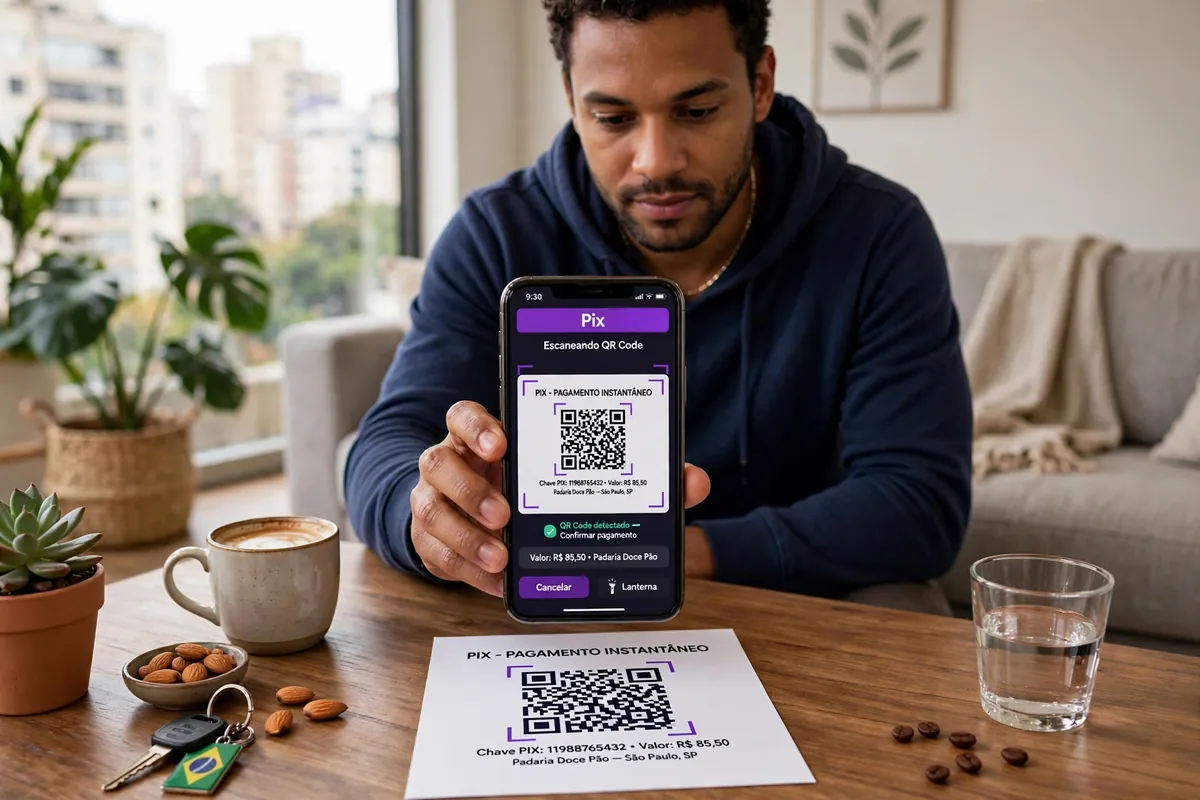
- Open the Pix deposit screen. Select Deposit, then BRL, then Pix, and type the amount you want to send.
- Check the recipient name. The QR code pays a company CNPJ, and your banking app shows its legal name before you confirm. Stop if that name does not match the deposit page.
- Pay from your own account. Scan the QR code or paste the Pix key in your banking app, and pay before the code expires.
- Buy BTC on the spot market. Once the reais land, open the BTC/BRL market and place a limit order, or use the simple buy screen and accept its spread.
A worked example with R$1,000
Say you deposit R$1,000 by Pix and the deposit fee is zero, which is the normal case. On Binance, a 0.10% spot fee takes R$1 and leaves R$999 working in your order.
The same market order costs R$5 on Foxbit at its 0.50% market rate and R$7 on Mercado Bitcoin at its 0.70% taker rate. Small gaps like this matter once you trade often or move bigger amounts.
Local exchanges vs global exchanges: the fee table
Local platforms win on support, Portuguese language screens and simple tax reports. Global platforms win on price, coin choice and trading tools.
The table below uses the fee schedules each platform publishes. We built it for this guide, and fees can change, so check the live fee page before a big trade.
| Platform | Type | Spot fee | Pix deposit | Fee on R$1,000 |
|---|---|---|---|---|
| Mercado Bitcoin | Local | 0.30% maker, 0.70% taker | Free | R$3 to R$7 |
| Foxbit | Local | 0.25% limit, 0.50% market | Free | R$2.50 to R$5 |
| Binance | Global | 0.10% spot | Free | R$1 |
| Coinbase | Global | About 0.50% to 1% | Free | R$5 to R$10 |
Which type fits a beginner?
A first-time buyer who wants help in Portuguese usually starts on a local platform. The slightly higher fee buys simpler screens and a tax report that matches the Receita format.
Cost-focused buyers often move to a global platform after their first purchase. If you live between countries, compare this route with our guide to buying Bitcoin in Argentina, where inflation changes the math completely.
P2P in Brazil: when it helps and when it hurts
P2P markets let you buy from another person while the platform holds the crypto in escrow. Pix is the payment rail most Brazilian P2P sellers accept.
Brazil sits in a safer spot than some countries here. In our Bangladesh guide, where P2P is the main route, buyers carry real legal risk, while Brazilian buyers use P2P as a choice, not a necessity.
P2P safety rules that protect you
Trade only inside the platform chat and escrow system. A seller who asks you to pay on WhatsApp first wants you outside the protection that escrow gives you.
Check the seller history, release nothing before your bank shows the Pix as settled, and never trust a payment screenshot. Screenshots take seconds to fake, and banks can reverse some payment types but not a settled Pix.
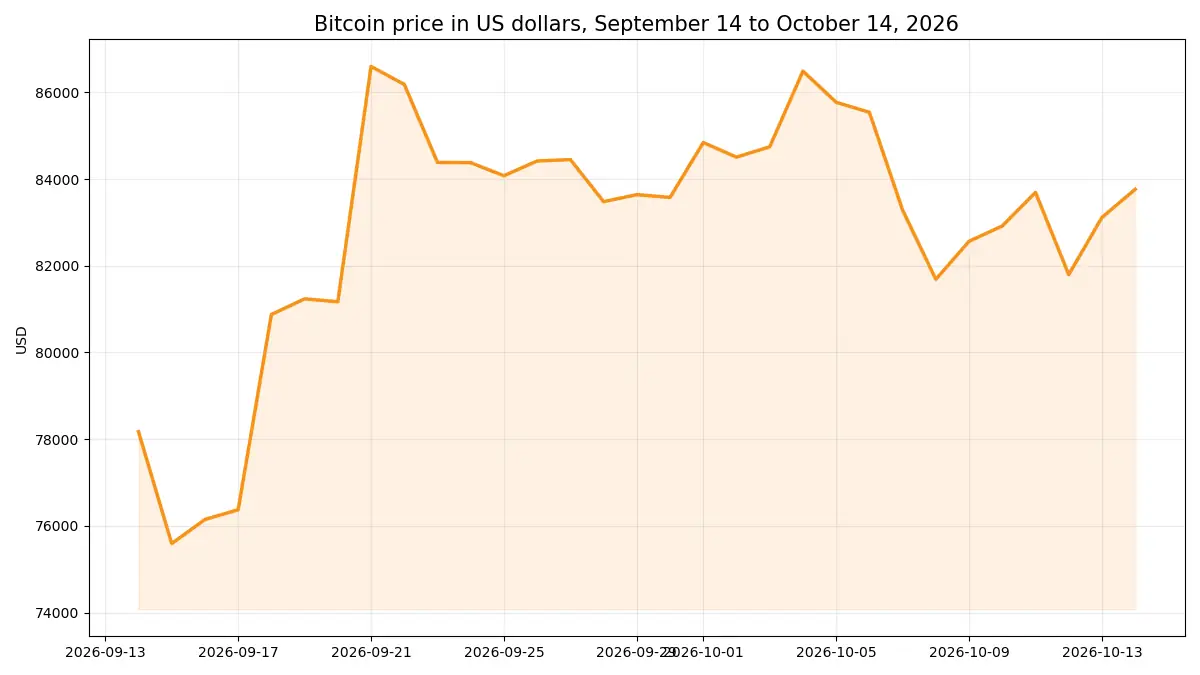
The chart above shows why timing rules matter more than timing guesses. Bitcoin swung between about $75,590 and $86,597 in one month, so a calm first buy beats a rushed one.
Taxes and reporting: the Receita Federal rules
Brazil taxes crypto gains, and the rules split by where you trade. Sales on Brazilian platforms stay exempt when your total sales in a month stay at or below R$35,000.
Above that line, gains face progressive rates from 15% to 22.5% based on the size of the gain. Gains on foreign platforms face a flat 15% rate under Law 14,754, and they get no R$35,000 exemption.
Many older guides still quote a flat 17.5% rate for everyone. That rate came from Provisional Measure 1303 in 2025, but Congress pulled that measure off the agenda and it lost validity, so the older exemption and progressive rates still apply in October 2026.
What DeCripto changed in 2026
Receita Federal now collects crypto data through DeCripto, its reporting system aligned with the OECD Crypto-Asset Reporting Framework. Brazilian platforms report your trades under this system, which Binance confirmed in its October 2026 Brazil migration notice.
You still file an annual tax return, the DIRPF, and you declare crypto holdings at purchase cost. If you trade on foreign platforms or in self-custody above the reporting limits, you file the monthly declaration yourself.
Records to keep from day one
Save every trade confirmation with the date, the amount in reais and the fee you paid. Fees form part of your cost base, and good records lower your taxable gain later.
Keep your Pix receipts with those records. If Receita ever asks how you funded a purchase, a clean Pix trail answers the question in minutes.
Common mistakes Brazilian buyers make
Most first-buy losses come from process errors, not price moves. The list below covers the ones support teams see again and again.
- Paying Pix from someone else’s account. The name mismatch can freeze your deposit for days.
- Using the simple buy screen for big orders. Its spread can cost more than the spot fee you tried to save.
- Selling above R$35,000 in a month without planning. One extra sale can push the whole month into taxable ground.
- Leaving large amounts on the exchange. An exchange account is a hot wallet that you do not control.
- Trusting P2P screenshots. Only a settled Pix in your bank app counts as payment.
Move your Bitcoin to your own wallet
An exchange is a fine place to buy, and a risky place to store. Once your balance grows past an amount you can shrug off, withdraw it to a wallet that you control.
Our full walkthrough on how to store Bitcoin safely with hot and cold wallets explains the split in plain words. Most beginners keep a small spending balance on the phone and the rest on a hardware wallet.
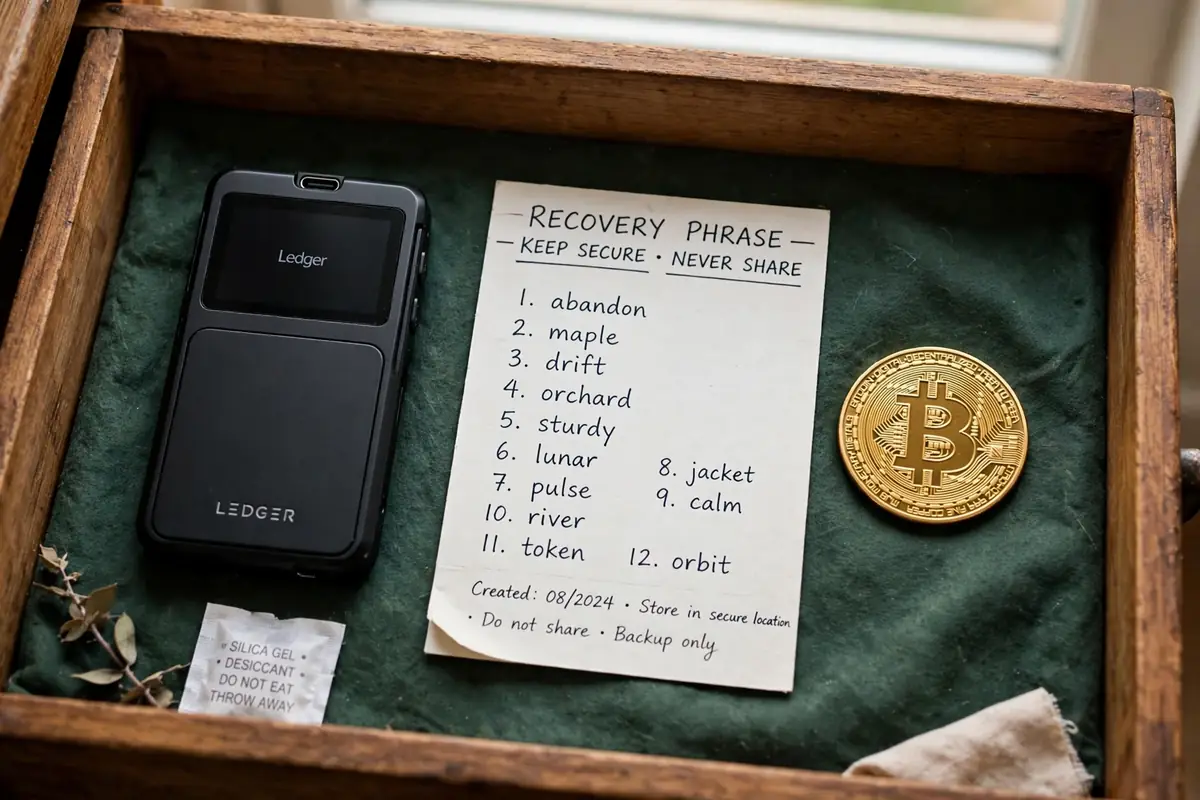
Test every new wallet with a small withdrawal first. Then send the rest, and store your recovery phrase on paper or steel, never in a photo or a cloud note.
FAQs
Beginners in Brazil ask the same six questions before a first buy. Short answers sit below, and the sections above carry the full detail.
How to buy Bitcoin in Brazil as a beginner?
Open an account on a regulated exchange, verify it with your CPF and a photo ID, deposit reais with Pix from a bank account in your own name, then buy BTC on the spot market. Start with a small amount and move large holdings to your own wallet.
Is Bitcoin legal in Brazil in 2026?
Yes. Law 14,478 of 2022 recognises virtual asset service providers, and the Central Bank of Brazil licenses and supervises them under rules that took effect in February 2026.
Can I buy Bitcoin with Pix?
Yes. Pix is the fastest funding route on Brazilian platforms, it works 24 hours a day, most exchanges charge no Pix deposit fee, and your bank account name must match the CPF on your exchange account.
Do I need a CPF to buy Bitcoin in Brazil?
Yes. Every authorised platform in Brazil asks for a CPF plus a photo ID such as an RG, a CNH driving licence or a passport, and many also ask for proof of address.
How much tax do I pay when I sell Bitcoin in Brazil?
Sales on Brazilian platforms stay exempt up to R$35,000 in total sales per month. Above that line, gains face progressive rates from 15% to 22.5%, while gains on foreign platforms face a flat 15% with no exemption.
Which exchange has the lowest fees in Brazil?
On published spot fees, Binance charges about 0.10%, Foxbit charges 0.25% on limit orders and 0.50% on market orders, and Mercado Bitcoin charges 0.30% for makers and 0.70% for takers. Fees change, so check the fee page before you trade.
Conclusion: your first buy can take ten minutes
How to buy Bitcoin in Brazil safely comes down to three habits: verify properly, pay from your own account, and keep records from day one.
Brazil gives beginners one of the easiest on-ramps in the world. CPF verification, an instant Pix deposit and a liquid BTC/BRL market turn a first buy into a ten-minute job.
Start small, keep your records from the first trade, and move bigger balances into your own wallet. When you feel ready, compare more countries in our Australia buying guide and our Pakistan buying guide, and you will see how much the payment rail shapes the whole experience.