


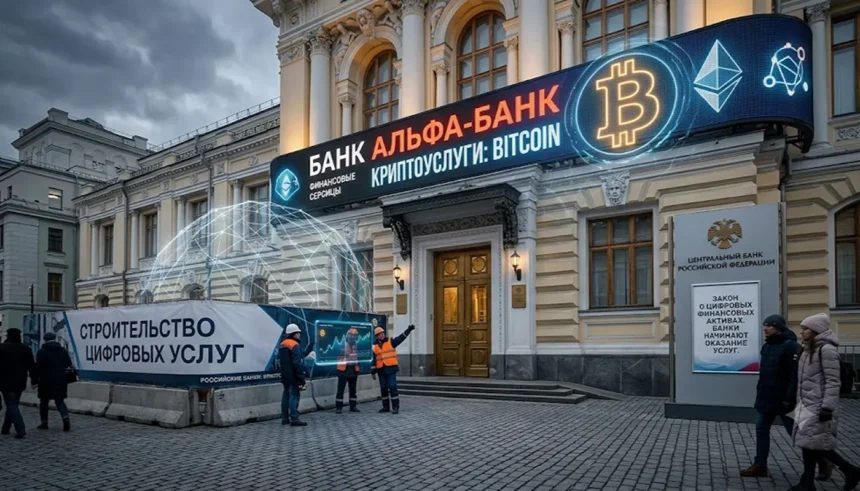
Top Russian banks are now preparing to embrace bitcoin and crypto as they shift towards regulated crypto.
This comes as Alfa-Bank outlines plans to introduce regulated crypto services while the lawmakers finalize the new rules for the industry.

As part of the move, Alfa will announce a digital storage platform developed to hold and assist users with crypto.
The service will originally focus on safe custody for retail and institutional investors and is expected to go live when Russia’s new crypto rules are passed.
According to Alfa-Bank COO Dmitry Vitman, the digital storage will serve a more general goal rather than supporting the bank’s own products.
The bank also plans to provide custody infrastructure to businesses that need these services. This will help to create a foundation for a wider digital asset ecosystem.
Vitman also added that crypto brokerage and trading services will remain part of the bank’s long-term roadmap. However, he noted that Russia’s regulated crypto market will need more time to develop before reaching actual trading activity.

Moreover, the storage model suggested will form a central part of Russia’s upcoming crypto rules. This will introduce crypto custodians as a newly regulated category of financial service providers.
It will also be responsible for protecting crypto assets and meeting strict compliance requirements.
Once it is approved, the regulation rules will form legal standards for cryptocurrency custody and other related operations. But the oversight will be given to the Bank of Russia.
Top Lenders Back Russia’s Shift Toward Crypto Regulation
Meanwhile, Alfa-Bank is not the only bank that is preparing for this transition. Sberbank also announced its plans to merge crypto wallets and custody services into its banking and investment platforms.
VTB and T-Bank are building digital asset offerings ahead of the regulatory rollout. The growing involvement of Russia’s top lenders reflects a changing regulatory landscape.
This is because authorities are creating rules that will allow licensed banks to deliver crypto services within a supervised environment.
Once the regulation is in place, users will be able to buy, store, and manage Bitcoin and other cryptocurrencies. The same platforms they already use for traditional banking will be able to bring crypto and other assets closer
to the country’s mainstream financial system.
Readers can now follow the Bank of Russia register behind the Sberbank launch to see how those early bank plans became a licensed market.