



Yes, you can buy Bitcoin legally in Argentina, and most beginners finish their first buy in about 15 minutes. Pick an exchange that sits on the CNV register, such as Lemon, Ripio or Binance, verify your identity with your DNI, deposit pesos by bank transfer, and buy on the BTC/ARS market.
My honest view is simple: the platform matters less than the register check and the funding route, and this guide shows you both.

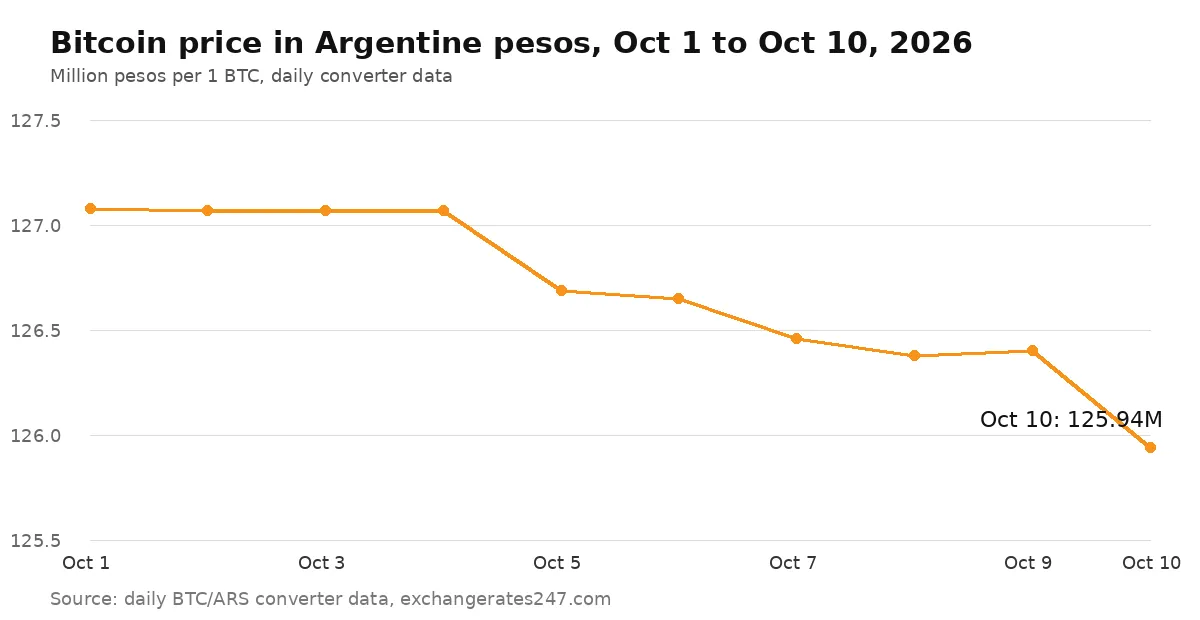
On 10 October 2026, converter data put one Bitcoin near 125.9 million pesos. Nobody needs that kind of money to start, because exchanges sell tiny fractions of a coin.
- Is Bitcoin legal in Argentina in 2026?
- How to buy Bitcoin in Argentina in 7 steps
- Step 1: Pick a CNV-registered exchange
- Step 2: Create your account
- Step 3: Complete identity verification
- Step 4: Deposit pesos from your own bank account
- Step 5: Open the BTC/ARS market
- Step 6: Enter your amount and confirm
- Step 7: Move bigger amounts to your own wallet
- Lemon vs Ripio vs Buenbit vs Binance: which one fits you?
- How much does a first buy really cost?
- P2P and cash routes: use them with care
- Common mistakes Argentine beginners make
- Skipping the CNV register check
- Sending pesos from someone else’s account
- Leaving everything on the exchange forever
- Frequently Asked Questions
- Conclusion
A first buy of 50,000 or 100,000 pesos is normal, and if the basics still feel fuzzy, read our complete guide to what Bitcoin is and how it works first.
Key takeaways
- Buying, holding and selling Bitcoin is legal in Argentina. Bitcoin is not legal tender, and no shop must accept it.
- Since 2024, crypto platforms must register with the CNV as virtual asset service providers. The register listed 81 companies on 7 October 2026.
- Lemon is the simple starter app, Ripio is the long-running local name, and Binance charges the lowest standard trading fee at 0.10%.
- Bank transfers from your own account, using your CBU or CVU, are the cheap funding route. They are usually free and fast.
- Banks in Argentina still cannot sell you crypto directly, so you always buy through a registered platform, never inside your bank app.
Is Bitcoin legal in Argentina in 2026?
Yes. Argentine law lets you own, buy, sell and trade Bitcoin, and millions of people do exactly that to protect savings from inflation.
The state treats Bitcoin as property, not money, so the peso stays the only currency anyone must accept for a debt.
Law 27,739 put crypto firms under the securities regulator, the CNV, in 2024. Platforms that serve Argentine users must join the public register of virtual asset service providers, follow anti-money-laundering rules, and report to the financial intelligence unit, the UIF.

That register is your safety check, and it takes one minute to use.
Why you buy from an exchange, not your bank
The central bank, the BCRA, banned banks from offering crypto trading in 2022 and later extended the ban to payment firms. In October 2026 the central bank said it has no near-term plan to lift that ban.
So your bank moves the pesos, and a registered exchange does the trade. Anyone who offers you Bitcoin inside a normal bank app is not telling the truth.
What about tax?
Buying Bitcoin creates no tax bill by itself. Selling at a profit does: individuals pay capital gains tax at 15% on the gain, and the tax authority ARCA, which replaced AFIP, receives data from local platforms.
Larger holdings can also count toward the personal assets tax, depending on your total wealth and the rules for that year. Keep every receipt, date and peso amount from day one, because rebuilding records later is painful.
This is general information, not tax advice.
How to buy Bitcoin in Argentina in 7 steps
The steps below work on any of the big registered platforms. Screens differ a little, but the order never changes: account, verification, deposit, buy, then safe storage.
Readers abroad follow the same shape, as our guide on how to buy Bitcoin in Pakistan shows, but the documents, banks and rules are always local.
Step 1: Pick a CNV-registered exchange
Start with Lemon, Ripio, Buenbit or Binance, compared in the table below. Before you deposit one peso, find the company name on the CNV register of virtual asset service providers.
If the name is missing, close the app, whatever its adverts promise. One warning from recent history: Coinbase paused peso buying, selling and bank withdrawals on 31 January 2026, so do not assume every famous global name still takes pesos.
Step 2: Create your account
Sign up with your email and mobile number, then turn on two-factor authentication before you deposit anything. Use an authenticator app where the platform offers one.
Pick a password you use nowhere else, because account theft, not price drops, is how most beginners actually lose money.
Step 3: Complete identity verification
Have your DNI ready, because every registered platform must verify who you are. The app scans the document and asks for a selfie or a short liveness check, and some platforms also ask for a proof of address such as a utility bill.
Most accounts clear within a few hours. A blurry photo in bad light causes most delays, so retake the photo rather than waiting on support.
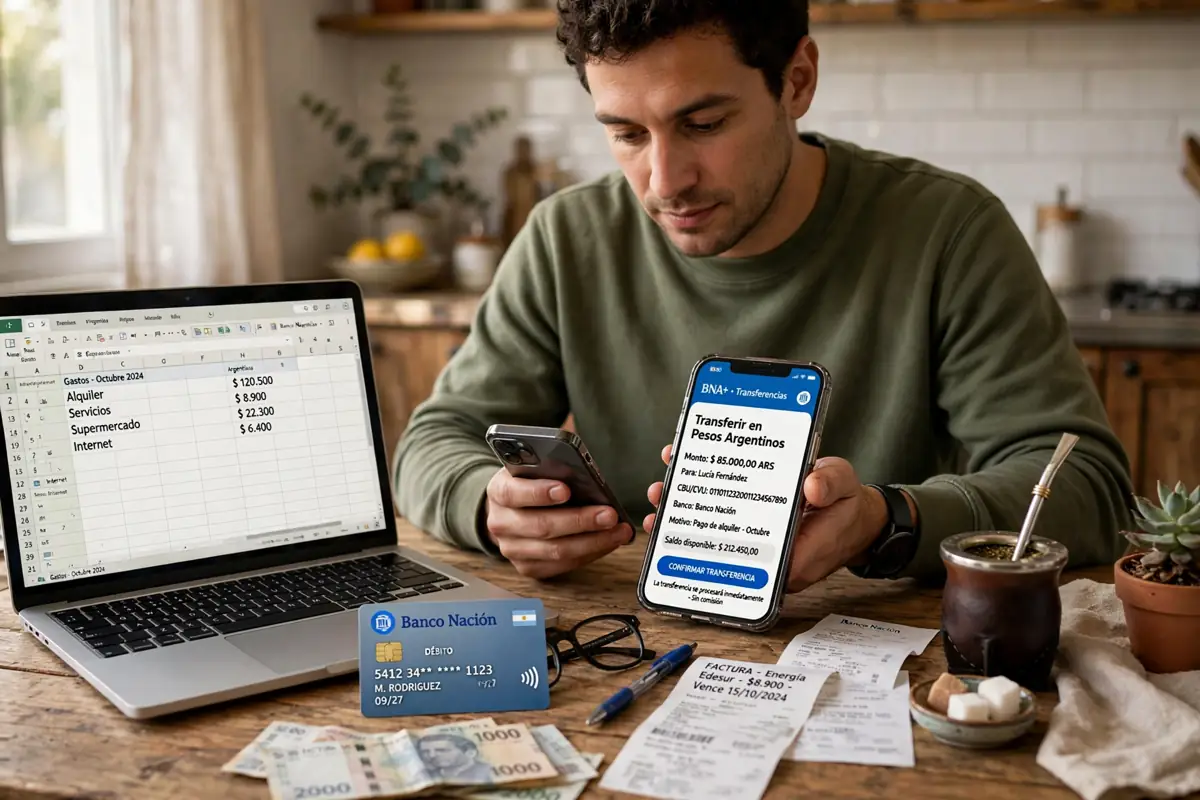
Step 4: Deposit pesos from your own bank account
Send money from a bank account in your own name to the CBU or CVU the app shows you. Bank transfers are usually free and land fast, often within minutes.
Many platforms also accept transfers from Mercado Pago, and some let you load cash at Pago Facil or Rapipago points. Our walkthrough on how to buy Bitcoin with bank transfer explains the cheap funding route in more detail.
Step 5: Open the BTC/ARS market
Find the Bitcoin market priced in pesos, shown as BTC/ARS. You will see two ways to buy: a quick buy button, and a normal market screen.
The quick button is simple, but it hides its cost inside a worse price. The market screen shows the live order book and charges the published fee, so learn it with your first small buy, while a mistake is still cheap.
Step 6: Enter your amount and confirm
Type the peso amount, not a coin amount. Before you confirm, check three numbers on the preview screen: the Bitcoin price, the fee or spread, and the exact amount of Bitcoin you will receive.
At the 10 October 2026 price near 125.9 million pesos per coin, a 100,000 peso order buys about 0.00079 BTC before fees. Prices move every second, so a small gap from the headline price is normal and a big one is not.
Step 7: Move bigger amounts to your own wallet
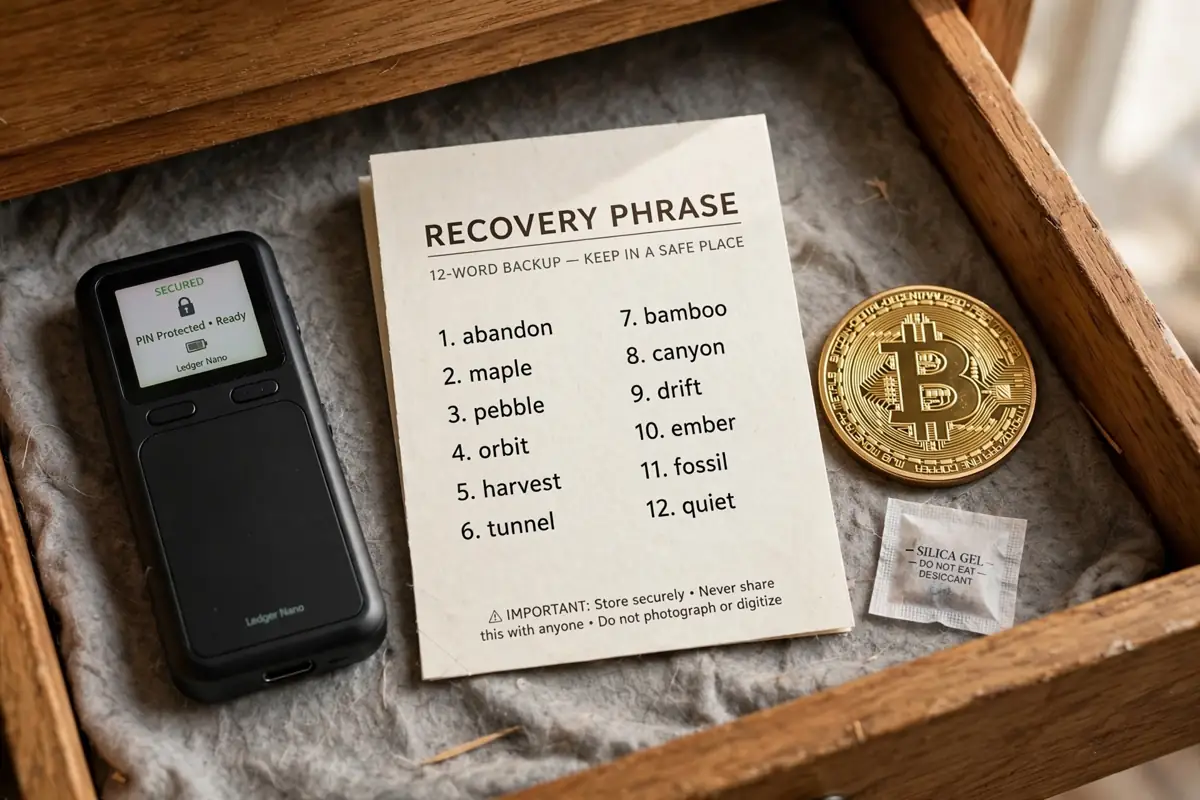
For a small learning amount, leaving Bitcoin on a registered exchange is common and practical. Once the value would hurt to lose, withdraw it to a wallet you control and write the recovery phrase on paper, offline.
Start with our picks for the best Bitcoin wallets for beginners, and for long-term holdings read how to store Bitcoin offline for the long term. Send a tiny test withdrawal first and wait for it to arrive before you move the rest.
Lemon vs Ripio vs Buenbit vs Binance: which one fits you?
All four platforms serve Argentine users, price Bitcoin in pesos, and sit on the CNV register. The real differences are feel, fee style and how much hand-holding the app gives you.
Fee figures below are the published entry rates I found in October 2026. Platforms change fees without much notice, so treat the preview screen at checkout as the final word.
| Exchange | Best for | Trading cost | Peso deposit | Watch out for |
|---|---|---|---|---|
| Lemon | True beginners who want one simple app | Simple buy price shown in the app, spread included | Free by bank transfer to your CVU | No full trading screen, so keen traders outgrow it |
| Ripio | A long-running local platform, founded in 2013 | 0.25% maker, 0.50% taker | Free by bank transfer, Mercado Pago also works | Taker fee is higher than Binance |
| Buenbit (Nexo) | Stablecoin savers who also want Bitcoin | Simple buy and sell prices shown in the app | Bank transfer and Mercado Pago | Buenbit became part of Nexo in late 2025, so screens and branding are changing |
| Binance | Low fees, deep markets and P2P trading | 0.10% maker, 0.10% taker on spot | Bank transfer and P2P in pesos | The app overwhelms some beginners at first |
Lemon says it has more than 4 million validated users, and its Visa card pays 2% cashback in Bitcoin on purchases. In January 2026 it launched a Bitcoin-backed Visa credit card, a first for Argentina.
Ripio has operated since 2013 and built its name on peso deposits and local support. Buenbit made its name on dollar stablecoins, which is why so many Argentines already hold an account there.
So which should a beginner choose?
Pick Lemon if the whole idea still feels new and you want the fewest screens. Pick Binance if fees bother you and you plan to trade more than once.
Pick Ripio or Buenbit if you want an Argentine company with local support in Spanish. Honestly, any registered platform beats the informal cash dealers and social media sellers who offer a slightly better rate and zero protection.
How much does a first buy really cost?
Take a 100,000 peso first buy at the 10 October 2026 price of about 125.9 million pesos per Bitcoin. Before fees, that buys roughly 0.00079 BTC.
The fee then decides how much less lands in your account.
On Binance at 0.10%, the trading fee on 100,000 pesos is 100 pesos. On Ripio as a taker at 0.50%, it is 500 pesos.
Neither amount ruins anyone, but the habit matters: on a 2 million peso buy, the same gap is 2,000 pesos against 10,000 pesos. The chart above shows the other cost that beginners forget.
The peso price of Bitcoin slid from about 127.1 million on 1 October to about 125.9 million on 10 October, so the exchange rate and the Bitcoin price both move your result. After a withdrawal, you can check if your Bitcoin transaction is confirmed before you relax.
P2P and cash routes: use them with care
Some Argentines buy through peer-to-peer markets, mainly Binance P2P, where other users sell Bitcoin for pesos. Escrow holds the coins until the seller confirms your bank transfer arrived.
That system works, but only inside the platform. The moment a seller asks you to chat or pay outside the app, the protection disappears.
Cash is the riskiest route of all. Loading cash at a Pago Facil or Rapipago point into your own registered account is fine.
Handing cash to an informal dealer, the classic cueva, for a rate that beats the app is not fine. You carry robbery risk, fake bill risk and zero comeback if the coins never arrive.
My opinion: a beginner gains almost nothing from that small rate gap and risks everything.
Three red flags that end any deal
Walk away if a seller promises fixed monthly returns, because no honest platform can promise that. Walk away if anyone asks for your recovery phrase or a photo of your DNI outside the app verification flow.
And walk away if a deal only works today and the seller rushes you. Pressure is the oldest trick in this market.
Common mistakes Argentine beginners make
Most first losses in Argentina have little to do with the Bitcoin price. They come from unregistered platforms, funding errors and hurry.
Three mistakes show up again and again.
Skipping the CNV register check
The register listed 81 companies on 7 October 2026, including Ripio, SatoshiTango, Lemon, Nexo, Binance, Bybit, OKX and Kraken. Checking a name takes one minute on the CNV site.
Skipping that minute is how people end up sending pesos to a copycat app that vanishes in a month.
Sending pesos from someone else’s account
Exchanges match deposits against the account holder’s name, and a transfer from a friend or relative can bounce or freeze for review. Fund your account from your own bank account, every time.
Copy the CBU or CVU exactly as the app shows it, because one wrong digit sends your money on a long holiday.
Leaving everything on the exchange forever
An exchange account is a shop, not a vault. Read how to store Bitcoin safely, turn on every security setting your platform offers, and never type your recovery phrase into any website.
That includes a site that claims to be support, because real support never asks for it.
Frequently Asked Questions
Is it legal to buy Bitcoin in Argentina?
Yes. Buying, holding and selling Bitcoin is legal in Argentina, platforms must register with the CNV as virtual asset service providers, and Bitcoin is not legal tender, so nobody has to accept it as payment.
What is the minimum amount I need to buy Bitcoin in Argentina?
You can start small. Local exchanges let you buy a tiny fraction of a coin, so many beginners start with 50,000 to 100,000 pesos rather than a full Bitcoin, which traded near 125.9 million pesos on 10 October 2026.
Which exchange is cheapest for buying Bitcoin in Argentina?
On published entry rates, Binance charges 0.10% maker and 0.10% taker on spot trades, while Ripio charges 0.25% maker and 0.50% taker. Lemon shows one final price in the app with its cost inside, and bank transfer deposits are free on the big local platforms.
Do I need ID verification to buy Bitcoin in Argentina?
Yes. Registered exchanges must verify your identity under anti-money-laundering rules, so you will need your DNI and a selfie or liveness check, and some platforms also ask for a proof of address.
Do I pay tax on Bitcoin in Argentina?
Buying Bitcoin is not taxed by itself. Individuals pay 15% capital gains tax on the profit when they sell, and ARCA receives data from local platforms, so keep your buy and sell records.
Conclusion
Learning how to buy Bitcoin in Argentina comes down to three habits: use a CNV-registered platform, fund it from your own bank account, and move real money into your own wallet. Lemon, Ripio, Buenbit and Binance all do the job.
They differ on fees and feel, not on the basic path.
Your next step: open one account today, finish the identity check, and send a small test deposit before you buy anything. Start small, check every number twice, and let the first buy teach you the screens while the stakes are low.
Buying from Australia instead? Our step-by-step guide explains how to buy Bitcoin in Australia.
Planning a buy from Europe instead? Our guide to buying Bitcoin in Austria covers the SEPA, MiCA and 27.5% KeSt rules that apply there.