


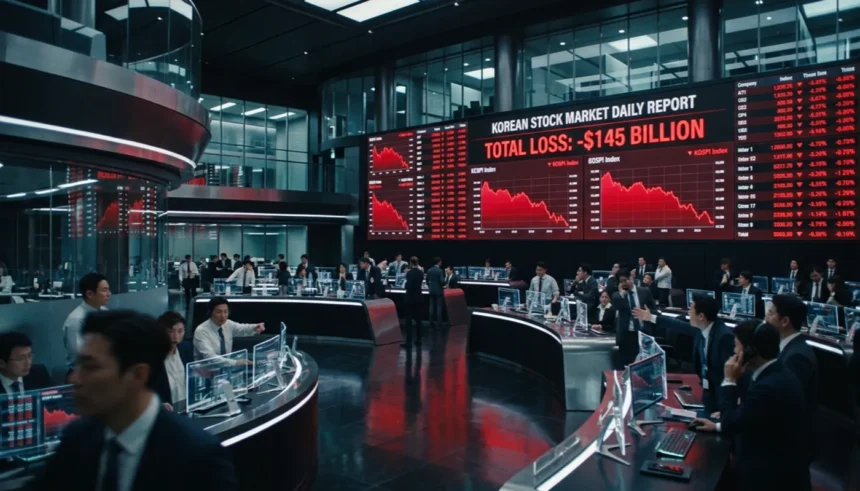
South Korea’s stock market suffered heavy losses on Wednesday, with over ₩200 trillion won erased from the market in a single trading session.
Selling pressure continued across South Korean stocks after Tuesday’s sharp market decline. Samsung Electronics opened 4.32% lower at 283,500 won, while SK Hynix lost 4.77% to 2.096 million won.

The KOSPI Composite Index, South Korea’s main stock index, dropped by more than 2.5% as investors sold shares across several sectors. Technology, finance, industrial, and automotive companies were among the biggest losers
The losses extended the previous session’s decline, which was fueled by a “sell the news” reaction following Samsung Electronics‘ earnings update. The heavy selling triggered a historic circuit breaker in South Korea and continued to weigh on Asia-Pacific markets in early Wednesday trading.
The decline comes as investors remain worried about the global economy. These worries have pushed many investors to move away from riskier assets.
The decline comes as South Korea continues to tighten oversight of digital assets, signaling a broader push to strengthen its financial system. While the stock market drop was driven by macroeconomic concerns, the country’s crypto industry is also facing increased scrutiny from regulators.
Crypto Crackdown Adds to South Korea’s Market Jitters
Recently, South Korean authorities expanded efforts to seize and sell cryptocurrencies belonging to people who fail to pay taxes. Local governments have begun liquidating confiscated digital assets to recover unpaid tax bills, reflecting the country’s tougher approach to crypto enforcement.

Authorities say the move is aimed at preventing investors from using digital assets to hide wealth or avoid tax obligations. The stricter enforcement comes as South Korea remains one of the world’s largest cryptocurrency markets.
Millions of retail investors actively trade Bitcoin and other digital assets, making regulatory decisions in the country closely watched by the global crypto industry.
The combination of a sharp stock market decline and tighter crypto oversight could weigh on investor sentiment in the short term.
When traditional financial markets experience heavy losses, investors often reduce exposure to higher-risk assets, including cryptocurrencies. However, South Korea’s regulatory approach could also help improve confidence over the long term.
By increasing oversight and enforcing tax rules, authorities hope to create a more transparent digital asset market that attracts institutional participation while reducing illegal activity.