



BlackRock’s spot Bitcoin ETF has reportedly sold Bitcoin worth millions, drawing attention as the crypto market continues to trade lower.
BlackRock’s iShares Bitcoin Trust (IBIT) recorded $59 million in net outflows as investors pulled money from the world’s largest spot Bitcoin ETF.

The redemption adds to a challenging period for U.S. spot Bitcoin ETFs, which have experienced heavy investor withdrawals in recent weeks.
The latest outflow is part of a broader trend. During June 2026, U.S. spot Bitcoin ETFs posted more than $4 billion in combined net outflows, marking their largest monthly withdrawals since their launch in January 2024.
IBIT accounted for the biggest share of those redemptions, with investors withdrawing approximately $3.55 billion from the fund during the month.
The largest single-day outflow came on June 26, when the ETF recorded $444.5 million in net withdrawals, highlighting the scale of institutional selling pressure.
However, ETF analysts say such transactions are not unusual. Spot Bitcoin ETFs regularly buy or sell Bitcoin as investors add or withdraw money from the fund.

This means the reported sale may simply reflect normal investor activity rather than a change in BlackRock’s view on Bitcoin.
Bitcoin Faces Major Test on Key Price Zones
The BlackRock spot Bitcoin ETF sale has shifted attention to Bitcoin’s next move, with traders closely watching whether key support levels can hold.
Bitcoin is trading near $62,800, just above a major demand zone between $55,000 and $58,000. This area has previously attracted strong buying interest and could determine whether the current pullback remains temporary.
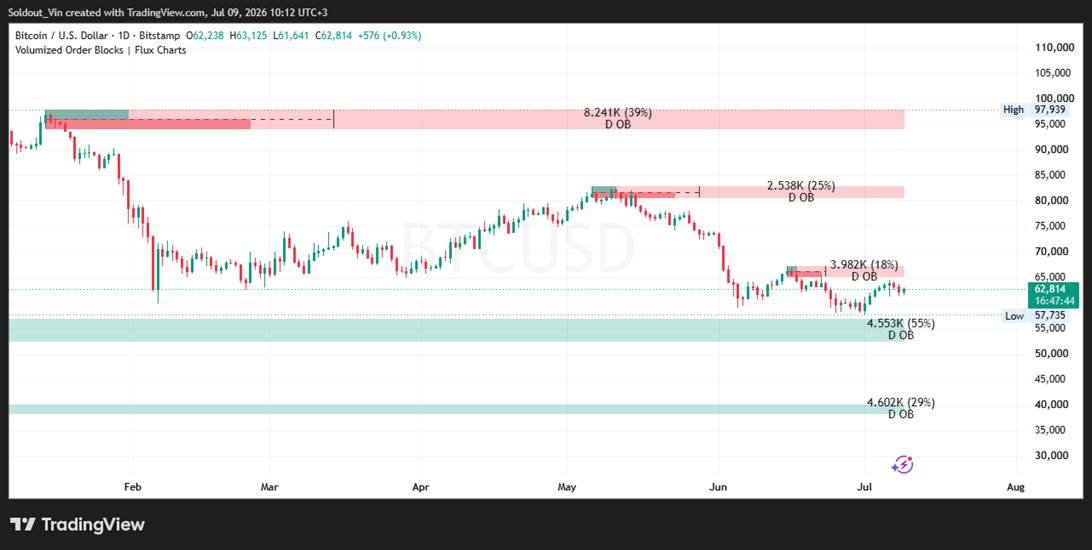
If buyers regain control, Bitcoin’s first hurdle lies around $65,000, with a much stronger resistance zone between $80,000 and $82,000.
Beyond that, the chart highlights another heavy supply area near $97,000, where selling pressure could increase.
The technical setup comes as investors digest BlackRock’s reported ETF outflow. While the sale has fueled short-term caution, analysts say Bitcoin’s trend will largely depend on whether bulls can defend current support.
A successful hold could revive bullish momentum, while a break below the demand zone may open the door to deeper losses.